15 Christmas Party Games for Adults and Kids
Party hosts know the moment well. Dinner plates sit cleared, conversation starts to drift, and children begin circling the tree while adults check the clock. Planned games rescue that quiet lull and give everyone a reason to laugh together instead of splitting into small corners. Good christmas party games need no fancy props, no long talks about rules, and no guest left sitting out for long.
You can run a whole game session with items already sitting in kitchen drawers and decoration boxes. Candy canes, spare wrapping paper, cotton balls, spoons and a handful of small ornaments cover most of the list below. Preparation takes minutes rather than hours, and every game clears away quickly when food or bedtime calls.
Below you will find fifteen christmas party games planned for mixed groups of adults and children playing in the same room. Each game comes with a short plain explanation of what players do, what you need, the group size it suits, a real example, and one mistake worth skipping. Read through, pick four or five favorites, and keep the rest in reserve for later in the evening.
What are the best christmas party games for a mixed group of adults and kids?
Mixed groups do best with christmas party games that run in short rounds, use props everyone understands, and let players join or rest between rounds. Team games work especially well, because adults and children balance each other and nobody performs alone. Choose two active games, two seated games, and one guessing game, and most parties feel full without feeling rushed.
Picture a living room where grandparents call bingo numbers, parents and children race candy canes in teams, and everyone ends the night shaking bells out of a box while the room laughs. Nobody needed sporting skill, acting talent or a loud voice. Simple rounds, fair teams and small prizes carried the whole evening from dinner to dessert.
Candy cane relay
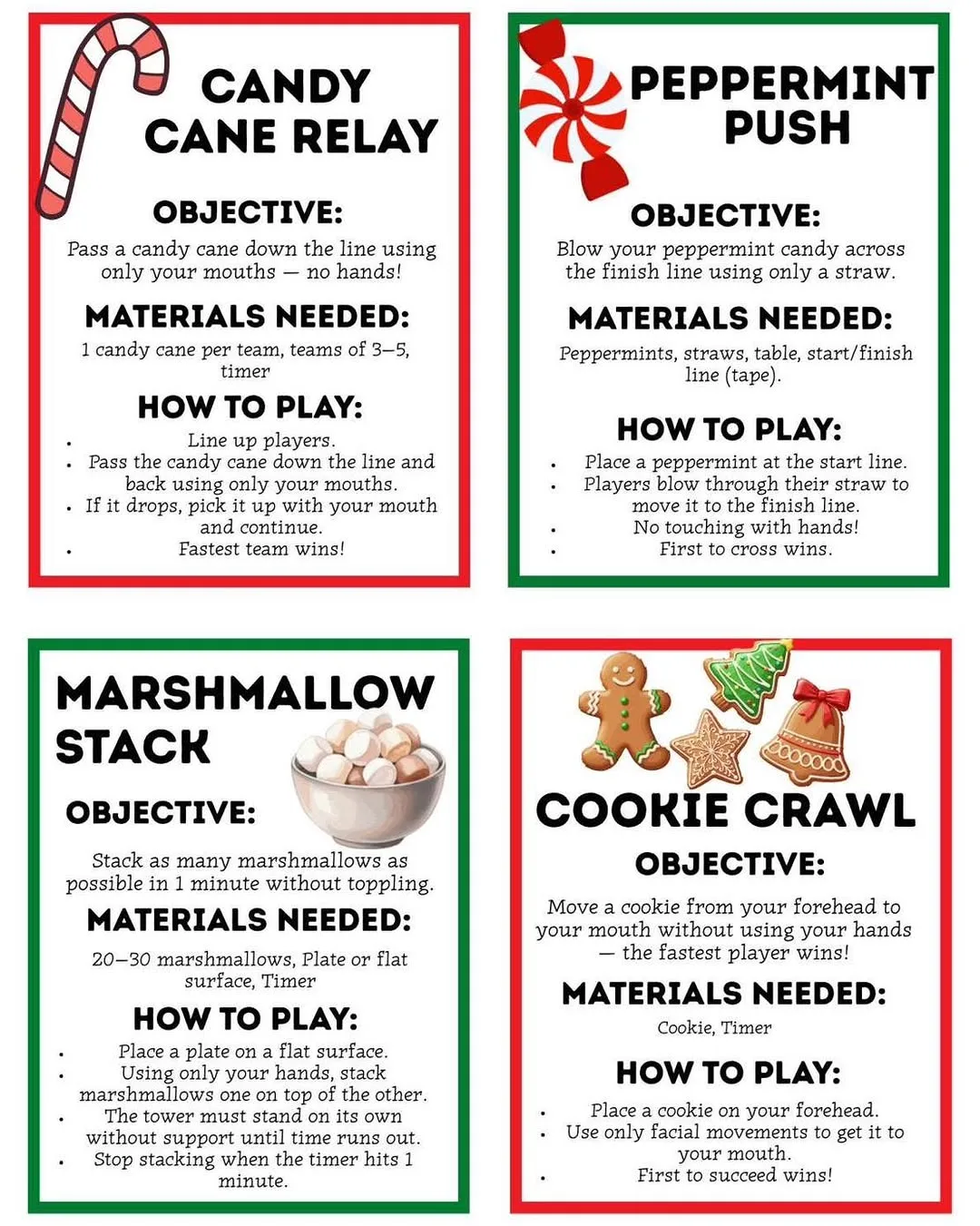
Players pass a candy cane down a line using only the hook of a second candy cane, and hands stay firmly behind backs. Faces concentrate, canes swing and drop, and the room usually laughs before the cane travels halfway. Gentle pacing makes the game safe indoors, since nobody runs and nobody leaves their spot in the line.
You need two sturdy candy canes per team plus a bowl of spares for breakages. Teams of four to six stand in a line, and the first player hooks a cane and passes it to the hook held by the next player. Each person keeps their own cane in hand, which keeps things clean and fair. First team to pass the cane to the end and back wins the round.
Families with mixed ages enjoy this one because grandparents can anchor the ends of the line while children take the lively middle spots. Small children can join by carrying their cane carefully in both hands for their turn instead. Run two short rounds rather than one long race, and swap team order between rounds so everyone gets a fresh start.
Buy thick canes rather than the thinnest bargain packs, because slim canes snap under excited hands and stop the game. Keep toddlers out of this round, since hard candy and small broken pieces suit older children and adults only. Have a damp cloth ready for sticky fingers before players touch furniture, cushions or the tree.
Gift wrap race

Pairs race the clock to wrap an awkward object neatly, and the results range from tidy parcels to hilarious bundles of paper and tape. Judging adds a second layer of fun, because the fastest wrap rarely looks the prettiest. Leftover paper from your own wrapping session keeps the game nearly free.
Set out matching boxes or odd items such as a football, a watering can or a saucepan, with equal paper, tape and ribbon for each pair. Give pairs two minutes on a timer, then judge together on speed and neatness. Popular twist: each partner may use only one hand, so pairs must cooperate on every fold and tear of tape.
Creative adults and older children shine here, though younger children enjoy being tape helpers for a parent. Offices play a version of this game every December, and it works just as well around a family table. Award two prizes, one for fastest finish and one for neatest parcel, so careful pairs stand a chance beside speedy ones.
Avoid giving different sized boxes to different pairs, because uneven challenges start arguments before the timer even begins. Pre cut paper pieces for young players so nobody waits on scissors. Keep proper scissors with adults only, and hand children safety scissors or ready torn strips of tape on the table edge.
Christmas charades
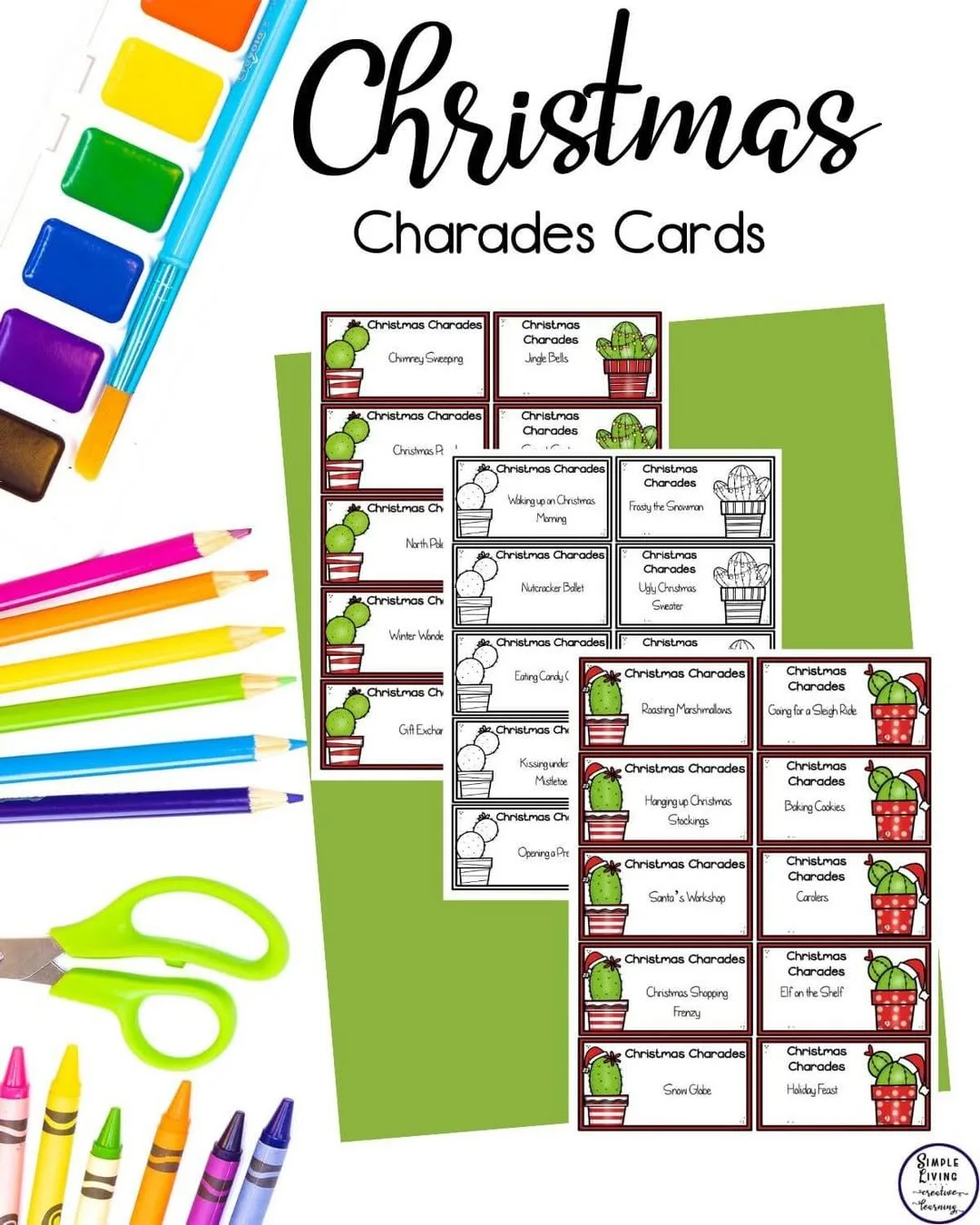
Acting out festive words in silence while teammates shout guesses creates instant energy, and even shy players warm up once the room starts laughing. One player acts, the rest of the team guesses, and the clock keeps turns short and fair. Familiar Christmas scenes keep the game kind, since nobody struggles with obscure clues.
Write simple slips before guests arrive: building a snowman, wrapping a gift, decorating the tree, a reindeer pulling a sleigh, opening a cracker, singing in a choir. Fold slips into a bowl, set a timer for one minute per turn, and split guests into two teams. Correct guesses earn one point, and passed slips go back into the bowl for later rounds.
Children handle animals and simple actions beautifully, especially with picture prompts for readers who still struggle with words. Teenagers enjoy film titles and song names, while grandparents often steal the show with dramatic acting. Teams of five to eight give every player a turn without long waits between rounds.
Keep clues kind and check every slip yourself before the game starts, removing anything too hard, too rude or too obscure. Ban shouting from the other team, because heckling rattles nervous players and spoils turns. Pass quickly when a player freezes, and praise brave attempts as warmly as correct guesses.
Ornament balance race
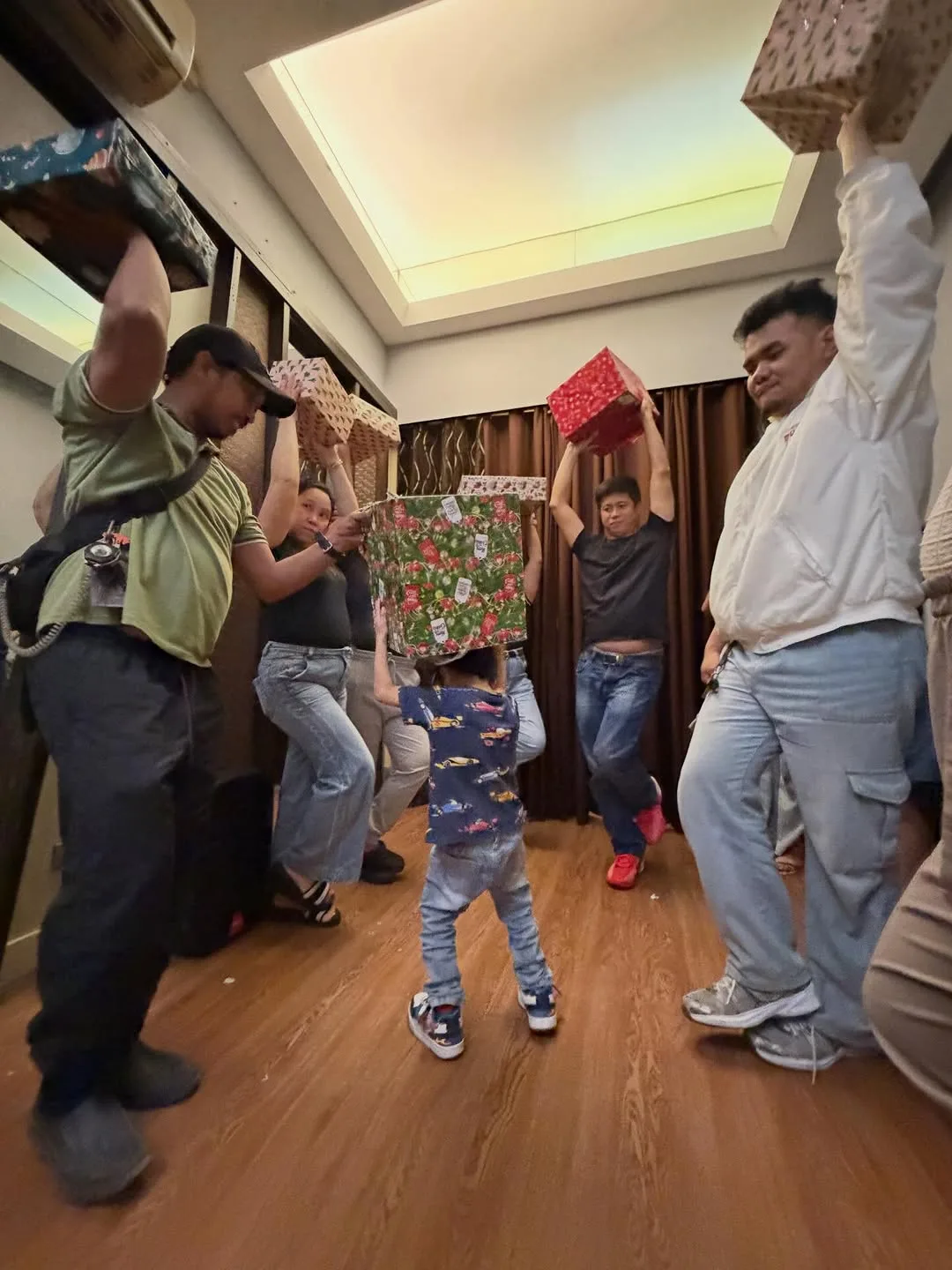
Carrying a light ornament on a spoon along a short course sounds easy until the first wobble, and that wobble is where the laughter lives. Players walk rather than run, concentrating hard while teammates call encouragement. Plastic ornaments keep the game safe, cheap and free of broken glass worries.
Lay out a simple course around a chair and back across the room, marking the start with a cushion or a line of tape on the floor. Each player carries one unbreakable ornament on a spoon, and dropping it means returning to the start of that stretch. Played as a relay, teams of four to six keep everyone moving and cheering in turns.
Steady handed grandparents often beat confident teenagers, which makes results deliciously unpredictable for family groups. Shorten the course for young children and let them use a larger serving spoon for confidence. Play beside the tree for photographs, and run the final between the two best players while everyone else watches.
Never use glass ornaments or real baubles from the tree, because one drop on a hard floor ruins the game and the decoration. Clear the course of rugs with curled edges, trailing cables and curious pets before starting. Insist on walking pace even when teams grow excited, since rushing causes every drop.
Guess the stocking contents
Feeling inside a stocking and naming mystery objects by touch alone fools adults far more than children, which delights younger players no end. Players reach in, feel carefully, and list what they believe hides inside. Nobody needs speed or strength, so the game slots happily between courses or during a quiet spell.
Fill one large stocking with six to eight safe objects, such as an orange, a pine cone, a bell, a cookie cutter, a spoon, a small toy and a rolled pair of socks. Keep a written list hidden for the host, and give each player one minute of feeling time. Players speak guesses aloud or write them down, and the closest list wins.
Curious children adore the mystery, while adults discover that everyday objects feel strangely foreign in the dark of a stocking. Play at the table with one stocking passed around, or prepare two stockings for a team version. Guests with limited mobility join fully, since the whole game happens seated with no movement around the room.
Choose objects with no sharp edges, no leaks and nothing that stains small hands, because players squeeze harder than you expect. Keep food items wrapped and separate them from toys if anyone plans to eat them later. Wash the stocking afterwards, and retire any object that comes out sticky or crushed.
Christmas bingo
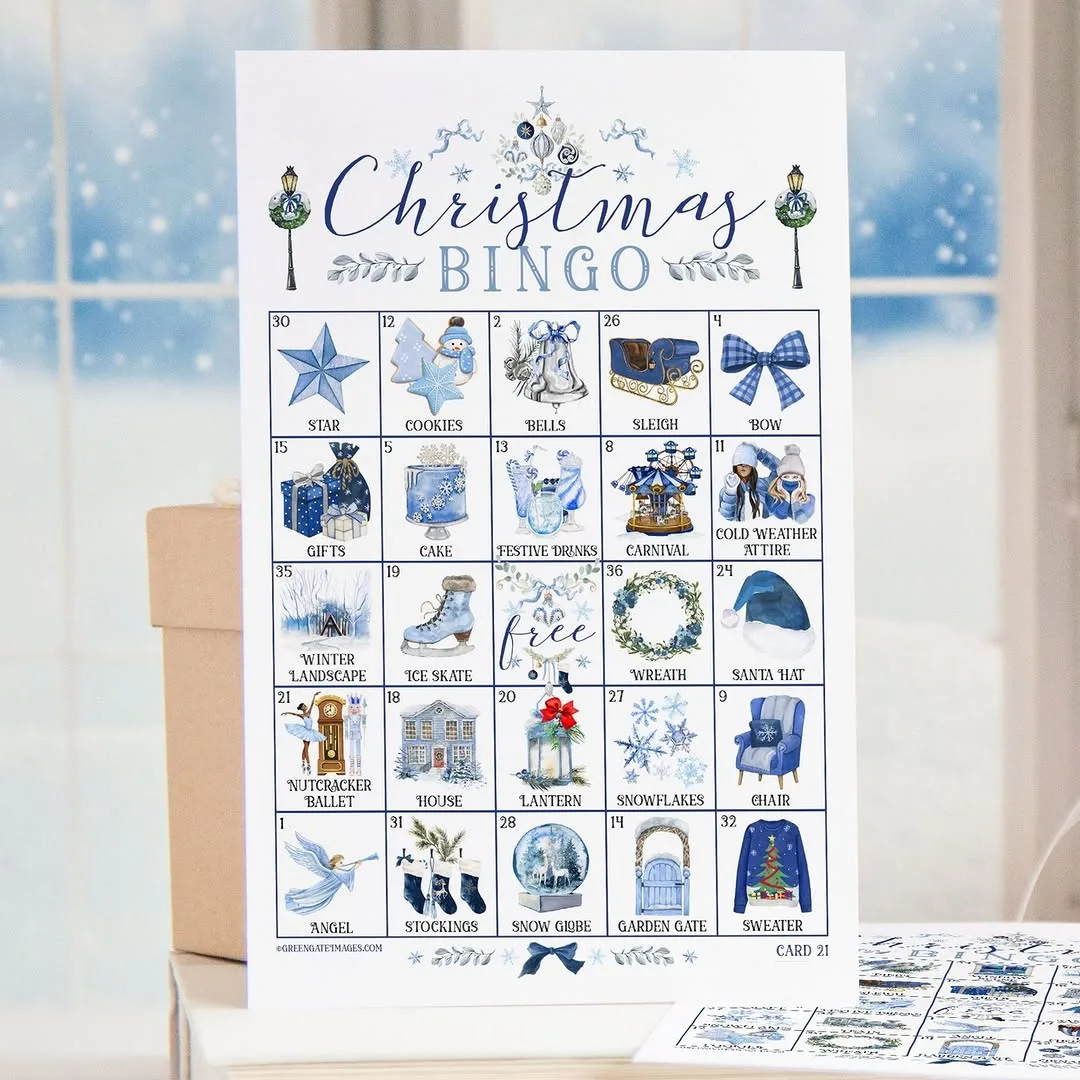
Few christmas party games settle a noisy room as quickly as bingo, because everyone sits, listens and scans their card at the same time. Pictures or simple words fill the squares, from snowmen and stars to puddings and reindeer. One caller keeps the pace, and near wins build lovely tension as cards fill up.
Print or draw cards with a grid of festive pictures, making each card slightly different so ties stay rare. Buttons, coins or dried beans work as markers, though sweets that players eat afterwards please children most. Prepare small prizes for a full line and for a full card, giving more guests a reason to stay hopeful until the end.
Grandparents, parents and children play on truly equal footing here, which makes bingo a kind anchor game for the whole party. Picture cards let pre readers join without help, and seated play rests tired legs after active rounds. Groups of six to twenty manage easily, since cards cost pennies and the caller runs everything from one chair.
Call each number or picture twice and at a calm pace, because rushed calling confuses young players and causes missed squares. Read winning cards aloud during checking so mistakes surface kindly in front of everyone. Keep spare cards ready for late arrivals, and let them join the next round rather than squeezing into the current one.
Snowball toss
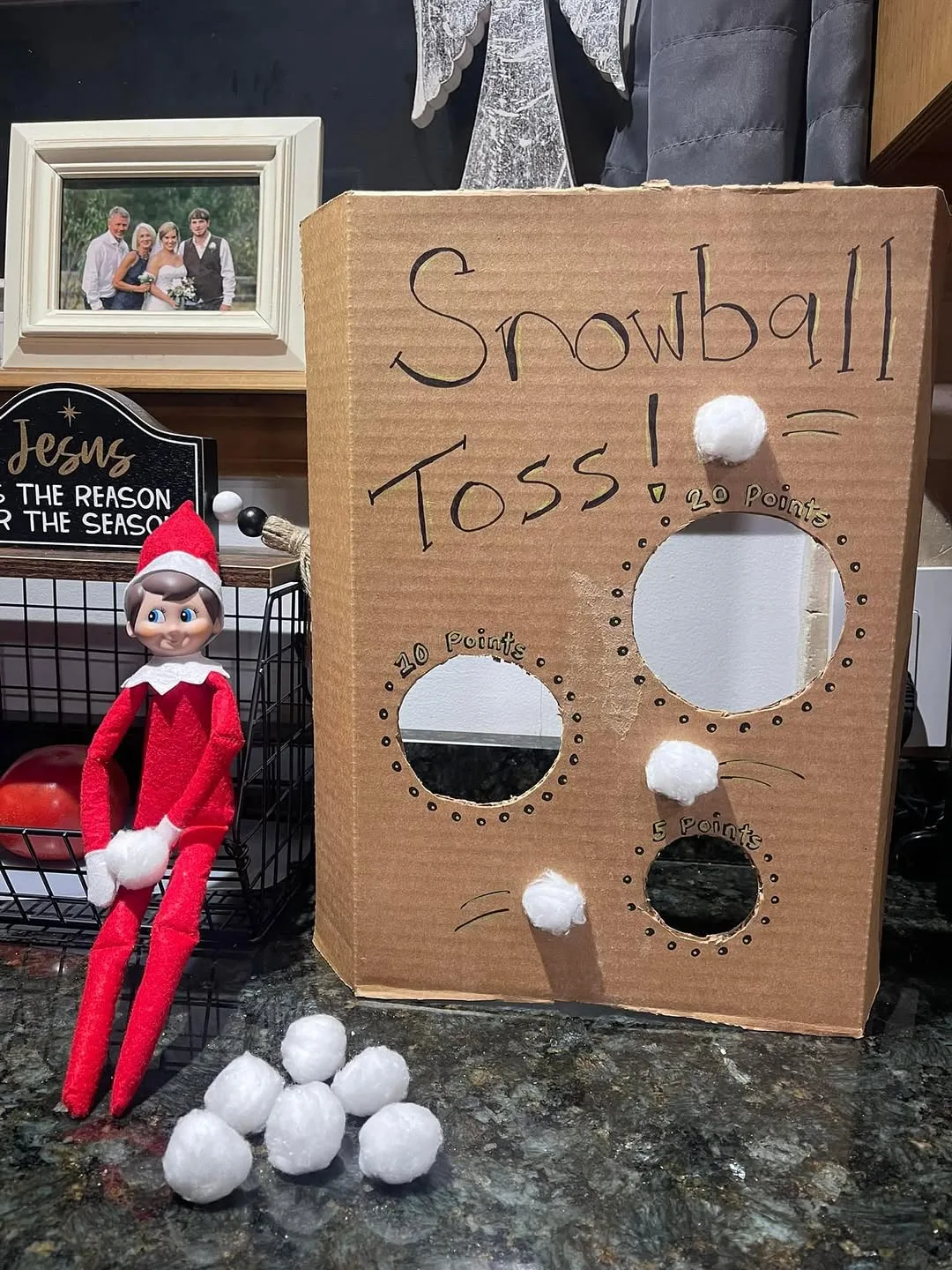
Tossing soft white balls into buckets at different distances gives every player quick turns and instant scores. Cotton balls feel too light outdoors but rolled white socks make perfect indoor snowballs with satisfying weight. Buckets at three distances let players choose between safe points and brave long throws.
Place three buckets or bowls in a row, worth one, two and three points from nearest to farthest, and mark a throwing line on the floor with tape. Each player throws five snowballs per turn, and a scorekeeper notes points on a simple card. Move the line closer for small children rather than moving buckets, keeping the target fair for everyone.
Toddlers join happily from a shorter line with bigger buckets, while adults can throw from their knees to even the contest. Play in a hallway or along a clear wall where stray throws harm nothing. Short rounds of two turns each keep queues moving and let the whole group finish before attention wanders.
Use only soft balls indoors, because even a light hard ball chips paint, knocks ornaments and startles grandparents. Clear the wall behind the buckets of picture frames and candles before the first throw. Collect every sock snowball at the end, since odd socks vanish into sofas and cause laundry mysteries for weeks.
Pin the nose on the reindeer
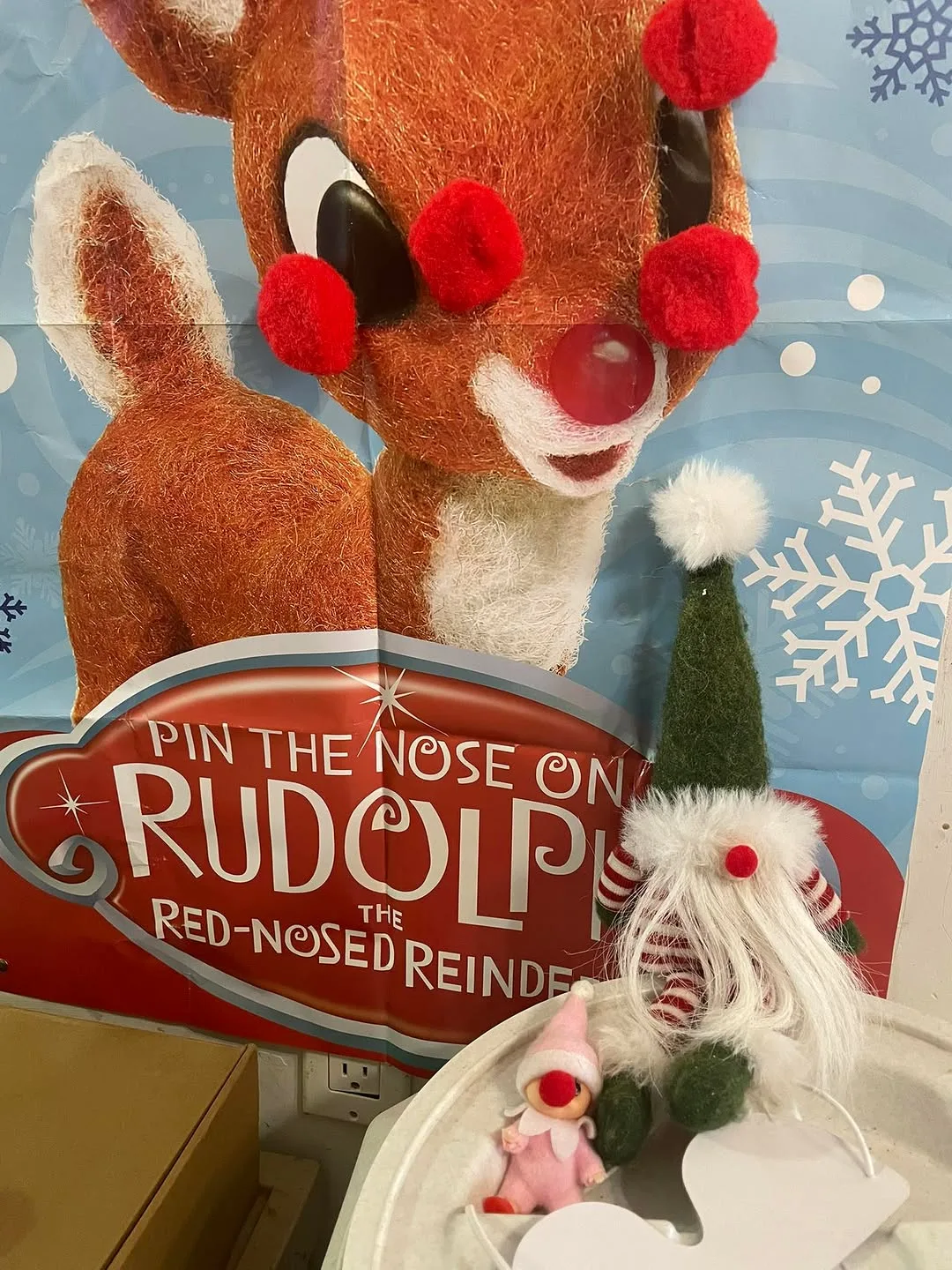
Blindfolded players turning in a gentle circle and hunting for the right spot on a big smiling reindeer has entertained children for generations. Laughter peaks when confident adults place the nose on an ear or halfway down the chin. Sticker noses keep the classic game safe for every age in the room.
Draw a large reindeer face on poster paper or an old sheet and fix it firmly to a door or wall at child height. Give each player a round red sticker as a nose, write names on stickers, and use a soft scarf as the blindfold. Players stand two steps back, turn once or twice with a guide hand nearby, then walk forward and place the nose.
Younger children love this game most, yet adults playing after dinner often produce the funniest results of the night. Photograph each attempt, because the finished face covered in wandering noses makes a wonderful keepsake picture. Groups of any size work, since turns take under a minute and watching proves nearly as fun as playing.
Stick with stickers rather than real pins whenever children play, and check the blindfold blocks sight properly before each turn. Guide every player gently by voice and a light hand on the shoulder near walls or furniture. Limit small children to one slow turn, because repeated spinning leaves little players dizzy and wobbly.
Name that Christmas song
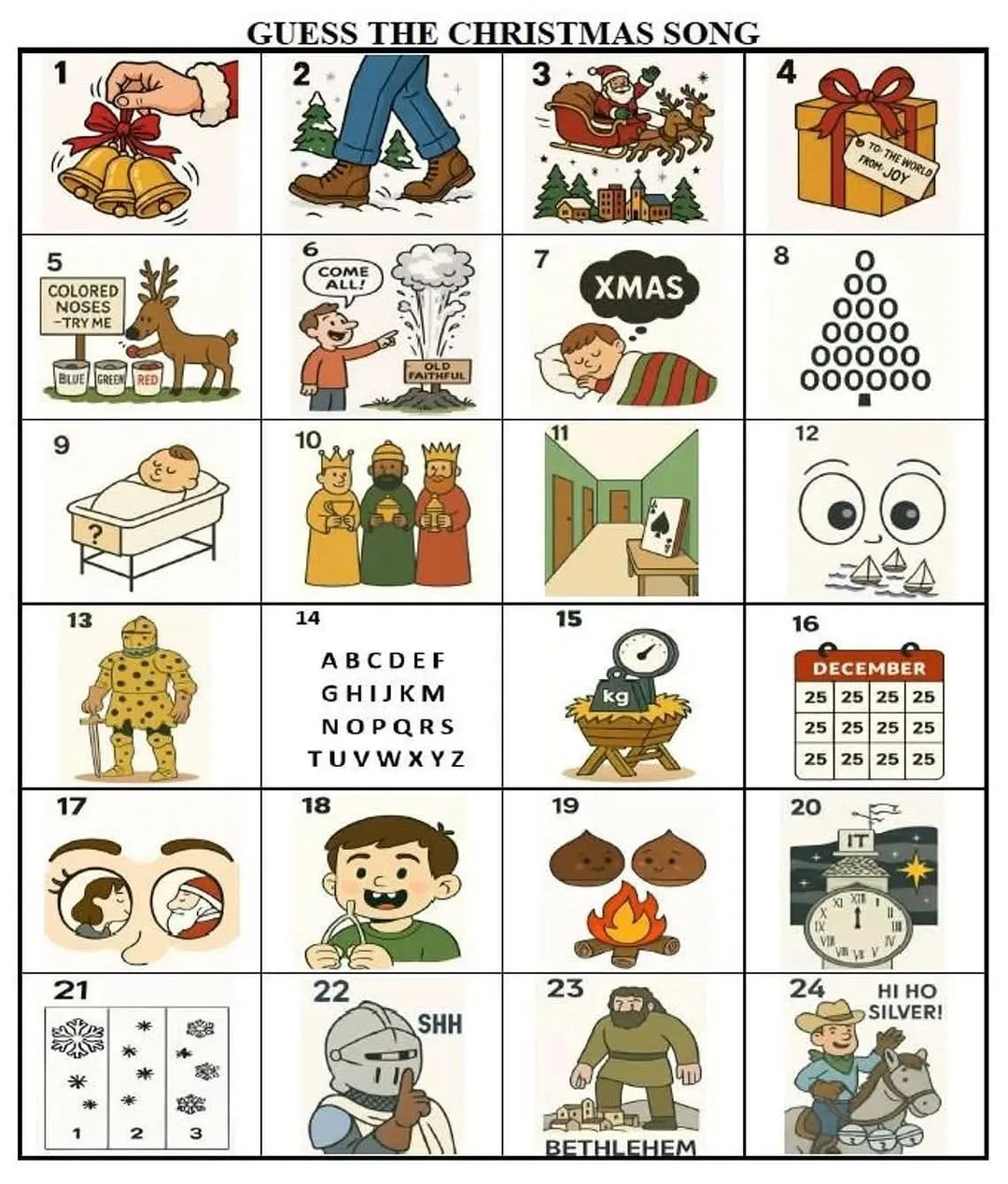
Listening to the first few seconds of a famous carol and racing to name it turns the whole room into rival choirs. Teams confer in whispers, someone always hums along too loudly, and confident singers burst into the chorus. Musical knowledge matters less than speed and teamwork, keeping rounds lively for everyone.
Prepare a playlist of well known carols and Christmas songs on a phone or speaker, with paper and pencils ready for written answers. Play ten short clips per round, award one point for each correct title, and add a bonus point when a team sings the next line. Keep a second easier playlist ready for children, built from songs every school choir sings.
Music lovers and teenagers race ahead in this game, while younger children glow when a favorite school song appears. Grandparents often know older carols that stump everyone else, balancing teams beautifully across generations. Seat teams around one table so conferring stays easy and answers stay secret until the reveal.
Pick songs your actual guests know rather than building a list from memory of radio hits, because obscure tracks stall the room. Keep volume comfortable for older ears and sleeping babies in nearby rooms. Finish with one song everyone sings together, turning the quiz ending into a warm group moment.
Present stacking contest

Stacking wrapped boxes into the tallest possible tower against the clock mixes planning, steady hands and glorious collapses. Teams study their boxes, argue kindly about foundations, and hold their breath as the final small box goes on top. Towers must stand for five full seconds before the height counts.
Collect empty boxes of varied sizes and wrap them earlier in the day, giving each team an identical set in number and size. Allow three minutes of building on a flat table or hard floor, with no tape or extra supports permitted. Measure towers with a tape measure or mark heights against the door frame in pencil free zones agreed with the host.
Patient builders, teenagers and grandparents who enjoy puzzles do surprisingly well against hasty younger players. Little children contribute as box passers and chief breath holders during the final seconds. Photograph each tower before the inevitable collapse, and award small prizes for tallest tower and for most creative design.
Weigh nothing down and never stack real presents with gifts inside, because falling boxes damage contents and tempers together. Empty light boxes collapse harmlessly, which keeps the game cheerful rather than costly. Balance the competition by rebuilding any tower knocked by a passing elbow, judged fairly by the host.
Ornament scavenger hunt

Hiding bright ornaments around a room and sending hunters out with a list turns waiting time into excited searching. Children dash between cushions and bookshelves while adults check plant pots and picture frames with equal seriousness. Found ornaments gather in baskets, and the final count brings everyone back together.
Before guests arrive, hide plastic ornaments in fair places around one or two rooms and count them twice. Hand hunters a picture list showing colors or simple drawings of what to find, plus a basket or stocking for collecting. Set clear boundaries, naming rooms in play and rooms closed, and pair young hunters with an older partner.
Energetic children burn off party excitement productively while adults finish cooking or clearing dinner plates nearby. Teams pairing one adult with one child balance keen eyes against long memories of hiding spots. Keep hunts to fifteen minutes, and shrink the area for toddlers so success comes quickly and often.
Tally every ornament at the end against your starting count, because one forgotten bauble behind a curtain surprises nobody pleasantly in January. Never hide glass ornaments, and keep hiding spots away from candles, hot dishes and kitchen counters. Praise clever finders warmly, and let the last ornament found earn the finder first pick from the dessert table.
Build a marshmallow snowman
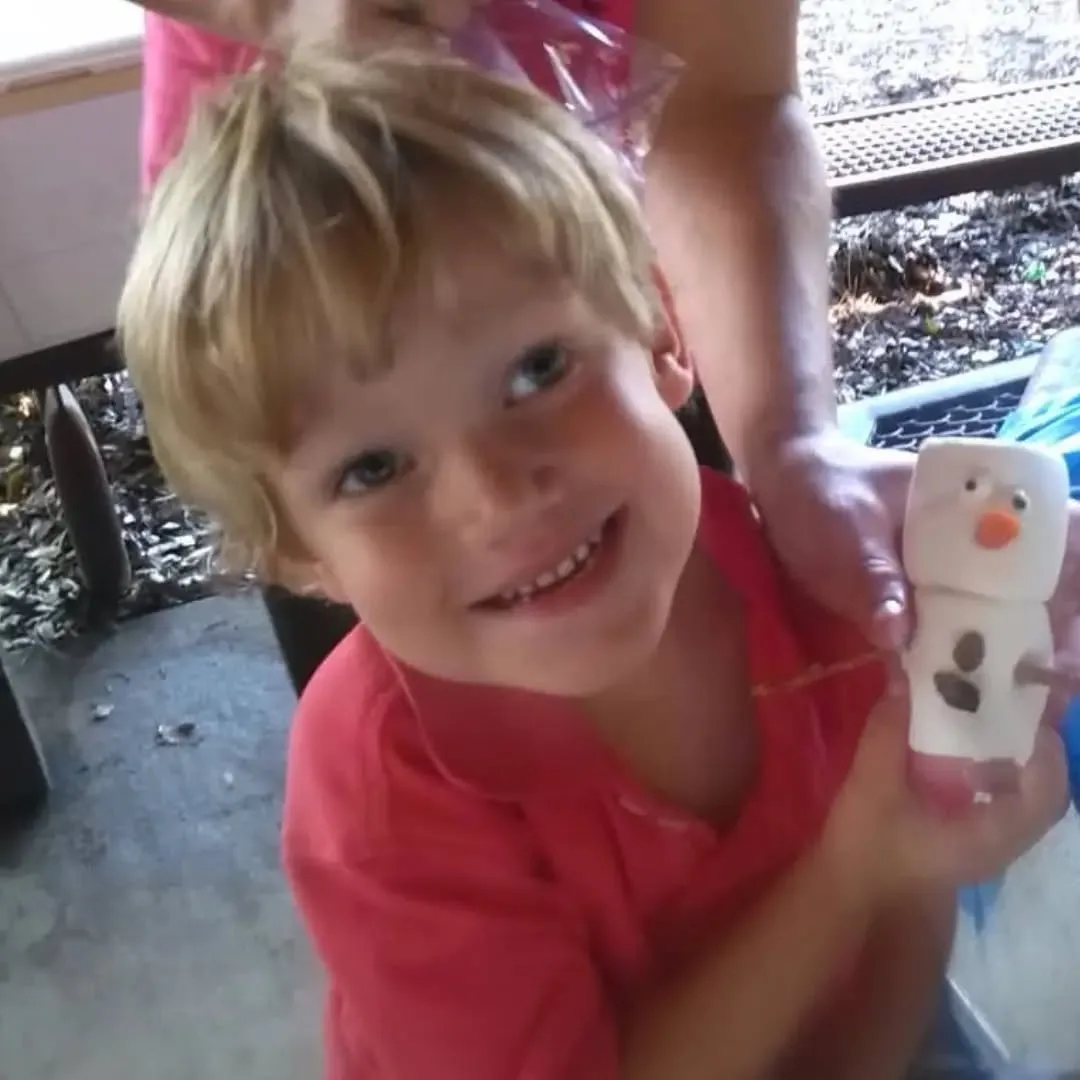
Building a snowman from marshmallows on a plate at the table gives creative guests a calm seated challenge. Skewers, icing and sweet decorations turn simple white blobs into characters with scarves, buttons and wonky smiles. Judging categories keep everyone in with a chance, since tallest, funniest and neatest rarely go to the same snowman.
Give each player or pair a plate, a bowl of marshmallows in mixed sizes, cocktail sticks or pretzel sticks, and small decorations such as raisins, tiny sweets and strands of liquorice. Ten minutes on the clock suits construction plus decorating. Set out wipes and a bin for sticky failures, and keep drinking water nearby for builders who sample as they work.
Gentle competition suits grandparents, crafty children and anyone who prefers sitting to racing around the room. Younger children stack happily with large marshmallows and thick pretzel sticks instead of sharp thin skewers. Display finished snowmen along the table as decoration until dessert, when builders may eat their own creations.
Wash hands before building starts, and provide a separate snack bowl so nobody eats pieces handled during construction games earlier in the evening. Supervise cocktail sticks closely around toddlers, or skip sticks entirely for the youngest builders. Photograph every snowman before eating begins, because proud builders always ask for proof later.
Christmas trivia cards
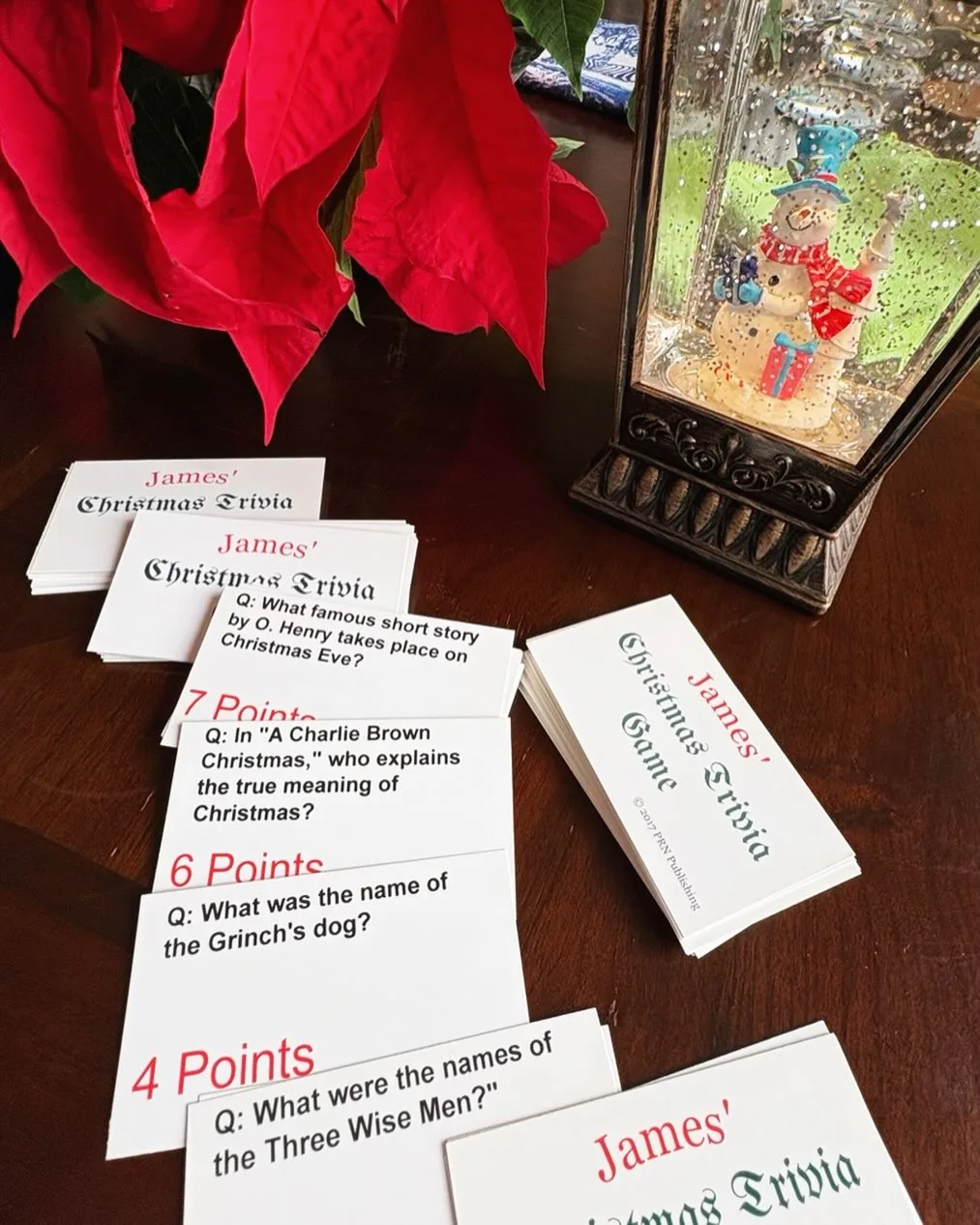
Questions about Christmas traditions, songs, food and films spark friendly debate long after each answer gets revealed. Teams whisper, argue and second guess themselves, and someone always insists a wrong answer felt right. Mixed difficulty keeps rounds fair, with easy questions landing often enough to keep children engaged.
Make cards covering simple topics: names of reindeer, words from famous carols, foods served in other countries, and scenes from well loved Christmas films. Give each team paper for answers, run rounds of five questions, and swap sheets between teams for marking. Twenty questions fill a comfortable session with breaks for drinks between rounds.
Quiz loving adults and older children lead the scoring, while picture questions and true or false rounds pull younger players into the action. Grandparents contribute memories of traditions that turn answers into short stories. Keep teams to three or four players so every voice gets heard during the whispering stage.
Balance every round with questions each age group can answer, because adults only quizzes silence children within minutes. Ban phones from the table before starting, and accept the host ruling as final even when debate runs hot. Read answers with a little ceremony, building suspense before revealing each correct response.
Pass the parcel
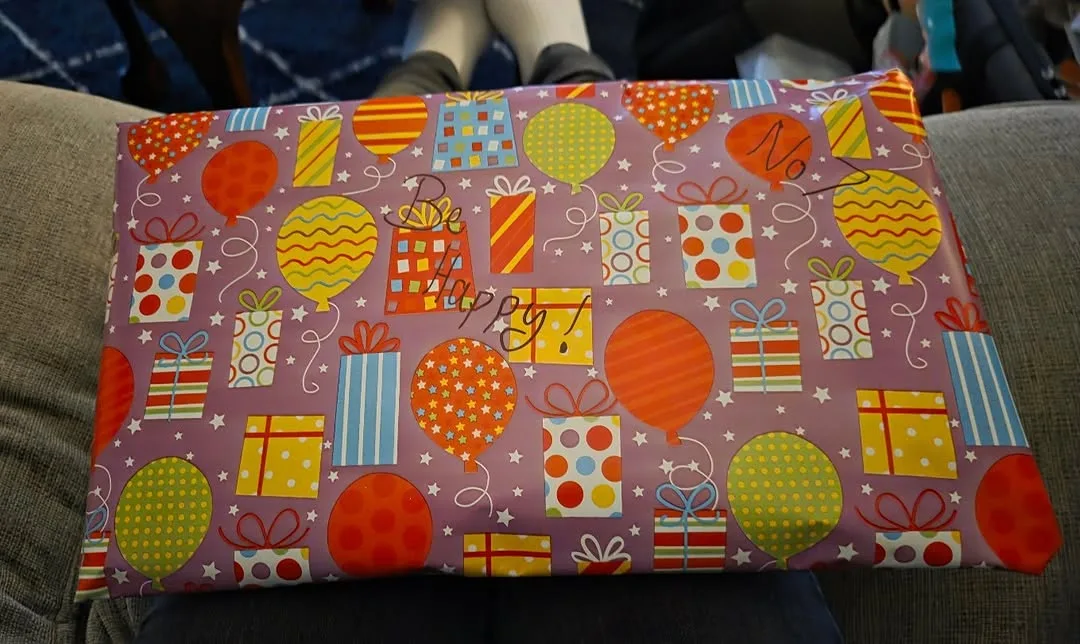
Music plays, a parcel travels hand to hand around a seated circle, and the music stopping decides who unwraps the next layer. Every layer hides a sweet or a silly small task, so nearly everyone wins something during one parcel. Anticipation builds beautifully as the parcel shrinks toward the main prize in the center.
Wrap one small prize in many layers of paper, tucking a sweet or a simple forfeit card between each layer, such as sing one line of a carol or name three reindeer. Use different paper for the final layer so the music controller knows when the game ends. Sit the controller facing away from the circle, stopping the music at fair random moments.
Everyone joins from a chair, including toddlers on laps and grandparents who prefer watching the unwrapping drama unfold nearby. Large groups suit this game well, because one parcel entertains twenty people as easily as eight. Tasks between layers keep non unwrapping players busy laughing instead of waiting in silence.
Spread layers generously so every player lands at least one unwrapping turn, and watch quietly for anyone repeatedly missed by the music. Guide stops gently toward children yet to win when nobody can see the pattern. Keep forfeits kind and quick, never embarrassing, so shy guests open their layer without dread.
Jingle bell shake off
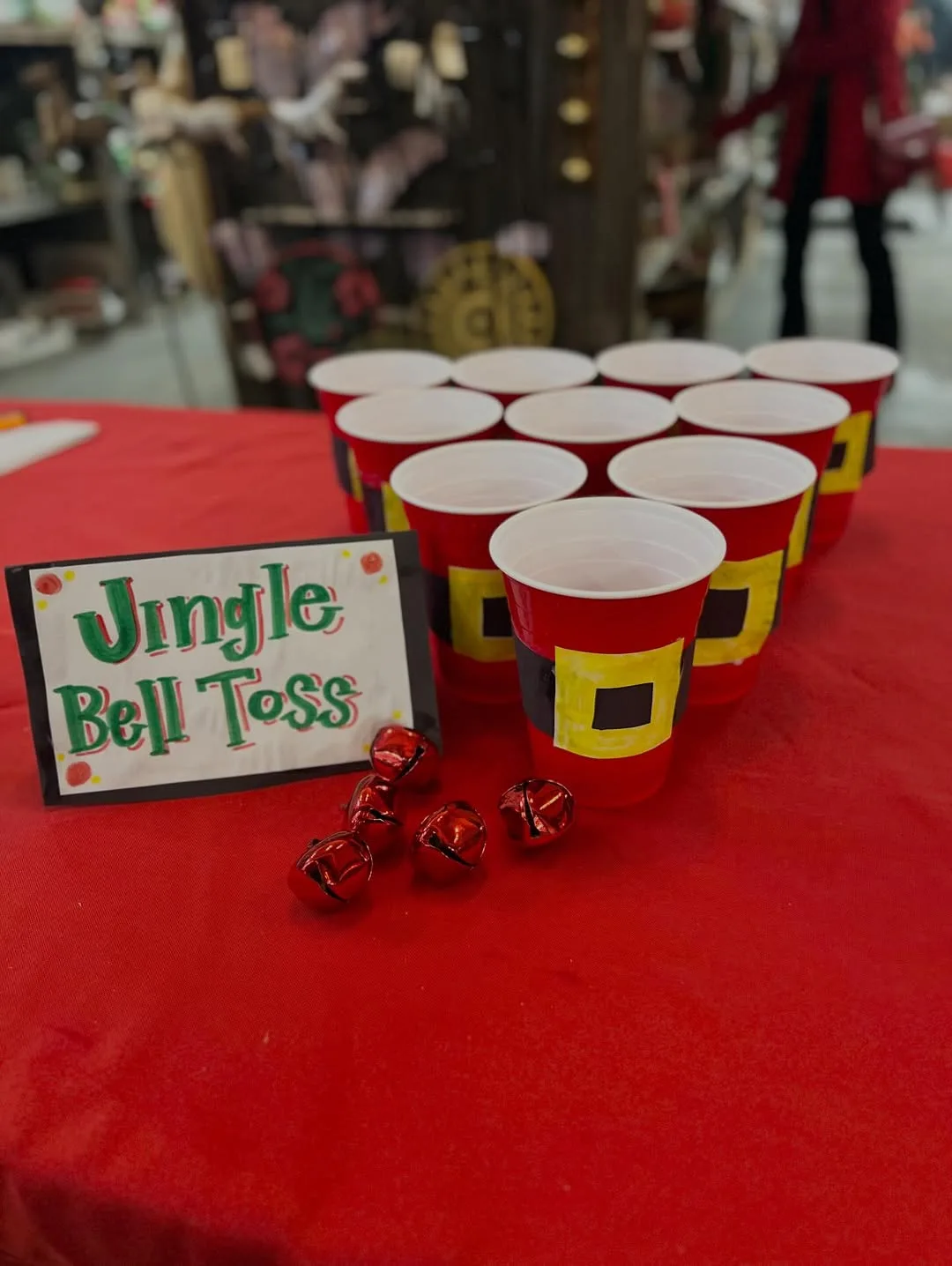
Shaking bells out of a box tied at the waist produces the loudest laughter of most party nights, as players wiggle, jump and twist while bells rain onto the floor. Timers add pressure, and spectators count the remaining bells with great enthusiasm. Energy peaks fast, making this game a perfect finale before dessert or goodbyes.
Tie an empty light box with ribbon or a scarf at the lower back of each player, filled with ten jingle bells and an opening facing upward. Players shake for one minute without using hands on the box, while a partner counts bells as they land. Dry pasta or beans substitute well when bells run short, though the sound loses some sparkle.
Confident performers, teenagers and sporty uncles volunteer first, yet shy players often join once the room roars with encouragement. Small children need fewer bells and no timer, turning the round into pure wiggling joy. Film the finale round if guests agree, because replays keep families laughing long after the party ends.
Clear a generous space before starting, moving low tables, glasses and anything precious well away from energetic hips. Fasten boxes firmly so the contest stays about shaking rather than untying knots mid round. Keep players spaced apart to avoid collisions, and end the game while the room still begs for more.
Common Mistakes to Avoid When Hosting Games
Most christmas party games fail for planning reasons rather than bad ideas, usually because hosts squeeze too many games into too little time. Rounds drag, children grow restless, and adults drift toward the kitchen. Plan four or five games for a full evening, and treat anything extra as a bonus rather than a promise.
Long rule talks drain energy faster than any weak game, because guests learn faster by playing than by listening. Explain the basics in two or three sentences, run one quick practice moment, and answer questions as play unfolds. Keep written rules on the table only for card based games where details genuinely matter.
Prizes cause surprising friction when one confident guest wins everything while children leave empty handed. Spread rewards with categories such as best effort, funniest moment and kindest teammate, and keep prizes small and similar in value. Praise specific moments warmly, because remembered laughter matters more than the prize table by morning.
Forgetting shy or less mobile guests during planning quietly excludes the very people games should gather in. Offer seated roles such as caller, judge, timer keeper and score keeper alongside active rounds. Check the room layout for chairs, clear walkways and space to watch, so everyone holds a real place in the fun.
Budget Friendly Ways to Run a Great Game Night
Nearly all christmas party games in this guide run on supplies already inside the average home, from rolled socks and spare paper to bells taken off decorations. Buying nothing remains a genuine option for most of the list. Spend small amounts only where freshness matters, such as new candy canes or a bag of marshmallows.
Print nothing when hand drawn cards serve just as well, since bingo grids, trivia cards and song lists take minutes to make with plain paper and pens. Borrow a speaker, timer or extra chairs from neighbors rather than buying equipment for one evening. Libraries lend party games and quiz books free, stretching the entertainment shelf even further.
Small prizes keep costs and expectations sensible, with sweets, hot chocolate sachets, first choice of dessert or control of the music playlist all prized by guests. Charity shops sell medals, silly trophies and festive mugs for pennies in December. Wrap prizes in leftover paper so even tiny rewards feel like events when handed over.
Party Game Tips for Hosts
Explain each game in one breath. Short explanations keep energy high and prevent the rule questions that stall a room. Demonstrate the first move yourself, then let play teach the rest. Players copy far better than they listen.
Mix active and seated games. Alternate a lively round with a calm one so energy rises and settles in waves through the evening. Bingo after the relay, trivia after the shake off, and charades anywhere energy dips. Balanced pacing keeps toddlers and grandparents comfortable all night.
Pair adults with children in teams. Mixed teams share skills kindly, with adult patience guiding child enthusiasm toward fair wins. Rotate teams between games so guests mingle beyond their usual corners. Cousins who rarely meet bond quickly over shared victories.
Keep one spare game ready. Energy sometimes outlasts the plan, and one extra simple game saves the host from improvising under pressure. Bingo cards or a bowl of charades slips wait quietly in a drawer. Unused spares cost nothing and store easily for next year.
Set prizes out early. Visible prizes build excitement before the first round begins and remind players what categories exist. Arrange small rewards on one tray near the tree. Guests glance at the tray all evening, and anticipation does half the entertaining.
Finish while energy stays high. Ending one game early beats dragging on until laughter dies and children bicker. Watch faces rather than the clock, and move to dessert on a wave of noise. Guests remember a short joyful ending far longer.
None of these habits costs money, yet together they protect the mood of the whole party from first round to final goodbye. Hosts relax when teams balance themselves, pacing stays gentle, and prizes stay small. Keep the plan loose, keep the people close, and let the best christmas party games end with guests asking to play once more.
FAQ
How many games should we plan for one party?
Three to five games fill a party evening comfortably alongside food, drinks and conversation. Two active games, two seated games and one guessing round give most groups a satisfying mix. Leave space between christmas party games for dessert and chat, because rushed schedules tire children and hosts alike.
What games suit a small living room?
Seated games suit small rooms best, including bingo, trivia cards, charades played from chairs and guess the stocking contents passed around a sofa. Clear one corner for the ornament balance course if space allows slow walking. Move the coffee table against a wall and the room suddenly fits a seated circle of ten.
How do we include shy guests?
Offer roles with real importance, such as caller, judge, score keeper, music controller or prize presenter, so shy guests join without performing. Team games help because nobody acts, races or answers entirely alone. Never pressure a guest into a round, and warm invitations repeated kindly work better than one public push.
What prizes work for children and adults together?
Edible prizes please nearly everyone, from small chocolate coins and candy canes to hot chocolate sachets and homemade biscuits. Experience prizes cost nothing and delight winners, like choosing the next song, picking the film or taking first slice of dessert. Keep values small and similar so prize envy never shadows the fun.
How long should each game last?
Ten to fifteen minutes suits most games on this list, with very active rounds ending sooner while energy stays high. Watch the room rather than the timer, and close a game when laughter peaks instead of when scores settle. Short games let you fit more variety into the evening without exhausting younger players.
Can toddlers join in safely?
Toddlers join best beside an adult partner, holding hands during hunts, sitting on laps for pass the parcel, and throwing soft snowballs from a close line. Skip small parts, hard candy, blindfolds and sharp sticks for the youngest players. Give toddlers their own simple jobs, like carrying the prize tray, and importance keeps them happily involved.
Conclusion
Good christmas party games turn a pleasant gathering into the night every guest talks about on the way home. Laughter travels across generations when rules stay simple, teams stay mixed and prizes stay small. Nobody needs talent, training or a big budget to join the fun properly.
Pick four games tonight, perhaps one active, one seated, one guessing game and one loud finale, and gather every prop into a single box this afternoon. Preparation done early frees you to play alongside your guests instead of managing from the edges. Write scores, winners and funniest moments in a notebook for next December.
May your living room fill with jingling bells, dropped candy canes, collapsing towers and the sound of grandparents laughing as loudly as the children. Parties live in memories long after decorations return to their boxes. Start the first game with confidence, and let the evening carry everyone along.