15 Fun Party Food Ideas for Kids’ Celebrations
Kids do not eat party food the way adults expect. Nobody sits down, nobody waits for everyone else, and nobody saves room for a main course. Children graze. Kids pick up food between games, carry it across the room, eat half of it, trade the rest with a cousin, and come back ten minutes later for something completely different. Hosts who understand grazing serve small portions of many things, and hosts who ignore grazing cook one big dish that comes back to the kitchen almost untouched.
Worried hosts usually fear the wrong problem. Children rarely complain about simple food, but they quietly abandon food they cannot hold, cannot recognize, or cannot eat without a knife, a fork, and a free hand. You need party food ideas for kids that work in small hands, survive a crowded room, and still look like a celebration on the table. Fifteen ideas below meet that test, and every one of them comes from real parties rather than a photo shoot, so the portions, timings, and shortcuts come from experience.
Parents will find serving math inside each idea, because guessing quantities causes most party food stress. You will also find the mistakes that empty a host's budget without filling a single child, honest ways to spend less, and answers to the questions hosts ask every single time. Keep the portions small, keep the choices clear, and let kids build, dip, and carry their food, children eat far more of a meal they helped assemble.
What food do kids actually eat at parties?
Kids eat food they can hold in one hand, recognize at a glance, and finish in three or four bites. Strong party food ideas for kids share four traits: small size, clear ingredients, a dip or topping they control, and no cutlery. Mini pizzas, fruit wands, popcorn, sandwich shapes, and veggie cups disappear at almost every party because children understand them instantly and can carry them back to the game without asking an adult for help.
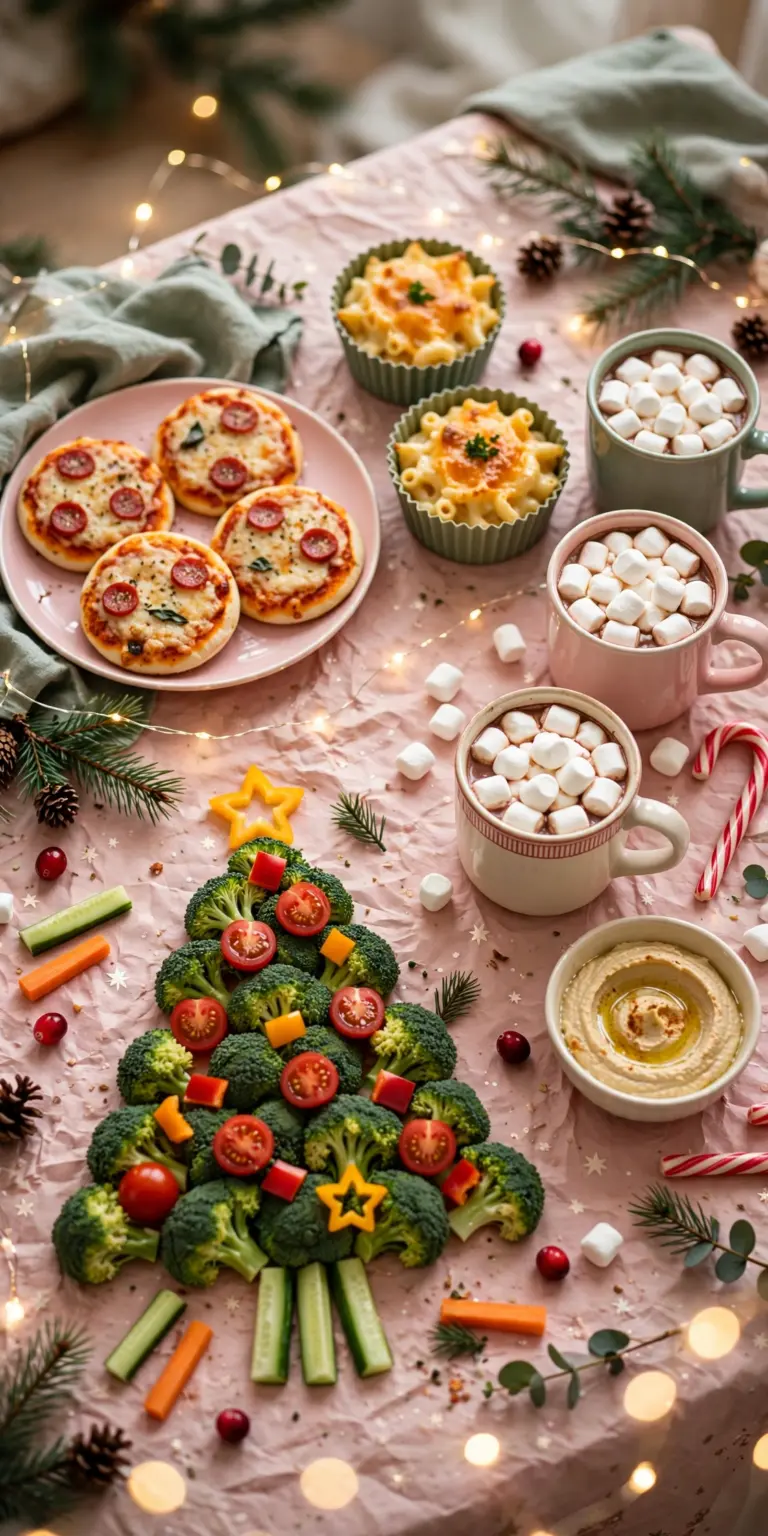
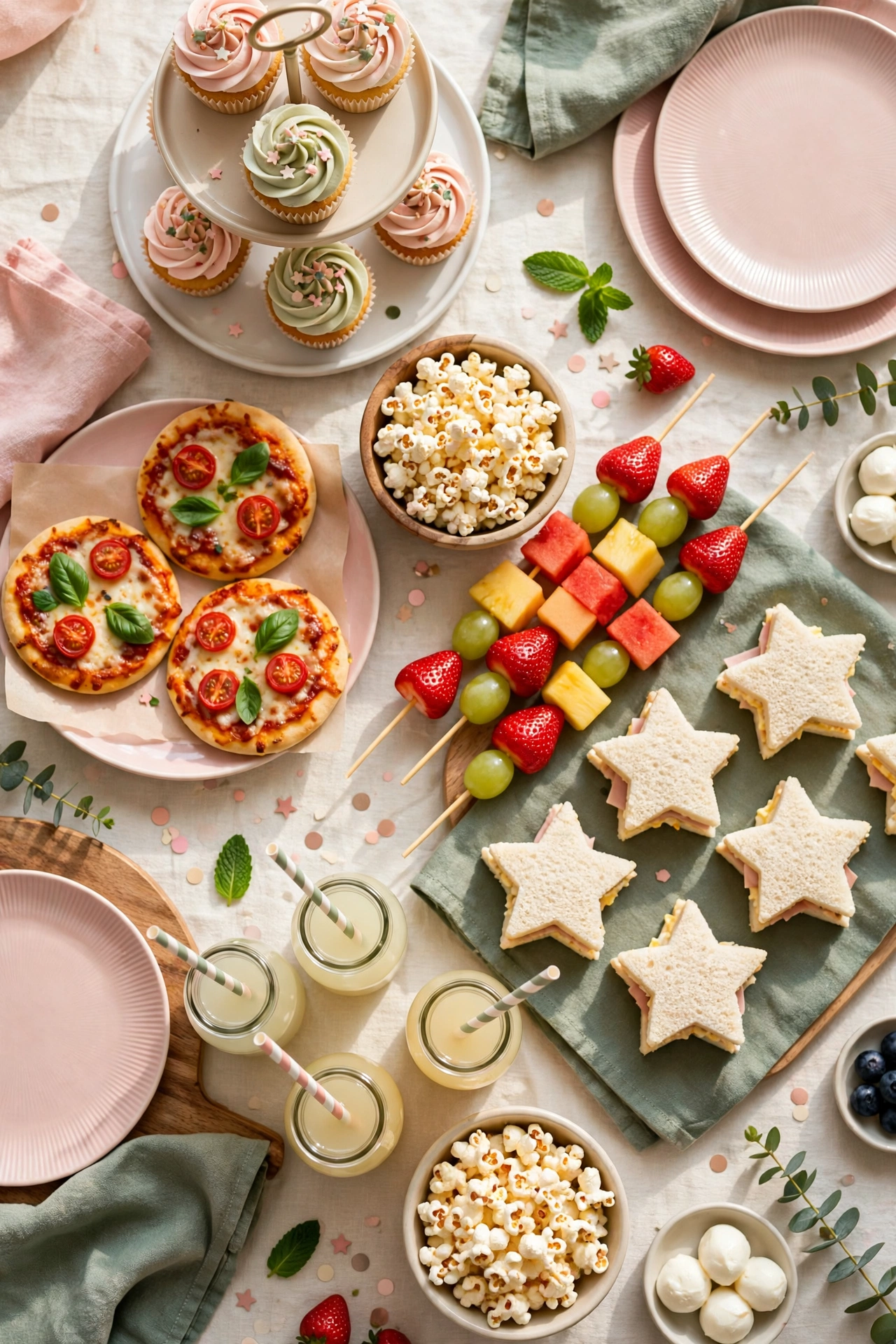
Picture one real table that worked. Hosts served mini pizzas, fruit wands, cheese and cracker stacks, a popcorn bar, and a small sundae station to fourteen children aged four to nine. Kids ate everything except half the veggie cups, hosts spent less than a cooked meal would have cost, and clearing up took eleven minutes because every item came in its own cup, cone, or stick. Simple food, served in grab and go portions, beat every ambitious dish on the table without any contest at all.
Mini Pizzas
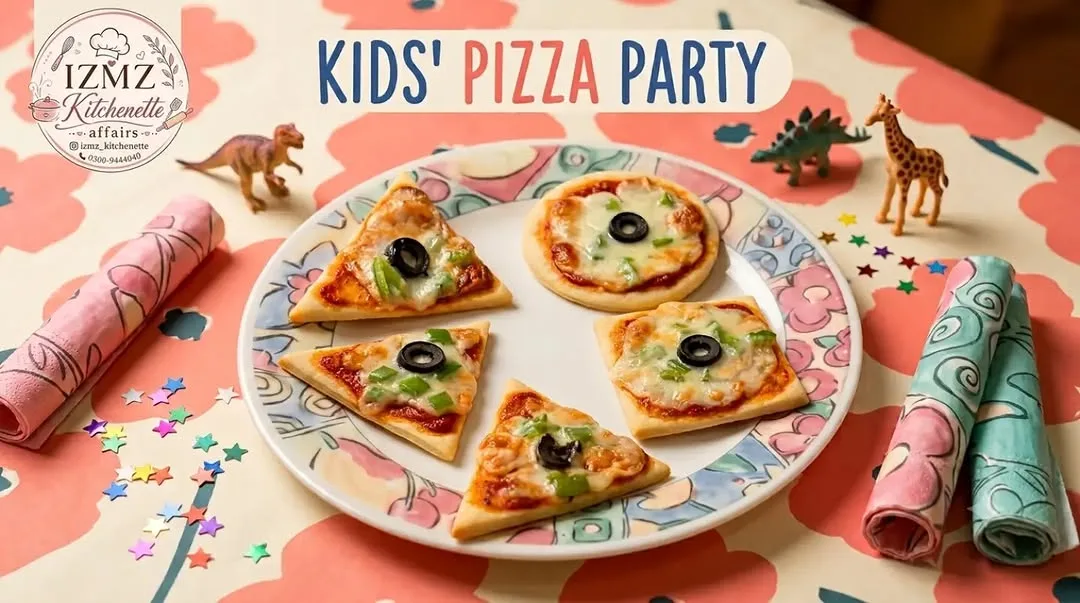
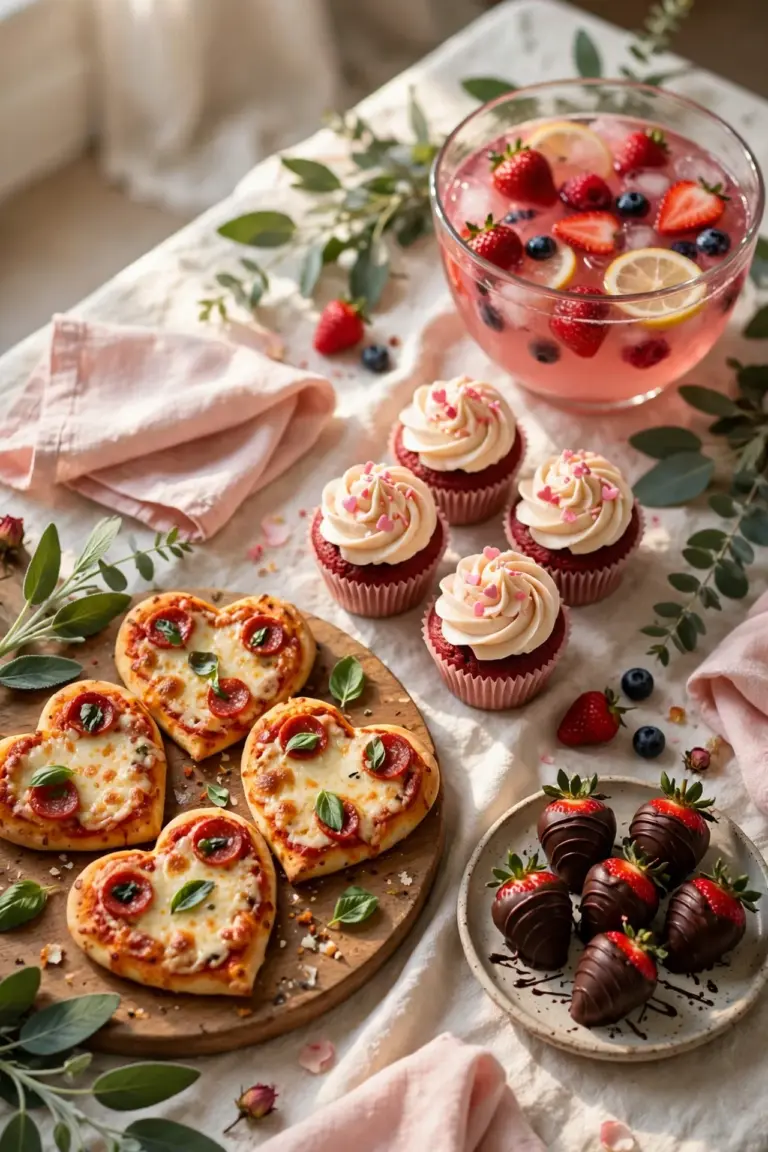
Mini pizzas give every child a personal pizza on a small base, and children eat more of any food that arrives as their own portion. English muffin halves, mini naan, pita rounds, and bagel halves all work as bases, and each base needs only a spoon of sauce, a handful of shredded cheese, and toppings cut small enough to sit flat. Pepperoni, sweetcorn, small pepper pieces, and ham bits cover most tastes, and ten minutes in a moderate oven melts the cheese and crisps the edges.
Hosts can serve mini pizzas two ways, and both work. You can bake a full batch plain before the party and reheat it in waves, or you can let children top their own pizzas at a small decorating station while games run in short rounds. Pizzas that children top themselves take longer but eat better, because no child has ever rejected a pizza they designed themselves. Keep toppings in small bowls with small spoons, and expect the floor under the station to need one quick sweep afterwards.
Greedy topping causes the only real mini pizza failure, since heavy piles slide off the base the moment a child lifts it. Press cheese over the toppings like glue, serve pizzas on napkins instead of plates for a firmer grip, and count two mini pizzas per child plus a spare tray. Budget hosts can swap half the cheese for a cheaper mild melting cheese without any child noticing, because the toppings earn all the attention at a party.
Sandwich Shapes
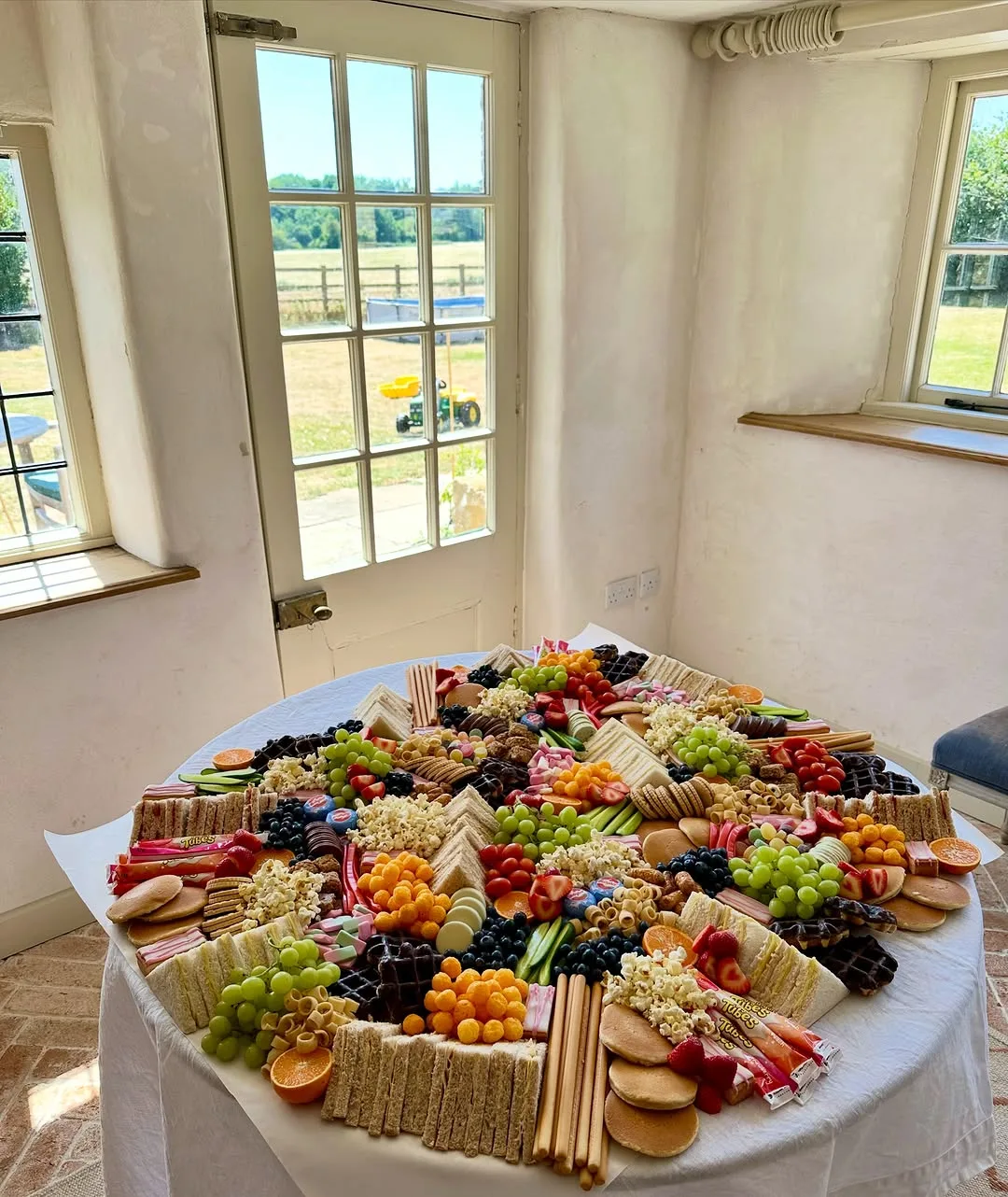
Sandwich shapes use cookie cutters on ordinary sandwiches, and familiar fillings in playful shapes disappear faster than any fancy filling in a plain shape. Stars, hearts, dinosaurs, and moons all cut cleanly from large sandwiches, and children trust the result because they can see exactly what the shape holds. Ham with mild cheese, cream cheese with cucumber, and jam all cut well, while very chunky fillings fight the cutter and tear the bread.
You should cut shapes from the whole sandwich rather than cutting bread first and filling later, because one firm press through a filled sandwich gives clean edges in a single motion. Save every trimming in a bowl instead of binning them, since trimmings become the host's own lunch, crouton material, or a breadcrumb topping later in the week. Shaped sandwiches therefore cost no more than plain ones, and hosts can tell themselves the shapes were free.
Soft bread cuts far better than crusty bread, and cold fillings cut cleaner than warm ones, so assemble sandwiches ahead and chill them for twenty minutes before cutting. Count three shapes per younger child and four per older child, and arrange shapes on a tray in loose rows rather than stacks, because stacked shapes stick together and tear. Keep one small tray of plain triangles for the child who distrusts novelty, since every party includes one, and that child still needs lunch.
Chicken Tenders or Nuggets with a Dip Trio
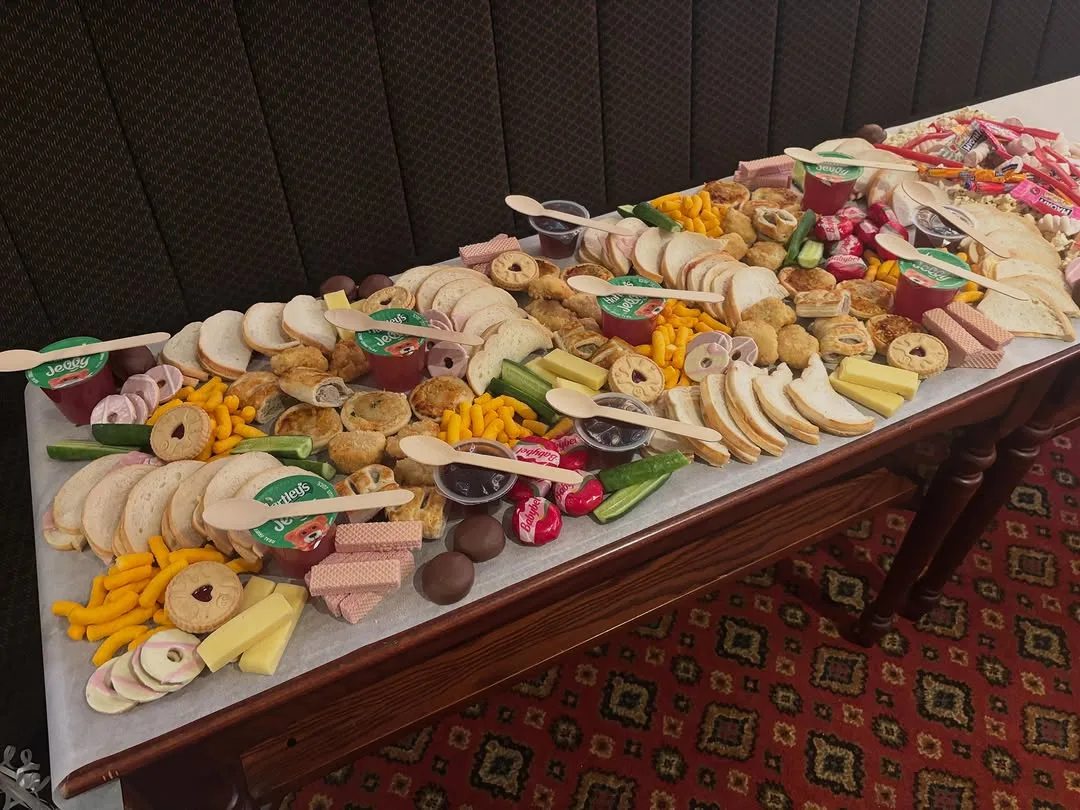
Chicken tenders or nuggets with a dip trio serve warm chicken beside three small bowls of sauce, and kids treat sauce choice like a serious and personal decision. Ketchup, mild barbecue sauce, and honey mustard cover almost every preference in the room, while a plain yogurt based dip rescues children who find all three too strong. Children eat more chicken when they control the dip than when sauce arrives already spread by an adult who guessed wrong.
Frozen tenders and nuggets honestly work fine here, because homemade breading rarely survives a party budget or a party timeline. Bake the chicken until genuinely crisp, rest it for two minutes so the coating sets, and hold finished batches in a low oven while the rest cook. Count five nuggets per younger child and seven per older child, then cook one extra tray anyway, because chicken disappears faster than every other savory food on the table at almost every party.
Hosts should give each sauce its own spoon and place bowls in a row rather than a cluster, which stops the double dipping traffic jam around one crowded bowl. You can announce one gentle house rule out loud, dip once, flip the chicken, dip the clean end, and kids will enforce it on each other with great seriousness. Serve chicken on a tray lined with paper that absorbs steam, and keep the tray away from the sweets so small hands do not carry sugar into the dip bowls.
Mini Hot Dogs and Sliders
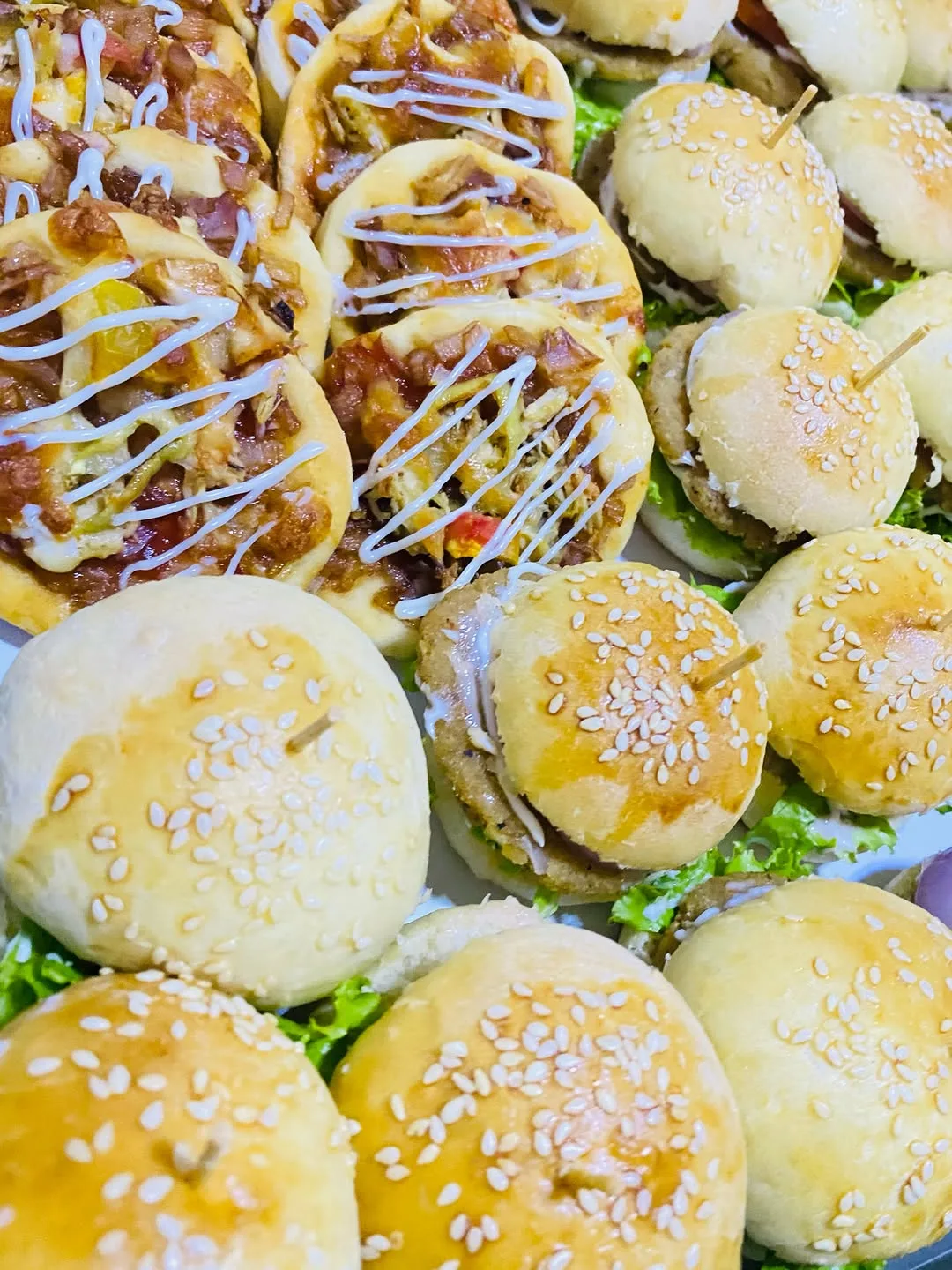
Mini hot dogs and sliders put the two most trusted party foods into child sized hands, and both vanish at a speed hosts consistently underestimate. Small sausages or halved hot dogs tucked into mini rolls need nothing more than ketchup to succeed, while mini burger patties in soft slider buns give older kids a food that feels properly grown up. Warm, salty, and easy to carry, hot dogs and sliders anchor the savory end of the table when fruit and sweets threaten to take over completely.
You can hold both foods warm without drying them out by wrapping finished batches in foil and keeping them in a low oven until each serving wave. Assemble sliders with cheese only, and put pickles, lettuce, and sauces on a small side plate so children build their own, sliders with adult assumptions baked in get dismantled at the table and half of them land on the floor. Small hands also manage mini rolls better than full size buns, which crumble and drop fillings at the first excited bite.
Serve hot dogs and sliders warm rather than hot, because fillings hold heat longer than small mouths expect. Squeeze bottles for ketchup and mustard give kids control without open bowls, and squeeze bottles also protect tables from rings and sticky spills. Count two mini hot dogs or two sliders per younger child and three per older child, and always cook one extra tray, both foods disappear during the walk from the kitchen at a rate no host has ever explained.
Cheese and Cracker Stacks
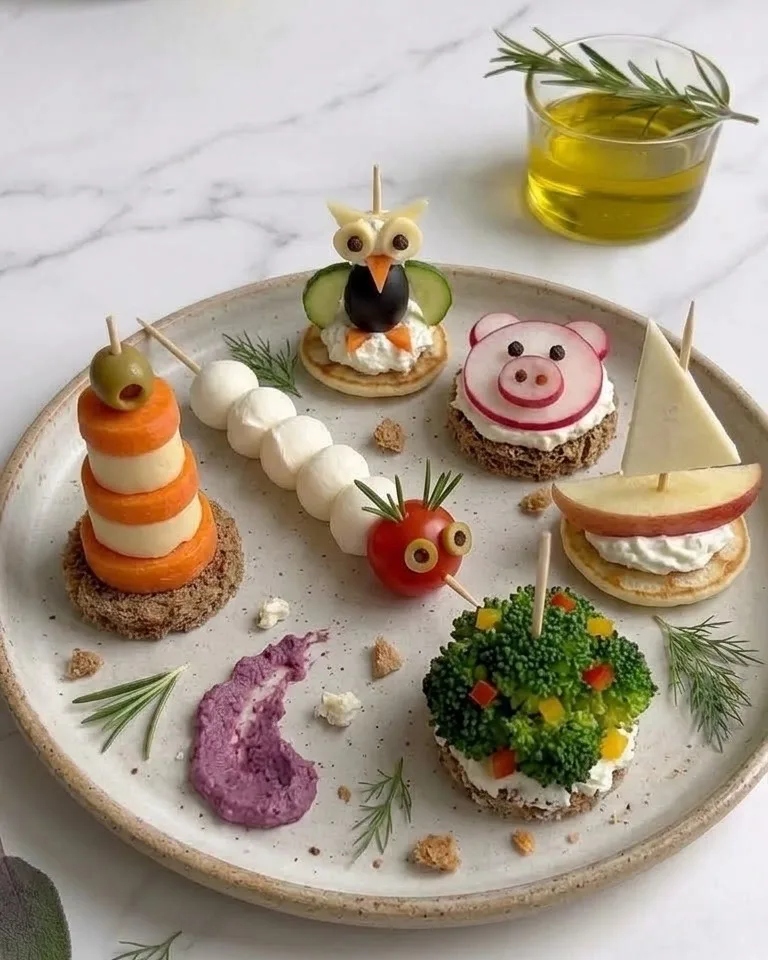
Cheese and cracker stacks layer small cheese pieces, cucumber rounds, cherry tomato halves, and sometimes a slice of sausage onto sturdy crackers, and kids eat them like building blocks they get to demolish. Ready stacked bites suit younger children who cannot manage assembly, while loose components in piles let older kids stack their own combinations. Familiar ingredients do the persuading here, because cheese and crackers might be the two foods children trust most in the entire world.
Hosts should choose crackers with some strength, since thin water crackers snap under cheese and small fingers, and one snapped stack per child quickly becomes twenty annoyed children. Round wholegrain crackers and small rice cakes both hold weight well and cost little. Put stacks together no more than an hour before serving, because crackers absorb moisture from cheese and cucumber and lose their crunch quietly in the fridge if you build them the night before.
Counting stays easy with stacks: four per younger child and six per older child covers most appetites when other food surrounds them. Arrange stacks on a flat board in a single layer so every child can see and reach them, and keep one corner of the board plain, crackers and cheese only, for cautious eaters. Cheese trimmings from any shaped cutting earlier in the day melt into a family pasta bake later, so the board effectively costs the price of the crackers alone.
Veggie Cups with Dip in the Bottom
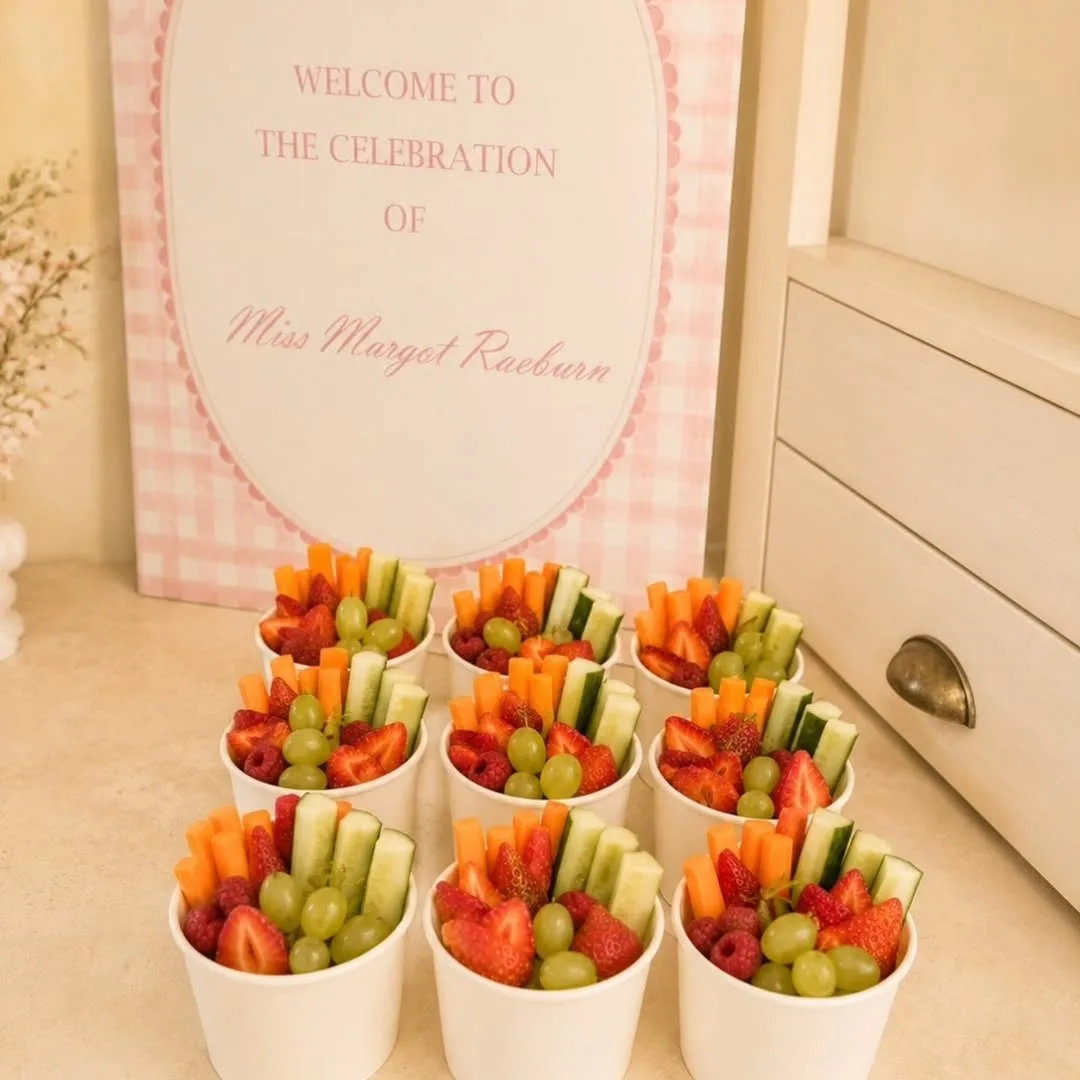
Veggie cups with dip in the bottom place a spoon of dip at the base of a clear cup and stand carrot, cucumber, pepper, and celery sticks upright inside, so every child carries a personal portion instead of hovering over a shared platter. Parents often doubt vegetables at a party, yet crunchy sticks with dip rank among the smartest party food ideas for kids who like control, because dipping turns eating into an action and the cup makes the portion feel like theirs alone.
Clear cups matter more than hosts expect. Kids choose with their eyes first, and visible layers of orange, green, red, and yellow look like a treat rather than a duty. Ranch style dip and hummus both hold up well at room temperature for the length of a party, and you can spoon dip neatly so cups look tidy rather than splashed. Fill cups only two thirds full, because overfilled cups tip during the walk back to the chairs and take four sticks down with them.
Practical hosts put veggie cups near the start of the table, where children arrive hungry and grab the first thing they see. Hungry kids eat a surprising amount of vegetables in the first ten minutes, while vegetables placed late on the table must compete with every sweet thing in the room. Put out twelve cups for fifteen children, refill once if they vanish, and accept a few leftovers calmly, cups cost pennies each, and one child discovering a love of peppers makes the small waste worthwhile.
Pasta Salad Cups or Mini Mac Pots
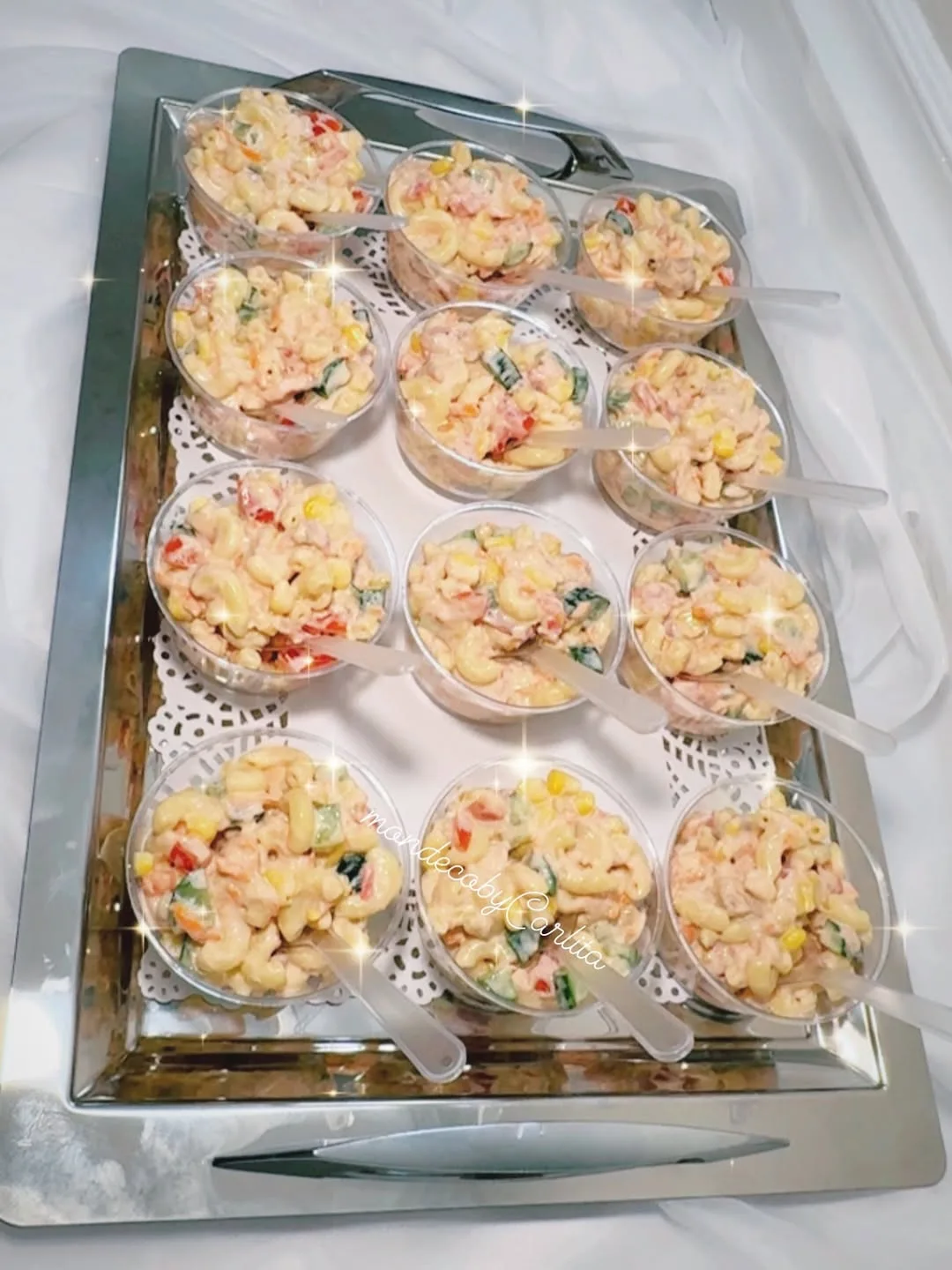
Pasta salad cups or mini mac pots spoon pasta into individual cups, and kids eat more of it than hosts predict in both versions. Short shapes like fusilli hold dressing in their spirals, sweetcorn and peas add color children accept, and small cubes of cheese make a cup feel like a meal rather than a side dish. Mini macaroni cheese pots suit cooler months and hungrier crowds, served warm in small heatproof cups with a fork each.
Dressing choice decides whether cold cups succeed or fail. Mayo based dressings split in warm rooms, so hosts serving outdoors should choose a light oil and lemon dressing or a yogurt based one that stays stable for hours. Dress pasta while it stays slightly warm so the spirals absorb flavor, then chill the salad properly and fill cups on party morning. Cook pasta one minute less than the packet says, because dressed pasta softens as it sits and packet timing produces mush by party time.
Portion math stays simple with cups: one small cup per younger child, one larger cup or two small ones per older child, plus two spare cups for the adult who always appears. Keep cold cups on a tray over ice packs at outdoor parties, and warm mac pots in a low oven in waves rather than all at once. Hosts who skip individual cups and use one big bowl will spend the party mediating serving spoon disputes that small cups prevent entirely, and cups also wash faster than one sticky shared bowl.
Fruit Wands
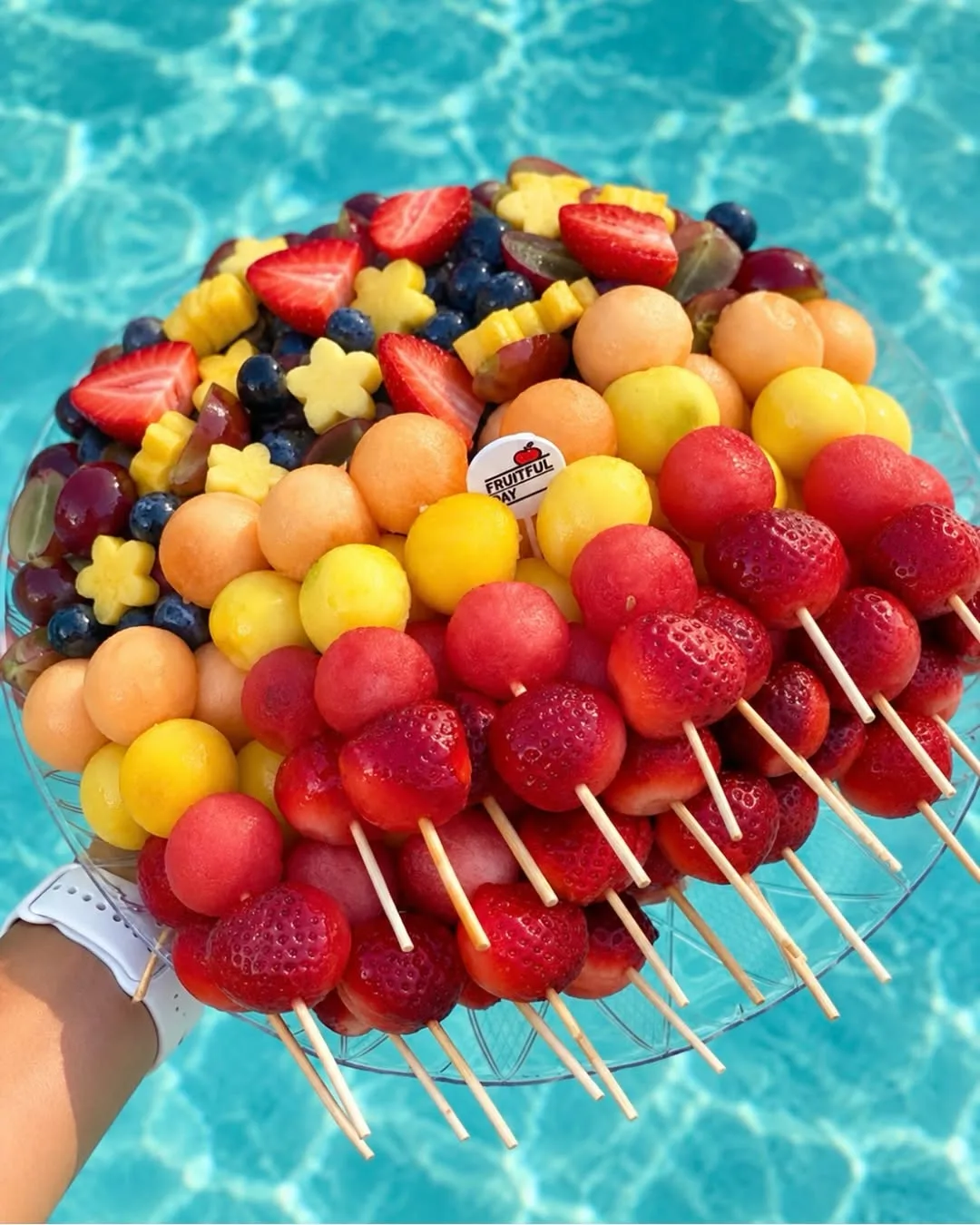
Fruit wands thread chunks of melon, grapes, strawberries, pineapple, and kiwi onto short sticks, often with a star or a marshmallow at the top, and kids treat them like magic they can eat. Bright colors do the persuading here. Children who refuse a bowl of fruit salad will eat two full wands because picking pieces off a stick feels like a game, and the stick keeps hands clean while kids move around the room between activities.
Hosts should cut fruit into pieces roughly the size of a large grape, because oversized chunks slide off and land on carpets. Short six inch sticks suit small hands far better than long barbecue skewers, and blunt ended sticks or sturdy paper straws remove the sharp point worry for younger children. Count two wands per child under seven and three per child for older kids, who eat fruit surprisingly fast when nobody at the table calls it the healthy option.
Grown ups sometimes stand wands upright in a melon half or a jar of dried beans, and both displays keep the table tidy and the fruit off the cloth. You can prepare wands three or four hours ahead, cover them with a damp paper towel inside a sealed container, and keep them cold until serving time. Hosts who skip wands because they expect waste usually discover the opposite when clearing up: fruit on sticks clears faster than fruit served any other way.
Cupcakes over a Big Cake (or Both)
Cupcakes solve the three problems a big birthday cake creates: cutting time, uneven slices, and frosting covered hands queuing while the party stalls. Every child receives an identical looking cupcake at the same moment, nobody argues about corner pieces, and hosts skip the knife work entirely. You can still keep one small round cake for the candles and the photograph, which gives the birthday child a proper blowing out moment while cupcakes handle the actual feeding of the crowd.
Home bakers can bake cupcakes two days ahead and frost them on party morning, because unfrosted cupcakes keep well in a sealed box and even freeze for a month. Box mixes honestly perform fine under good frosting, and children judge cupcakes by frosting height and sprinkles rather than crumb quality. One standard batch of twelve covers a small party, and hosts should bake six extra because cupcakes double as take home gifts in paper bags at the door when the table clears early.
Frosting color causes more delight per penny than any other party purchase. Two colors of frosting across the batch, plus one shared bowl of sprinkles kids apply themselves, turns plain cupcakes into the most photographed item on the table. Keep frosting shallow on cupcakes meant for children under five, though, deep frosting mostly ends up on faces, sleeves, and the one pale sofa, while the cake under it stays uneaten.
Popcorn Bar
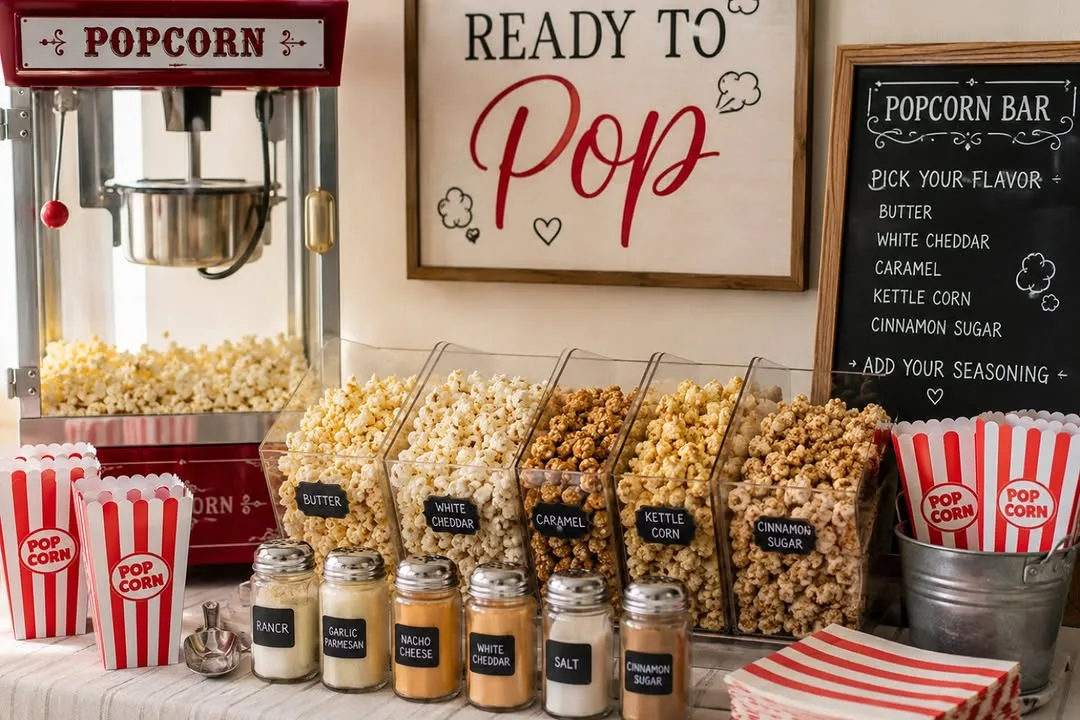
Popcorn bars serve big bowls of warm popcorn beside small shakers and scoops, and kids treat seasoning their own portion like a fairground prize. Popcorn costs very little, cooks in minutes, and fills a table with generous looking volume even on a tight budget. Paper cones or small cups keep portions portable, and hosts can roll cones from plain paper, wrapping paper offcuts, or brown baking paper and stand them upright in a crate packed with tissue paper.
Seasoning decides whether popcorn gets eaten or merely admired. Salt alone always works, while a light cheese powder and a cinnamon sugar shaker give older kids a second flavor to debate happily. Serve small cones of about two cups each, because giant cones mostly spill, and small cones let children return for refills, and refills make kids feel the table is endless, which matters more to them than portion size ever will. Keep one completely plain batch aside for the youngest guests and anyone avoiding salt.
Plain popcorn also beats sticky caramel popcorn when you clear up, since plain kernels brush off carpets and sweep up in seconds. Keep a small dustpan near the table, tip spilled kernels into it during the party, and nobody will find popcorn in the corners three weeks later. Hosts should keep popcorn away from children under four, because whole kernels can choke small children, and soft puffs or small crackers make a safer swap for the youngest guests.
Ice Cream Sundae Station
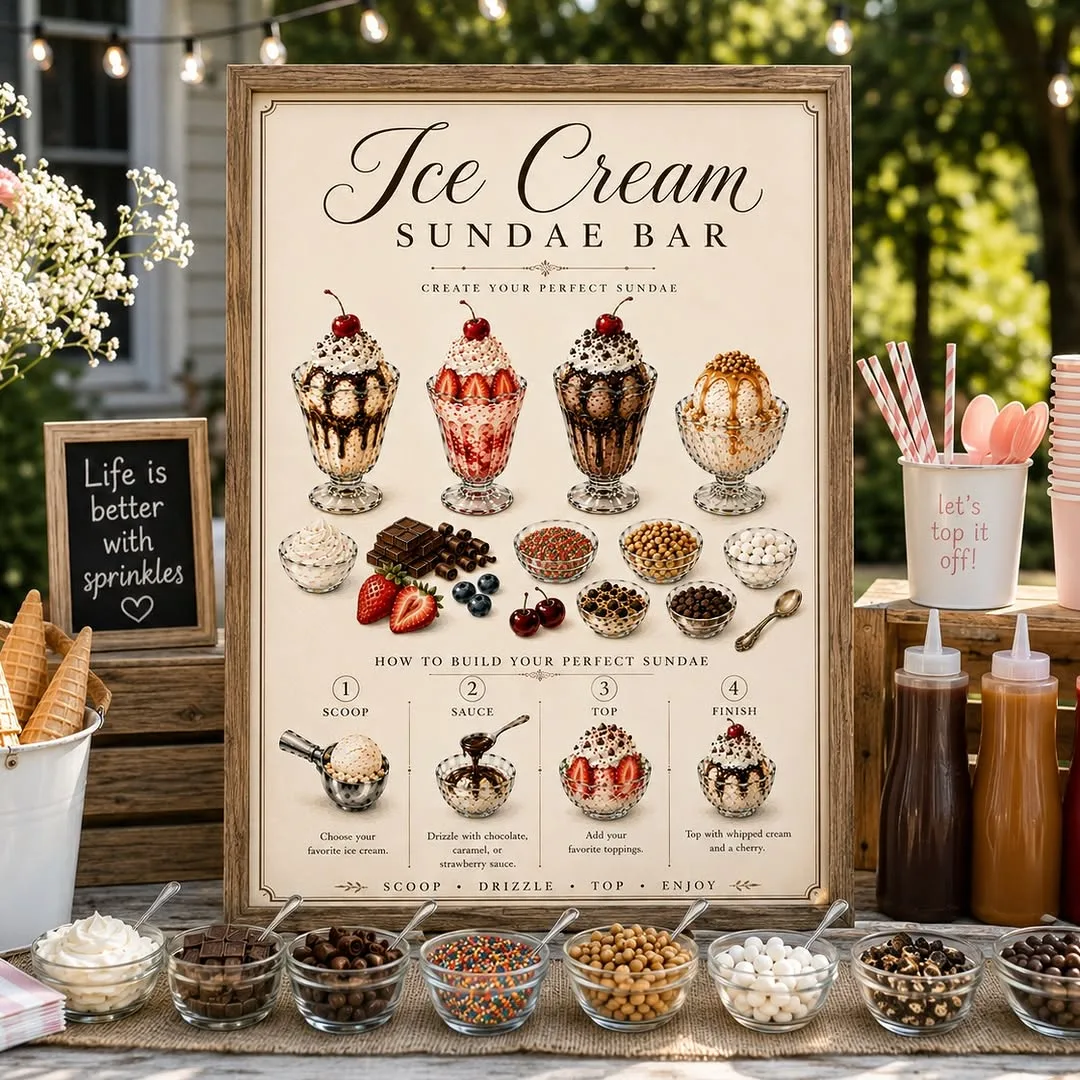
Ice cream sundae stations hand children a small scoop, a line of toppings, and full creative control, and kids remember sundae stations long after they forget the games. Vanilla ice cream plus one backup flavor covers almost everyone, while toppings carry the excitement: sprinkles, crushed biscuits, berries, chocolate sauce, mini marshmallows, and chopped banana all cost little and look abundant in small bowls. Among all the party food ideas for kids in this guide, sundae stations create the most joy per spoon, because every child builds a different dessert and defends the design proudly.
Drips cause the only real sundae station problem, and hosts control drips with three habits. Lay a cheap plastic cloth under the serving table, choose sauces in squeeze bottles, and serve sundaes in cups wide enough to catch errors. Put the station on a hard floor rather than carpet whenever the room allows it, and stand a roll of paper towels openly at the end of the line so kids clean their own small spills without shame or fuss.
You should scoop ice cream into cups ahead of time and hold the cups in the freezer on a tray, which turns serving into a half minute handoff instead of a wrestling match with a frozen tub. Give each child one cup, one spoon, and one pass along the toppings; seconds can follow once everyone has eaten. Keep scoops small on purpose, since children care about toppings far more than ice cream volume, and leftover scooped ahead cups refreeze happily for family sundaes later in the week.
Chocolate Dipped Marshmallows and Pretzel Rods
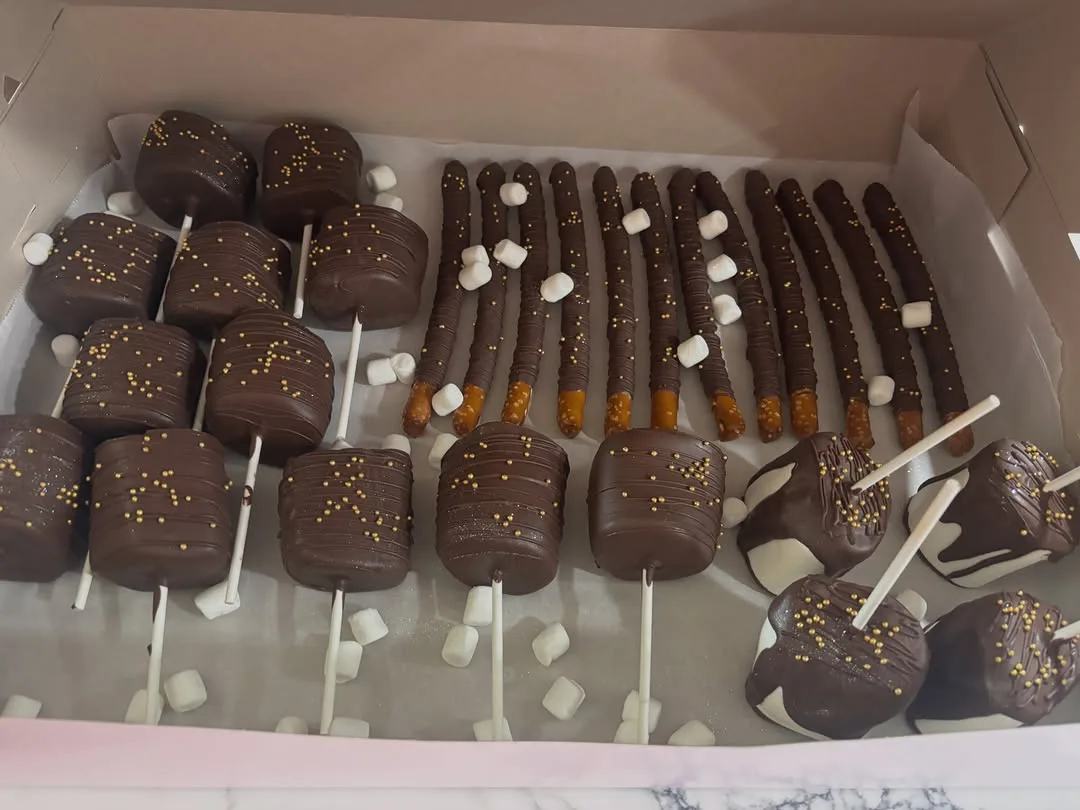
Chocolate dipped marshmallows and pretzel rods give kids a sweet on a stick that looks like a shop display and takes one bowl of melted chocolate to produce. Marshmallows on short sticks dip cleanly and set fast, while pretzel rods offer a salty crunch that older children strongly prefer. Roll both in sprinkles, crushed biscuits, or chopped nuts before the chocolate sets, keeping one nut free batch clearly separate, and every tray looks like a sweet shop window without any baking at all.
Melting chocolate in short bursts and stirring between them keeps the bowl smooth, because overheated chocolate turns grainy and refuses to coat properly. Dip each marshmallow two thirds deep rather than fully, since a clean white top shows the contrast and gives small fingers a dry place to hold. Set dipped items on baking paper, chill the tray for fifteen minutes, and stand finished rods upright in a jar so the coatings never touch and smudge.
Hosts can make dipped treats the day before the party and store them in a sealed box in a cool room, which frees party day completely. Count three pieces per child across both kinds, and put out only part of the batch at first so later waves still look fresh. One warning earns its place here: melted chocolate finds tablecloths and pale clothes with real determination, so paper liners under the serving plate and a strict no waving rule protect the room without spoiling anyone's fun.
A Lemonade or Juice Station with a Big Dispenser
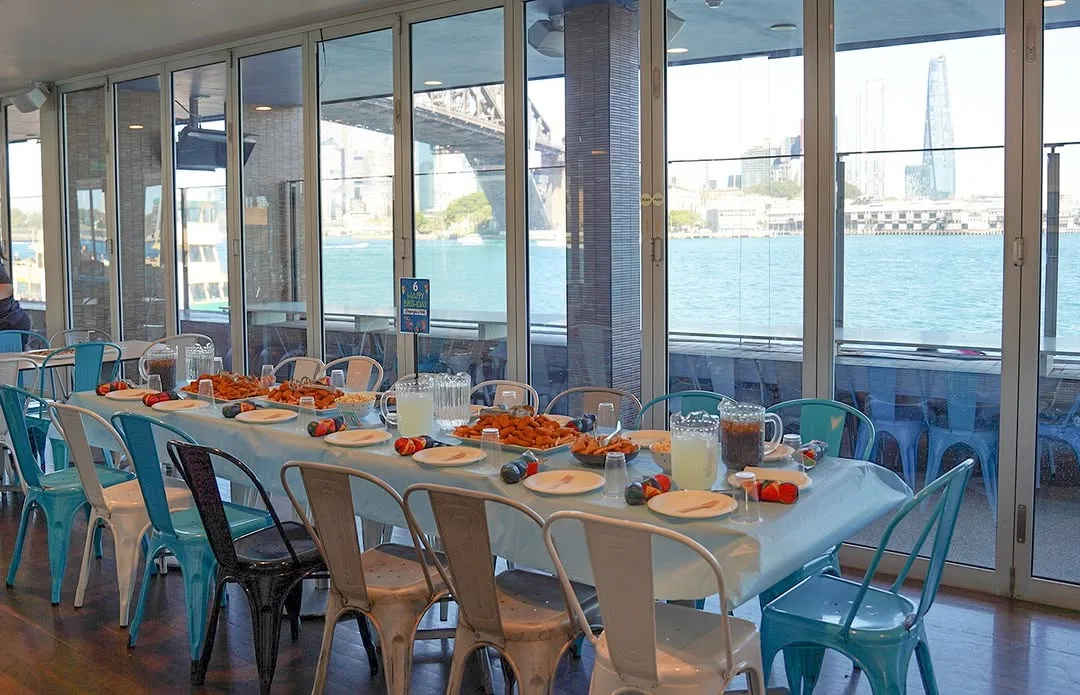
Drink stations built around one big dispenser of lemonade or juice cut costs, cut queues, and cut spills compared with individual cartons scattered across a table. Kids love serving themselves from a tap, and a dispenser makes simple drinks feel like an event rather than a compromise. Pale lemonade also protects clothes and carpets, since pale drinks leave almost no stain when, not if, a cup tips over near the games.
You should place the dispenser on a hard floor or over a plastic cloth, with cups stacked beside it and a small towel living permanently underneath the tap, because every dispenser drips a little and every child tests the tap twice. Fill the dispenser three quarters full so small arms can manage the tap without sloshing, and keep a jug of plain water with fruit slices as the second option. One dispenser of lemonade plus water covers a whole party for most hosts, and refills take one minute with a ready mixed jug waiting in the fridge.
Labels turn a drink station from furniture into a feature: a card in the birthday child's handwriting naming the lemonade gives kids a story to read while they pour. Hosts should skip red and purple juices entirely, because those two colors cause nearly all permanent drink stains on light carpets and party outfits alike.
Milk Bottles or Mini Drink Cartons with Paper Straws
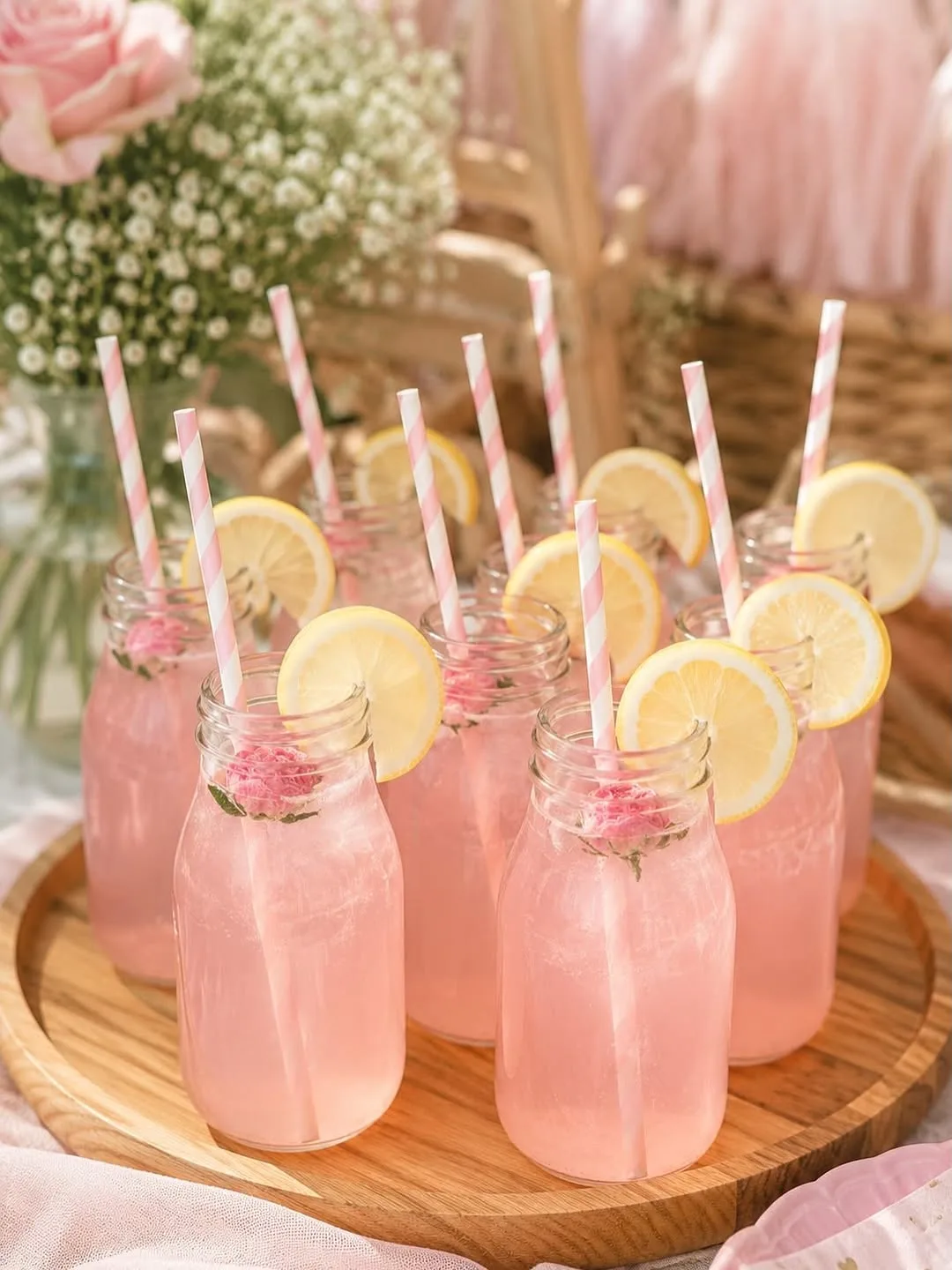
Milk bottles or mini drink cartons with paper straws give every child a sealed, personal drink that nobody can knock into the food. Small glass look bottles feel special at the table and photograph beautifully, while cartons suit outdoor parties and younger children who squeeze bottles mid drink. Chocolate milk, strawberry milk, and plain milk cover most preferences, and one small carton per child keeps sugar lower than an endless juice tap for hosts who care about the crash afterwards.
Paper straws add color for pennies, but hosts should buy the sturdy kind and keep spares dry in a jar, because cheap straws collapse halfway through the party and produce twenty small complaints at once. Serve milk cold from a tray over ice at outdoor parties, and retire unopened warm cartons after two hours rather than returning them to the fridge for another day. Bottles need a crate or tray with dividers for transport, since loose bottles in a car boot will teach you about milk and upholstery in one short trip.
Counts stay simple: one bottle or carton per child, plus a quarter extra for spills and second helpings, works for almost every party size. Put drinks at the end of the food table rather than the start, so children load their hands with food first and collect a drink last, which halves the classic dropped everything moment at the table edge. Hosts who chill bottles overnight can skip ice entirely indoors, and cold glass in small hands feels like a café treat rather than a party compromise.
Themed Food Labels
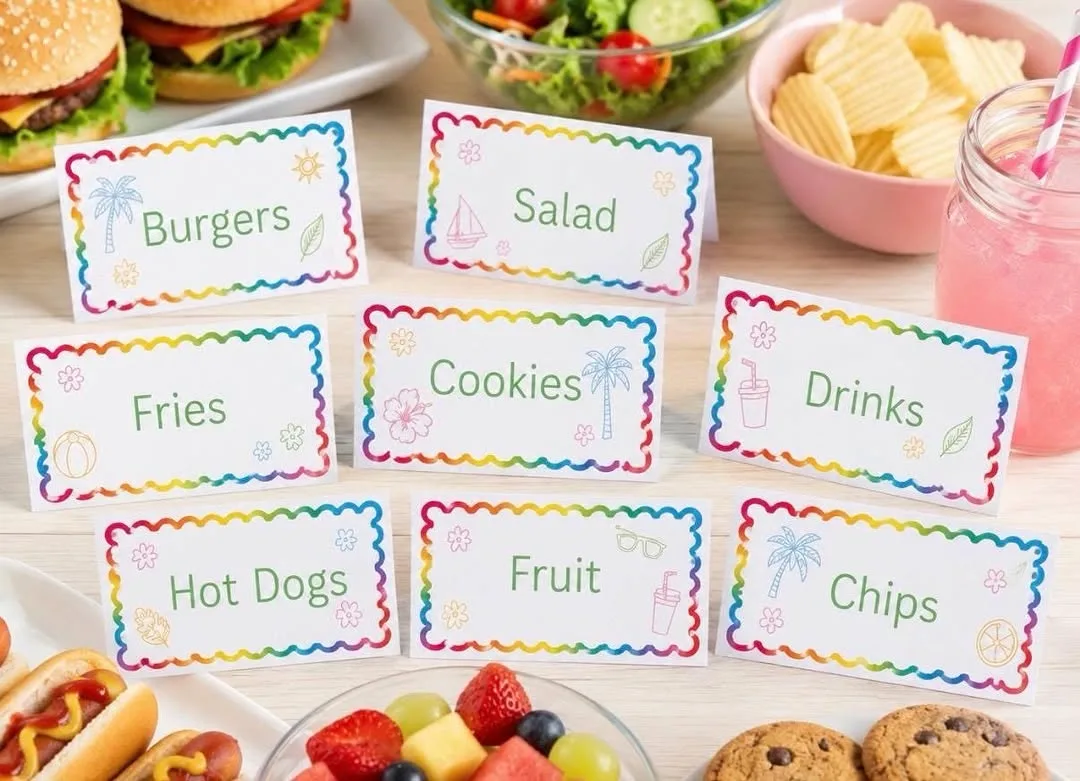
Themed food labels rename ordinary dishes to match the party, dinosaur nuggets, pirate popcorn, superhero sandwiches, and kids eat renamed food with an enthusiasm plain food never earns. Card tents, small chalkboards, and flags on sticks all work, and the birthday child can write or decorate the labels as part of the celebration. Labels cost almost nothing, take fifteen minutes at the kitchen table, and quietly perform a second job: they tell parents exactly what each dish contains.
Hosts should write labels in plain words under the fun name, "Dino Nuggets (chicken)", because allergy information matters more than the joke, and parents scan tables for exactly that line. Place labels before the food goes out, since labeling a full table with guests arriving means knocking a cup with your elbow at least once. Bold marker on folded card stands up best; printed labels look neater but curl in steam from warm dishes, so keep printers for cold tables only.
You can match label art to the theme with one shared color or one simple drawing repeated across every card, and repetition makes a budget table look designed. Keep a few blank cards and the marker in a drawer near the table, because one dish always changes at the last minute and an unlabeled dish draws more questions than any other item. Save the finished labels in the party box afterwards, themes repeat across siblings and years, and last year's pirate cards will sail again.
Common Mistakes to Avoid When Feeding Party Kids
Most failed party food ideas for kids fail for the same four reasons: portions grew too big, food needed cutlery, hosts served everything at once, or the menu ignored the one shy eater in the corner. Big portions waste money and intimidate small appetites, so serve half of what your instinct suggests and refill proudly instead. Refills signal abundance to children, while giant first portions mostly signal the bin. Keep every item liftable with fingers or a short stick, and you remove the queue of children asking adults to cut, pour, and carry for them.
Serving everything in the first ten minutes empties the table before latecomers arrive and leaves nothing fresh for the second half of the party. Hold back one tray of each main item, bring food out in waves, and tell another adult the plan so nobody helpfully puts everything out at once. Wave serving also keeps hot food hot and cold food cold without any special equipment, which quietly solves half of all party food safety worries in one move.
Mess causes the third classic failure, and hosts control it more than they think. Dark drinks, loose sauces, and sticky toppings find party clothes and pale furniture with unerring aim, so choose clear or pale drinks, squeeze bottles over open bowls, and cups over plates wherever the room has carpet. Finally, always include one completely plain option, plain nuggets, plain pasta, plain breadsticks, because every group contains a child who eats narrowly, and a fed shy child enjoys the party instead of enduring it.
Budget Friendly Ways to Feed a Crowd of Kids
You can serve generous party food ideas for kids on a small budget by spending on presentation and saving on ingredients, because children honestly cannot tell premium from ordinary when food arrives shaped like a star. Popcorn, watermelon, pasta, lemonade, and cupcakes cost very little per child, while cheese, chicken, and ice cream carry most of the bill. Build the table around three cheap anchors, add two mid price favorites, and finish with one treat, and the spread will look abundant at roughly half the cost of an all treat table.
Home brands and frozen ranges lower the bill further without lowering the fun. Frozen nuggets, frozen tenders, and supermarket ice cream all pass the child test easily, and savings there fund the items where quality shows, like soft rolls that do not crumble and chocolate that actually tastes like chocolate. Buying one large watermelon instead of three fruit punnets, and mixing one big dispenser of lemonade instead of thirty cartons, cuts both cost and packaging in the same decision.
Drinks quietly eat party budgets, so handle them with a plan. One dispenser of lemonade with cups costs a fraction of individual juice boxes for twenty children, and a second jug of plain water with fruit slices keeps everyone hydrated without a single complaint from the under ten crowd. Hosts can also ask one trusted family member to bring ice and drinks as their contribution, which families gladly do, and the saved money covers the cake and the candles properly.
Party Food Tips That Save Time and Mess
Serve in cups, cones, and on sticks. Portable portions stop spills, end plate balancing, and let kids keep playing while they eat, which is the entire goal of party food.
Protect the floor before you protect the table. Cheap plastic cloths under serving tables catch the drips that ruin carpets and cause frantic scrubbing after the party, while table covers alone only guard the surface nobody walks on.
Choose pale drinks and squeeze bottle sauces. Clear lemonade and pale squash leave almost no stain on carpets or party clothes, and pale drinks forgive the spills that dark drinks turn into permanent marks.
Set the table in grab order. Place cups and napkins first, then savory food, then fruit, then sweets at the far end, because children fill hands in the order they meet food and arrive at the cake with room left.
Label food with small cards. Simple labels naming each dish and flagging nuts or dairy help parents relax, help shy kids choose without asking, and save hosts from answering the same question fourteen times during the party.
Keep one adult off hosting duty for fifteen minutes. Somebody needs to watch the table, refill waves, and notice the empty dip bowl, and rotating that job keeps every adult at the party instead of in the kitchen.
Every tip above serves one goal: food that children can reach, carry, and finish without adult rescue. Plan the table around party food ideas for kids that work in real rooms, with real floors, and real children dropping real crumbs, and the food will behave from the first guest to the last cupcake.
FAQ
How many different foods should I serve at a kids' party?
You need fewer party food ideas for kids than you fear: five or six items cover a two hour party well, with two savory anchors, one or two fruit or vegetable options, popcorn or a similar filler, and one sweet finish. Children prefer repeating a favorite over sampling ten strangers, and a shorter menu keeps costs, waste, and host stress under control. Add one extra item only for parties longer than two hours or parties that replace a full meal.
How much food do I need per child?
Young children aged three to six eat roughly five to seven small items across a whole party, while children aged seven to ten eat eight to ten, especially at parties that span a mealtime. Count portions per child for each anchor food, halve your instinct on sweets, and keep one frozen backup, nuggets or mini pizzas, that you can cook in twelve minutes if the table empties early. Leftovers shrink dramatically when you serve in waves.
What party food suits children with allergies?
Fruit wands, popcorn, veggie cups with a safe dip, and plain grilled items suit most allergy lists, and hosts should ask parents directly before the party rather than guessing. Keep safe food on a separate tray with its own serving tools, label it clearly, and place it where small hands from the main table cannot swap pieces into it. Most parents of allergic children will gladly confirm a menu in one short message, and asking early is kindness, not fuss.
Can I prepare party food the day before?
You can prepare most party food ideas for kids a day ahead: cupcakes bake and wait for frosting, dipped marshmallows and pretzel rods keep in a sealed box, pasta salad chills happily overnight, and sandwich fillings sit ready for morning cutting. Save fruit wands, popcorn, and shaped sandwiches for party day, since those lose freshness and crunch fastest. Hosts who prep the day before spend the party at the party, which is the entire point of a good plan.
What drinks work best for kids' parties?
Water with fruit slices, pale lemonade from a dispenser, and small milk cartons cover nearly every child and protect clothes and carpets at the same time. Serve drinks in cups with lids or in small bottles for younger children, and place the drinks at the end of the table away from the games area so spills happen on hard floors. One juice option is plenty; children drink for thirst at parties, not for variety, and hosts overspend on drinks more than on any food.
How do I keep food safe at an outdoor party?
Cold food needs ice packs under trays and shade over the table, and hosts should retire perishable items after two hours in warm weather, or one hour on a very hot day. Serve in small waves from a cool box instead of laying everything out at noon, and keep covers or mesh tents over dishes to guard against insects. Hot food travels best in insulated bags and should arrive at the table genuinely hot, not warm from a long wait.
Conclusion
Good party food ideas for kids do one job: they let children eat happily without stopping the party. Small portions, familiar flavors, food on sticks and in cups, and sauces under the child's own control will beat an ambitious cooked menu at almost every celebration you host. Start with five or six ideas from this list, serve them in waves, keep one plain option for the cautious eater, and protect the floor before you protect anything else.
Hosts do not need a bigger budget or better cooking skills to feed a room of children well. You need a short menu, honest portions, cheap anchors dressed up nicely, and a plan for spills that assumes children will be children in any room at all. Write your menu down, prep what you can the day before, and leave the rest to the kids, children bring the appetite and the noise, and your simple table will handle both beautifully.