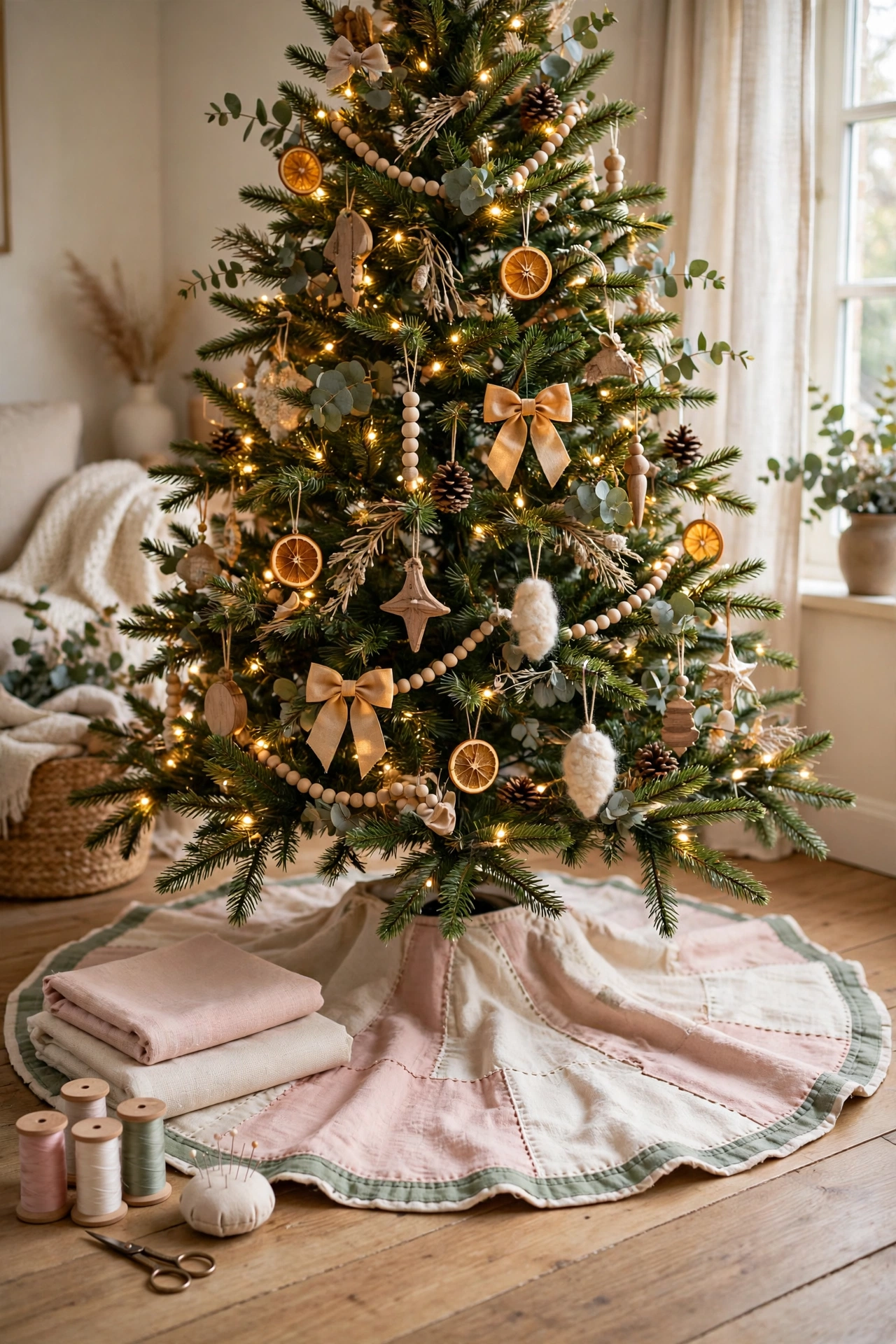
How to Sew a Christmas Tree Skirt in 15 Lovely Styles
Soft fabric under a Christmas tree finishes the whole corner and hides the stand, the trunk and tangled light cables in one kind move. Handmade skirts also catch fallen needles and protect floors from scratches. Choose colours that suit your room and your tree, and one simple circle of cloth quickly turns a plain stand into part of the decorations.
Learning to sew a christmas tree skirt gives you full control over size, fabric and finish, which shop bought skirts rarely offer. Tall trees need wider circles, small trees need neat little covers, and odd corners need custom shapes. Home sewing lets you match curtains, stockings or table linen for a calm and planned look.
Inside this guide you will find fifteen styles, from plaid and velvet to patchwork and lace, with fabric amounts, sizing advice and finishing notes for each one. Most styles suit confident beginners who can sew a straight seam and a gentle curve. Gather basic tools, read the sizing notes first, and pick one style before buying fabric.
How can you sew a christmas tree skirt at home?
You can sew a christmas tree skirt by cutting a large fabric circle, cutting one straight opening to the centre, finishing the edges, and adding ties, buttons or ribbon at the opening. Most skirts use a circle between 40 and 56 inches wide. Simple cotton versions take one afternoon, while quilted and ruffled versions take a full weekend.
Picture a 48 inch plaid circle under a six foot tree, with the opening hidden at the back and two ribbon ties holding the edges together. Presents sit on smooth fabric instead of a hard stand, and fallen needles lift away easily at packing time. Simple construction like this suits almost every style in this guide.
Disclosure: As an Amazon Associate I earn from qualifying purchases. Some of the links below are affiliate links, which means Bloomie Living may earn a small commission if you buy through them, at no extra cost to you.
Classic red and green plaid skirt
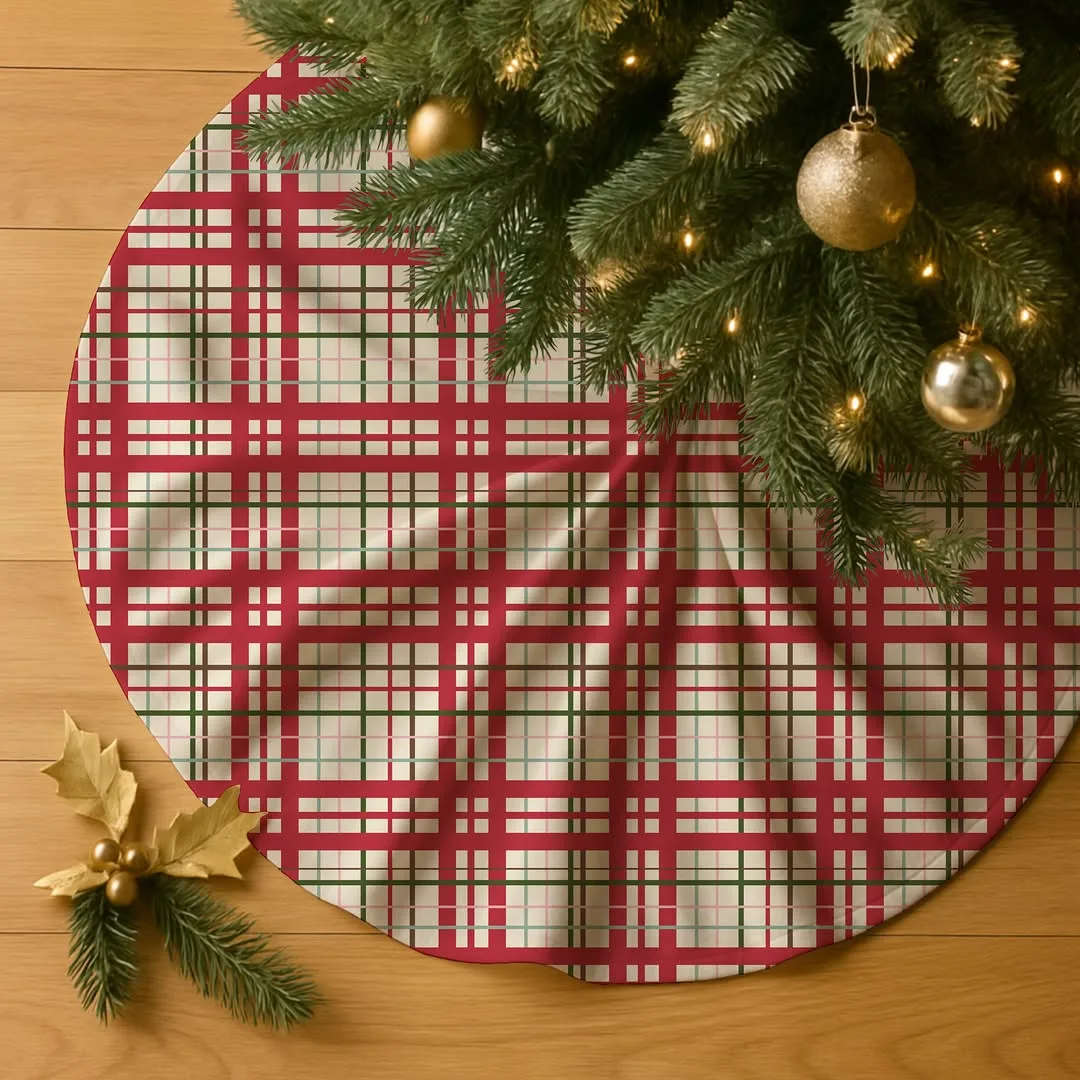
Plaid brings instant Christmas colour and suits trees decorated with red baubles, gold bells and warm white lights. Traditional checks forgive small cutting wobbles because the pattern draws the eye across the whole circle. Cotton plaid also presses well and stays flat under heavy gift boxes.
Choose about two yards of cotton or cotton blend fabric for a 48 inch skirt, plus matching thread and two yards of ribbon for ties. Cut the circle with the plaid lines running straight across the centre so the pattern looks balanced. Add a light lining if your fabric feels thin.
Family living rooms and farmhouse style trees suit plaid best, especially beside wooden furniture and woven baskets. Smaller trees look smart with small checks, while large trees carry bold checks without overwhelming the branches. Match one colour from the plaid in your gift wrap for a tidy finish.
One maker cut a plaid skirt for a hallway tree and turned the leftover fabric into matching bows for the branches. Guests noticed the link right away and asked where the set came from. Small matching touches like bows make a simple plaid skirt feel planned rather than plain.
Cutting plaid without matching the lines at the opening leaves a crooked looking join that shows every year. Pin the opening edges together before finishing and check the check lines meet neatly. Slow cutting on a flat table prevents most pattern drift before sewing even begins.
Buffalo Plaid Fabric by The Yard: Buffalo plaid fabric sold by the yard gives the classic checked look and sturdy feel this skirt needs.
White faux fur skirt

Snowy white faux fur looks like fresh snow under the tree and makes coloured baubles glow by contrast. Soft pile hides the stand completely and gives presents a gentle place to rest. Winter woodland themes with silver, white and pale blue decorations suit fur especially well.
Buy about one and a half yards of faux fur with a short to medium pile, plus plain cotton for a backing if the fur feels stretchy. Cut fur from the back with a craft knife or small scissors so long fibres stay whole. Shake cut pieces outdoors to remove loose fluff.
Calm neutral rooms and Scandinavian style trees carry white fur beautifully, since pale wood and simple ornaments match the soft texture. Homes with dark floors gain strong contrast under the tree. Fur also suits photo corners where families gather for Christmas morning pictures.
Imagine white fur under a tree dressed in silver stars, with wrapped gifts in kraft paper and red ribbon resting on the pile. Parcels look warm and inviting, and children love sitting on the soft edge during story time. Simple styling lets the texture do all the work.
Sewing fur with the pile trapped in the seam creates bulky ridges, so brush fibres away from the seam line before stitching. Use a longer stitch and walk slowly around the curve. Vacuum the sewing area afterwards, because loose fibres travel surprisingly far across a room.
Faux Fur Fabric by The Yard in White: Soft white faux fur fabric with a long plush pile makes the skirt look snowy and rich.
Burlap and lace skirt
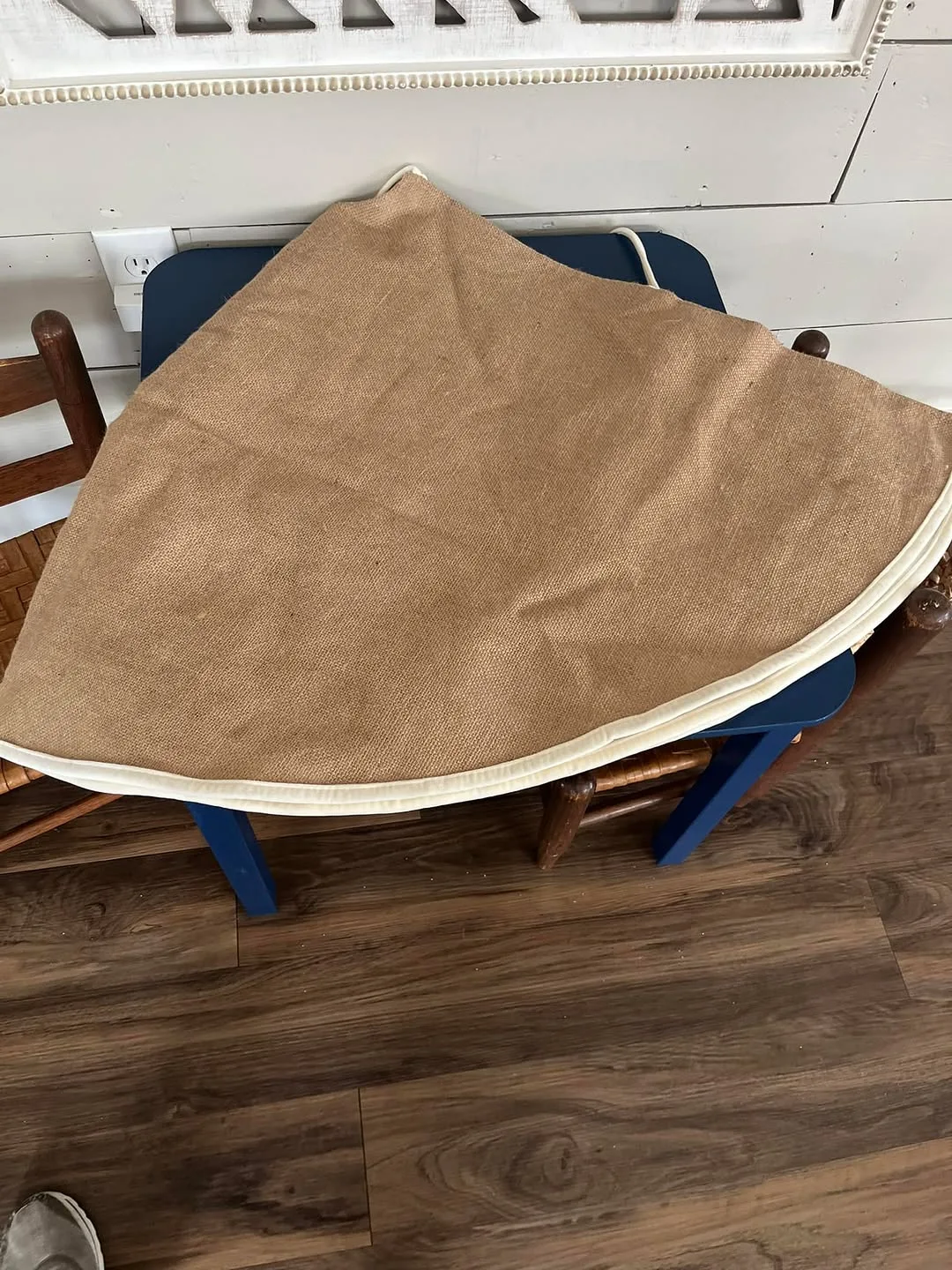
Rustic burlap paired with cream lace gives a tree skirt both texture and softness in one design. Burlap brings a natural brown base, while lace trims the edge with a gentle vintage touch. Farmhouse, country and woodland trees all welcome this pairing.
Plan on two yards of burlap, one yard of wide lace for the edge, and cotton backing fabric to stop scratching and shedding. Burlap frays quickly, so finish every raw edge with a tight zigzag stitch or bind the edges with cotton strips. Press lace only, never the burlap layers under high heat.
Country kitchens, porch trees and rooms with natural wood suit burlap and lace best. Gardeners and craft lovers often choose this style because materials feel honest and familiar. Pair the skirt with pine cones, dried orange slices and plain linen stockings for one calm theme.
Consider a burlap skirt under a tree on a covered porch, edged with lace saved from an old tablecloth. Sentimental fabric adds a story guests enjoy hearing, and the lace softens the rough base beautifully. Porch lights catch the lace edge in the evening and draw the eye downward.
Skipping the backing causes most trouble, because bare burlap sheds fibres onto floors and gift wrap. Backing also stops the loose weave from stretching out of shape during sewing. Cut burlap with sharp scissors in one direction to reduce fraying while you work.
White Lace Ribbon: Delicate white lace trim sewn along the burlap edge adds the soft contrast this rustic style is loved for.
Patchwork skirt from fabric scraps
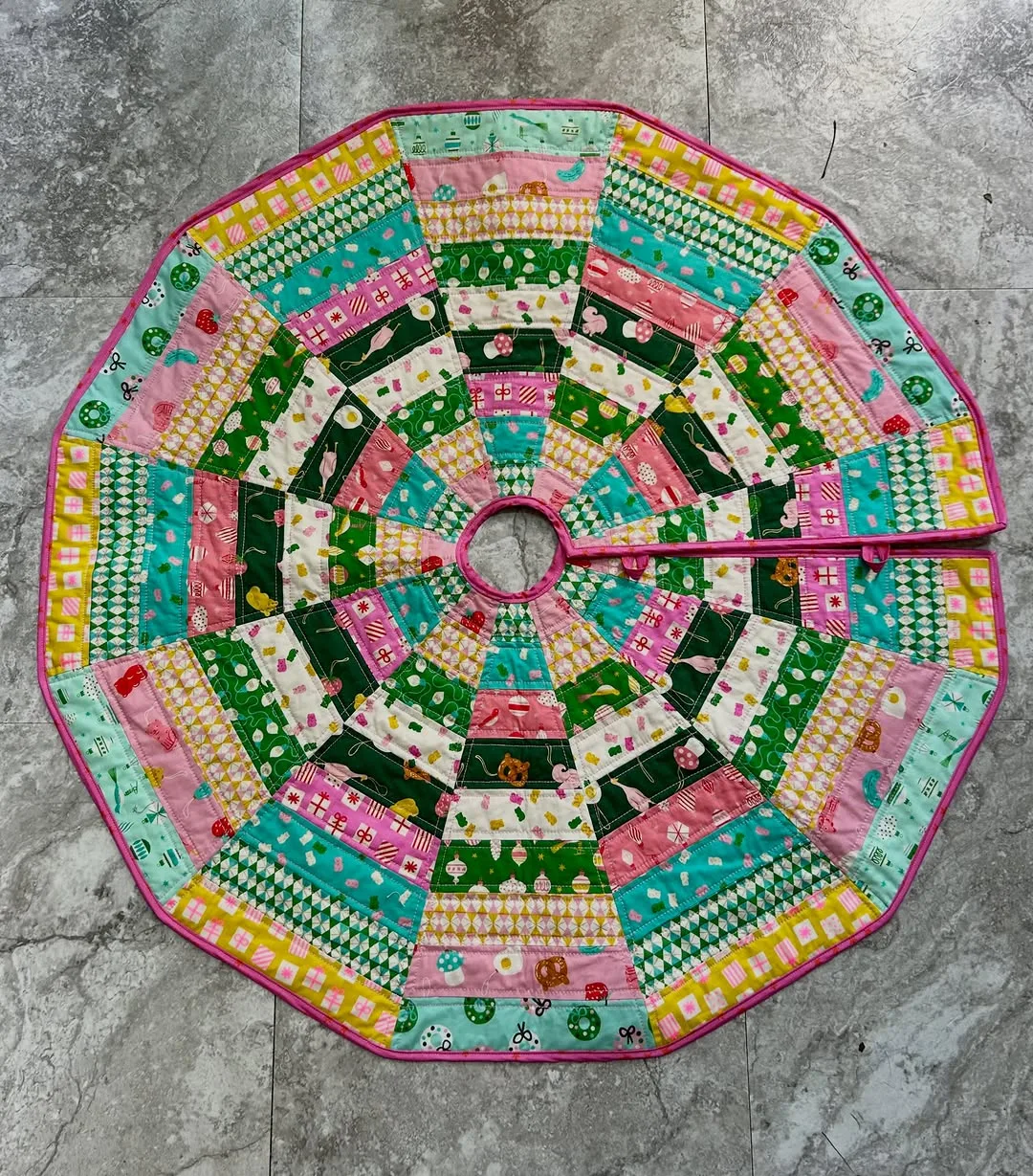
Patchwork turns leftover cotton scraps into a colourful skirt full of memories from other projects. Mixed prints suit family trees where ornaments come from many years and many hands. Every panel can carry a small story, which makes the finished skirt feel personal.
Gather scraps in three or four colours that sit well together, then sew them into large squares or strips before cutting the circle. One finished skirt needs roughly two yards of joined fabric for a 48 inch circle. Press seams flat as you join pieces so the circle stays smooth.
Busy family rooms and craft loving homes suit patchwork best, because perfection matters less than warmth and colour. Children enjoy spotting fabric from their old clothes or curtains in the panels. Scrappy skirts also suit trees decorated by many people with mixed ornaments.
Suppose grandmother scraps, curtain offcuts and one outgrown Christmas dress all appear in one skirt under the family tree. Relatives point out familiar prints while gifts are opened, and the skirt becomes part of the celebration. Keeping one colour repeated across panels stops the mix looking messy.
Mixing very thick and very thin fabrics in one panel causes puckers and uneven feeding under the needle. Stay with similar cotton weights and test one joined square first. Trim loose threads on the back, since dark threads can shadow through pale prints.
Cotton Fat Quarters Fabric Bundle: A bundle of cotton fat quarters in mixed prints gives plenty of scraps to piece into a patchwork skirt.
Quilted skirt with soft batting
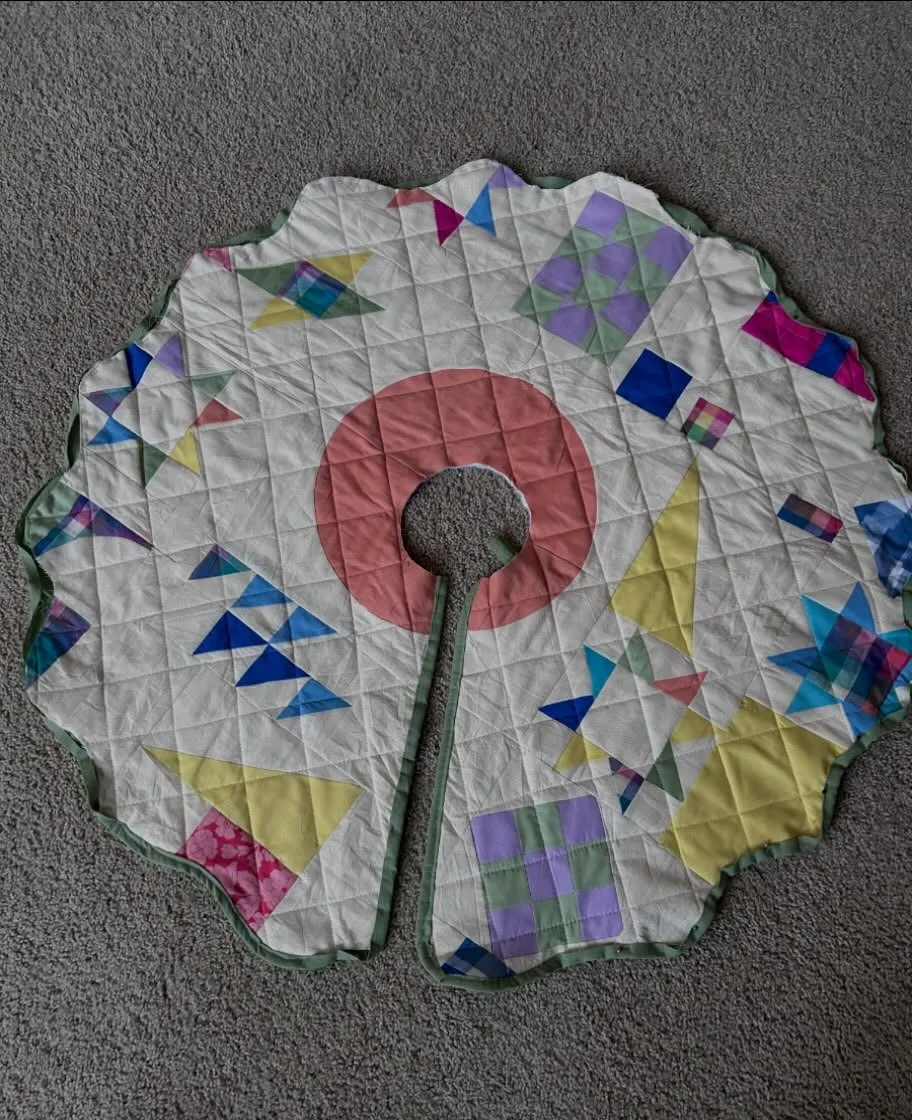
Quilted skirts feel padded and generous, giving the tree a soft base that looks made to last for decades. Gentle stitching lines across the surface add pattern without extra decoration. Solid colours and small prints both quilt well and suit traditional rooms.
Layer two yards of top fabric over thin cotton batting, with plain cotton underneath as backing. Pin or baste the layers well, then quilt in simple lines or a grid before cutting the circle, or quilt after cutting if your machine handles curves calmly. Bind the outer edge with bias strips for a clean finish.
Traditional living rooms, heirloom trees and homes that keep decorations for years suit quilted skirts best. Thick padding protects delicate floors and muffles the sound of boxes being moved. Deep red, forest green and cream quilting looks rich beside brass and wooden ornaments.
Envision a cream quilted skirt under a tall tree, stitched in a diamond grid and edged with red binding. Presents rest on the padded surface without sliding, and the skirt folds neatly into storage each January. Quilting also makes plain fabric look special without costly prints.
Thick batting makes edges hard to bind and can jam a small machine, so choose thin batting made for quilts. Test binding on a curved scrap first. Walking slowly and lifting the presser foot often keeps layers feeding evenly around the circle.
Cotton Batting: Soft cotton batting adds gentle body and warmth between the layers of a quilted skirt.
Ruffled tiered skirt
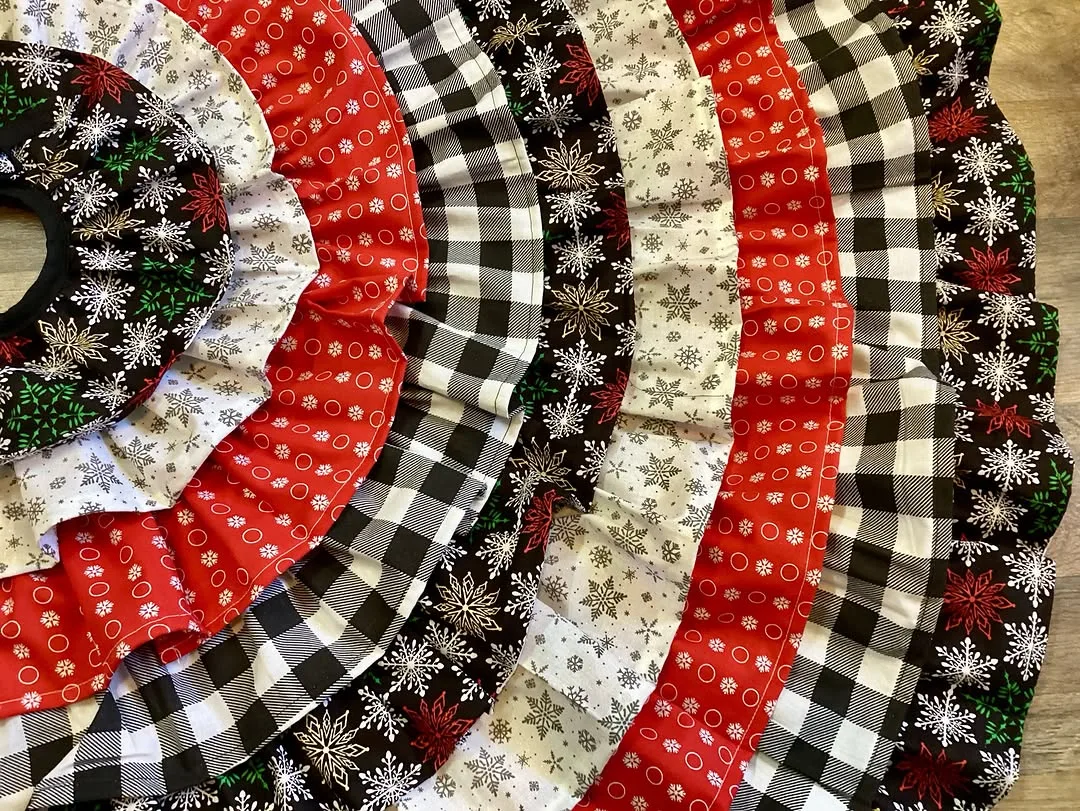
Ruffles bring movement and fullness, turning the base of the tree into a soft layered skirt in the truest sense. Tiered fabric catches light gently and hides the stand under generous folds. Romantic and vintage decorating styles suit ruffles especially well.
Cut a plain base circle first, then cut long strips for two or three tiers, each strip about twice as long as the edge it will cover. Light cotton, voile or seersucker gathers easily and keeps weight low. One standard skirt needs about three yards of fabric in total.
Bedrooms, dressing rooms and calm living rooms carry ruffled skirts beautifully. Pale pink, cream and white tiers suit trees with pearls, roses and glass ornaments. Small trees on tables also look charming with one short ruffled tier.
Gentle cream tiers under a tree dressed with blush baubles create a calm corner that photographs beautifully for family cards. Ruffles soften hard floor lines and make even a small tree feel dressed. Matching ruffled cushion covers can link the tree corner to the sofa.
Gathering strips without measuring leaves one side full and the other side flat, so mark quarters on both strip and base before pinning. Spread fullness evenly at each mark. Sew slowly, because gathered layers shift under the foot when rushed.
Pleated Ruffle Chiffon Trim: Ready pleated ruffle trim saves hours of gathering and gives the tiered skirt its full frilly edge.
Velvet skirt with gold trim
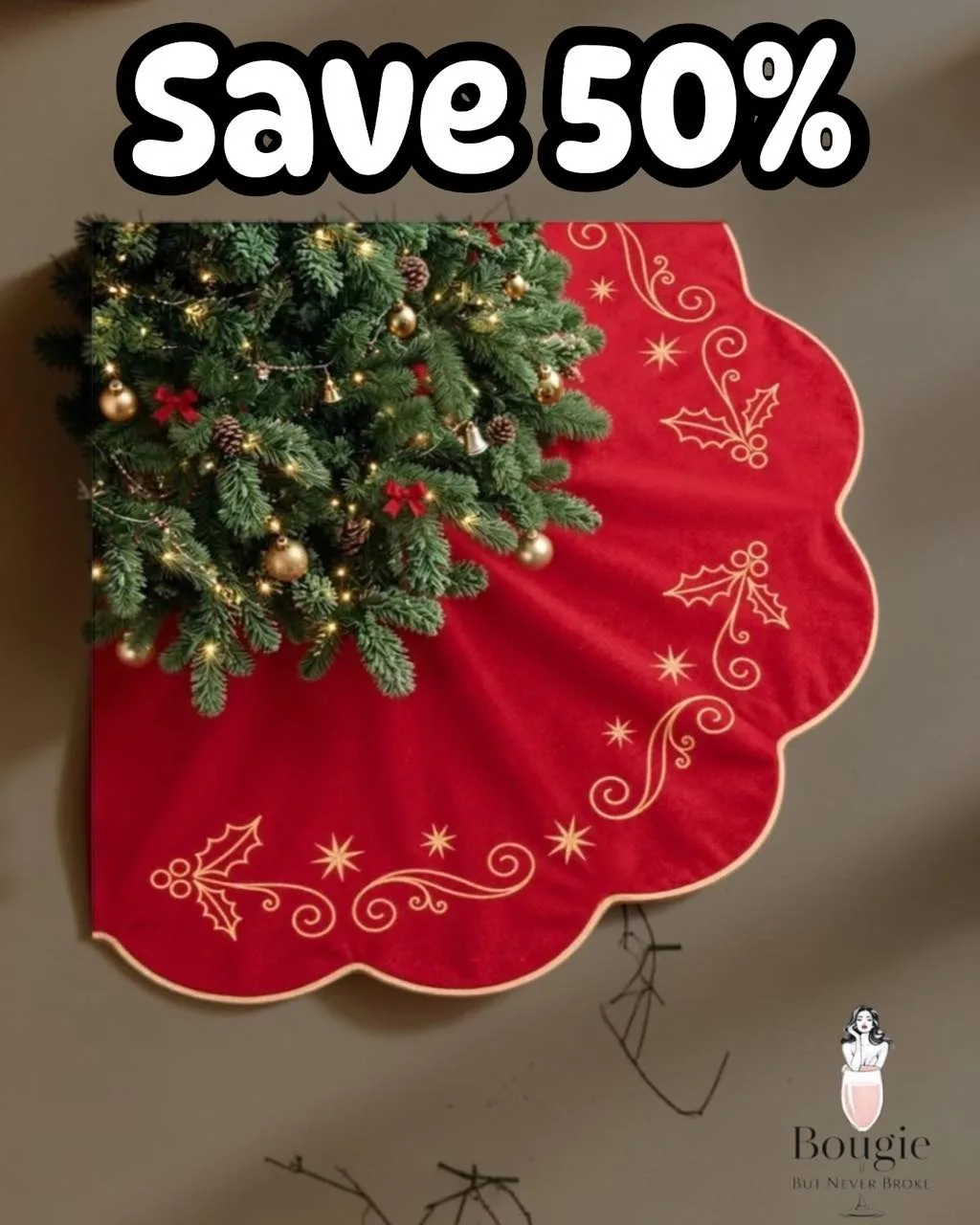
Velvet gives a tree skirt deep colour and a rich sheen that suits evening lights and candle glow. Gold trim along the edge adds a formal finish without needing printed fabric. Jewel tones like burgundy, emerald and navy look especially handsome in velvet.
Allow about two yards of cotton velvet or velveteen for a 50 inch skirt, plus gold braid or ribbon for the edge and centre opening. Velvet pile must all run in one direction, so mark the top of each piece before cutting. Use a fresh needle and longer stitches.
Formal dining rooms and elegant sitting rooms suit velvet best, especially beside dark wood and brass. Trees with gold, glass and deep coloured ornaments match the richness without competing. Velvet also suits a main family tree that guests see first.
Deep green velvet under a tree hung with gold bells makes a hallway feel dressed for a celebration the moment visitors enter. Gold trim catches lamplight along the floor and frames piles of wrapped gifts. One neighbour liked the look so much she ordered matching fabric for cushions.
Pressing velvet face down on a hard ironing board crushes the pile and leaves shiny marks. Press from the back with steam held above the surface, or lay velvet on a towel. Test iron settings on a scrap and store the finished skirt rolled rather than folded.
Gold Satin Ribbon: Shiny gold satin ribbon sewn along the velvet edge gives the skirt a rich festive finish.
Gingham skirt with ric rac trim
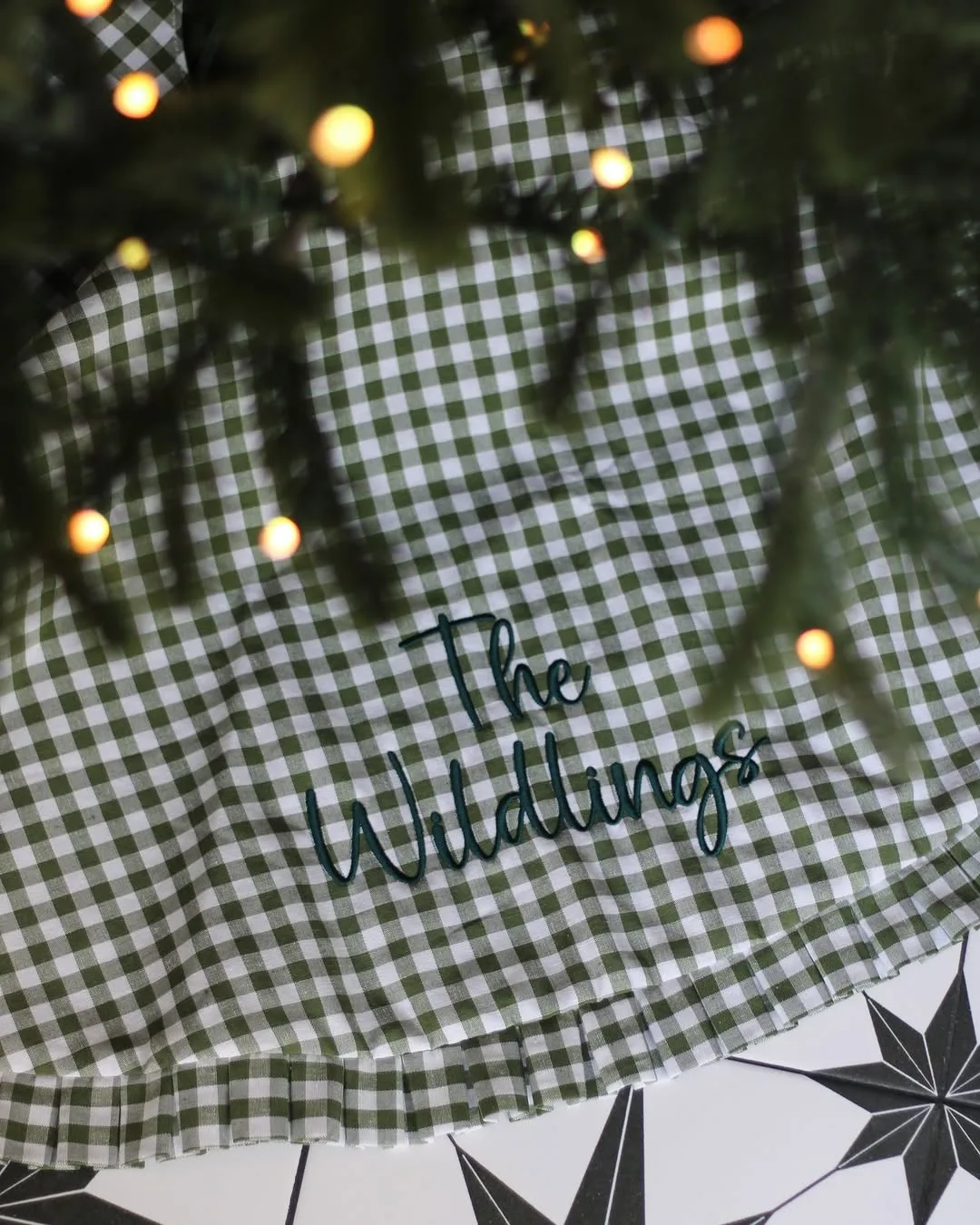
Gingham checks feel fresh and cheerful, and ric rac trim adds a playful wavy line around the edge. Red and white checks suit kitchen trees and family rooms, while green checks feel calmer. Cotton gingham sews easily, which makes this style kind to beginners.
Learners who sew a christmas tree skirt will find gingham forgiving, because the woven checks act like a cutting guide. Buy about two yards of gingham and three yards of ric rac for a 48 inch circle. Sew ric rac along the edge after finishing the hem, keeping the wave centred on the stitching line.
Kitchens, breakfast corners and casual family rooms suit gingham best. Trees decorated with wooden ornaments, popcorn strings and homemade paper chains match the homely checks. Gingham also works for classroom trees and community hall displays.
Red gingham under a small kitchen tree, edged with white ric rac, turns a corner beside the baking shelf into a festive spot. Cookbooks, cookie tins and a jar of candy canes complete the scene. Children notice the wavy trim first and often trace it with a finger.
Stretching gingham while hemming twists the checks into waves that no pressing can fix. Let the fabric feed naturally and pin the hem at short intervals. Check the check lines against a ruler before sewing the opening edges closed.
Red Gingham Ribbon: Red and white gingham ribbon adds the classic checked detail along the seams and hem of the skirt.
Felt applique skirt with trees
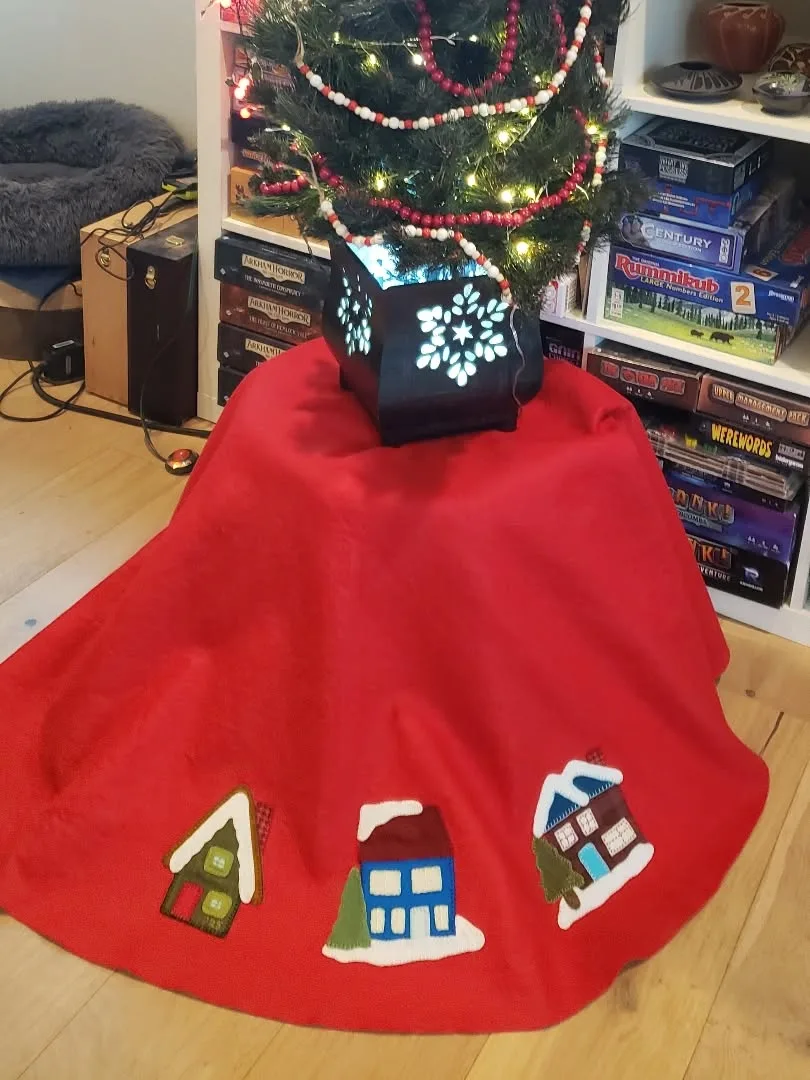
Felt applique lets you add trees, stars and houses to a plain skirt without printed fabric. Felt does not fray, cuts cleanly and stitches down with simple straight or blanket stitches. Children love pointing out each little shape around the circle.
Start with a plain cotton or felt base circle, then cut tree shapes from green felt in two or three shades. One skirt needs about one yard of base fabric and several felt sheets. Pin shapes evenly around the skirt before stitching any of them down.
Playrooms, nurseries and family dens suit applique skirts best, because children interact with the pictures at floor level. Primary colours suit young children, while muted felt suits calmer rooms. Applique also refreshes a plain skirt bought or sewn in earlier years.
Little green trees with tiny stitched trunks march around a cream skirt under a tree decorated by grandchildren. Each child chooses a favourite tree and places one gift beside it on Christmas Eve. Personal touches like initials on one tree make the skirt a keepsake.
Gluing every shape instead of stitching saves minutes but loses pieces after a season of folding and storage. Stitch main shapes down firmly and save glue for tiny dots like baubles. Check the back for loose thread ends before gifts cover the surface.
Craft Felt Fabric in White: A big sheet of craft felt cuts cleanly into tree shapes for the applique details on this skirt.
Reversible skirt with two fabrics
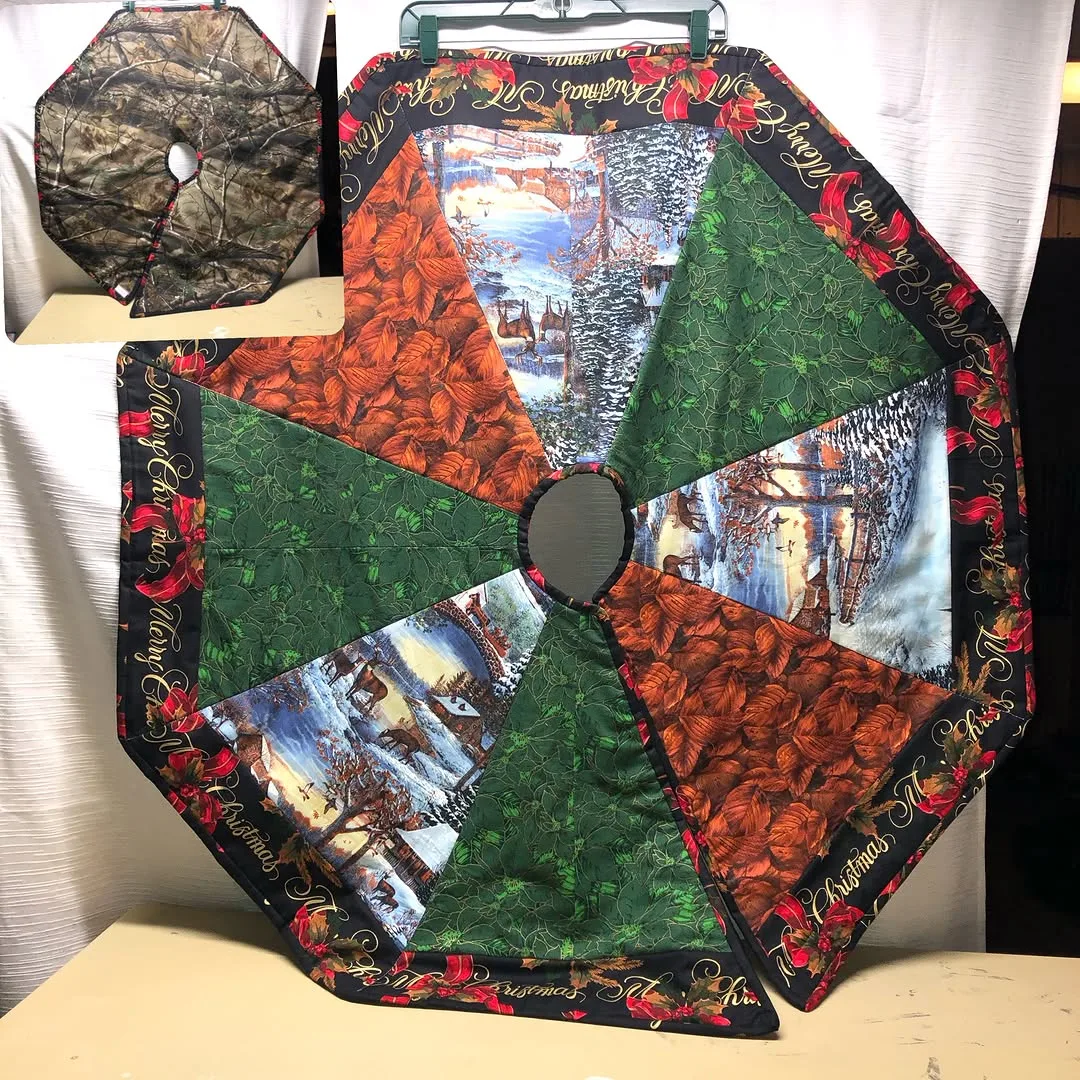
Reversible skirts give two looks in one piece of sewing, which helps homes that change colour themes between years. One side can carry a bold print while the other stays plain for calm days. Turning the skirt over also spreads wear across both fabrics.
Pick two fabrics of similar weight, about two yards of each for a full size skirt. Sew the circles together around the outer edge, turn through the centre opening, and press carefully before closing the slit edges. Add ties that work from both sides, or use buttons on loops.
Small homes and keen decorators benefit most, because one stored item covers two themes. Print lovers can enjoy a busy Christmas pattern one year and plain linen the next. Reversible skirts also suit households where two people prefer different styles.
Turn one side up for a red berry print during family week, then flip to plain cream when hosting a quiet New Year dinner under the same tree. Guests assume two skirts live in the cupboard. Careful pressing at the flip keeps both sides looking fresh.
Bulky seams at the opening spoil the flat lie of a reversible skirt, so trim allowances and press the slit edges well before finishing. Match thread colour to the paler fabric where possible. Test the opening ties from both sides before wrapping gifts around the base.
Sewing Clips Pack of One Hundred: Sewing clips hold both fabric layers together without pins, which helps when sewing a reversible skirt.
Scalloped edge skirt
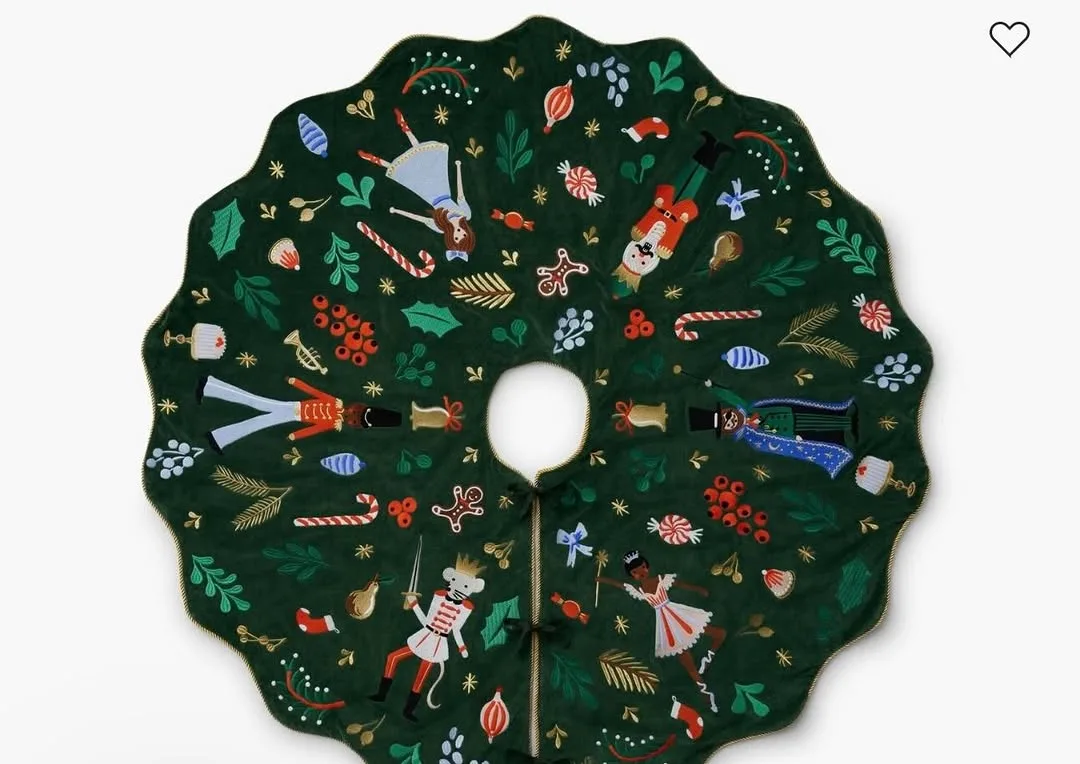
Scallops soften the outer edge of a tree skirt and give plain fabric a decorative finish without added trim. Even curves around the circle look sweet under both real and artificial trees. Cotton, linen and light velvet all hold a scalloped edge well.
Draw your circle first, then mark even scallops around the edge using a small plate or cup as a guide. Cut a facing or lining in the same shape, sew along the scallops, and turn carefully. One 48 inch skirt needs about two yards each of main fabric and lining.
Dining rooms and entrance halls suit scalloped skirts, because the shaped edge shows clearly where people walk past. Plain colours show the curve best, while busy prints hide the shaping. Scallops suit vintage ornaments and delicate glass baubles especially well.
Cream linen with scallops under a tree dressed in white and gold creates a soft frame that guests notice without knowing why. Shaped edges catch shadows along the floor and make plain fabric feel worked on. Matching scalloped napkins can echo the shape on the table.
Rushing the turns leaves scallops pointed or lopsided, so clip each curve and push the shape out gently with a blunt tool. Press each scallop before moving on. Marking all scallops the same size before cutting prevents the most common uneven finish.
Scallop Blade for Rotary Cutter: A scallop blade in a rotary cutter cuts a neat wavy edge all the way around the skirt.
Flannel skirt for a rustic tree
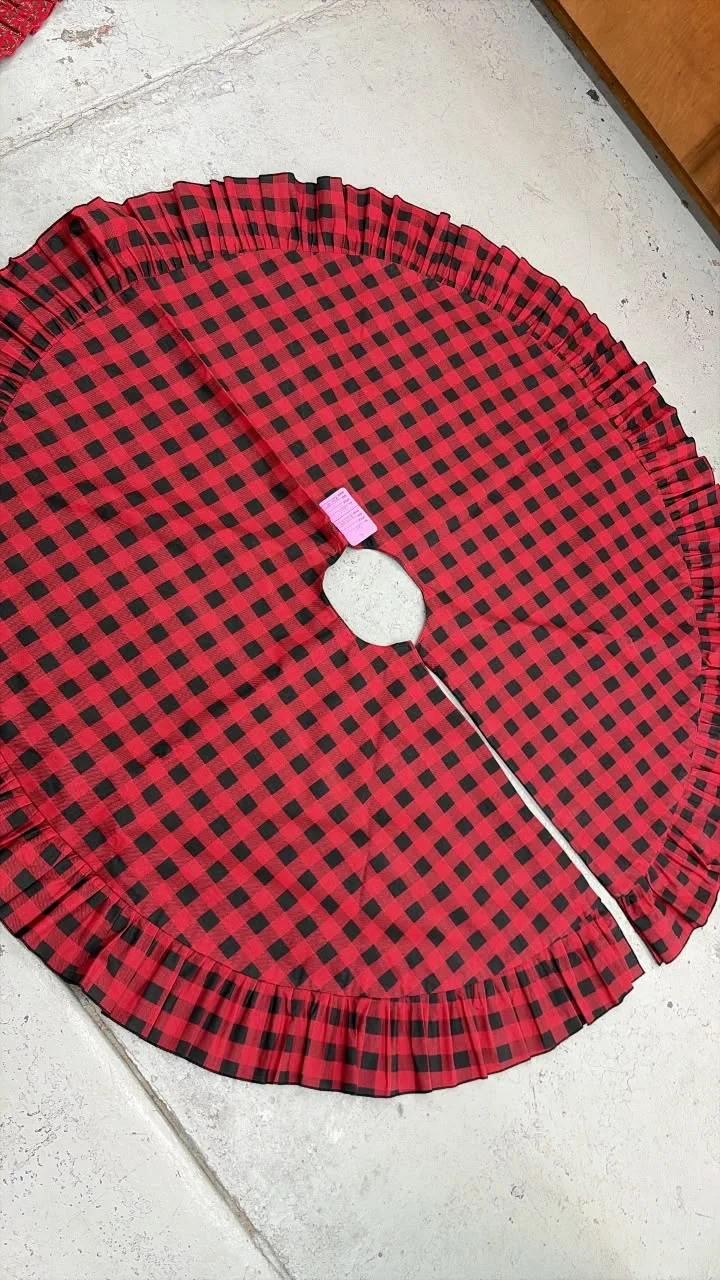
Flannel brings brushed warmth and a cabin feeling that suits woodland trees and simple homemade ornaments. Soft checks and plain brushed cotton both work well. Flannel also feels kind under knees during gift opening on cold floors.
Select about two yards of cotton flannel for a standard skirt, keeping in mind that flannel shrinks, so wash and dry it before cutting. Flannel frays more than quilting cotton, so finish edges with binding or a close zigzag. Thicker seams benefit from trimming and firm pressing.
Cabins, dens and rooms with leather chairs or wooden beams suit flannel best. Trees with pine cones, twine and carved ornaments sit naturally on brushed checks. Flannel also suits a tree kept near a reading chair where people gather with blankets.
Beside a stone fireplace, a red flannel skirt under a tree hung with wooden stars completes a cosy corner for winter evenings. Hot drinks, a basket of blankets and board games gather naturally around it. Guests tend to settle near flannel because the whole scene feels warm.
Forgetting to wash flannel first causes shrinking after the first clean, which can pucker seams and lift the edges. Shrinkage also shortens the circle more than most makers expect. Buy a little extra fabric and keep scraps for matching gift sacks.
Pinking Shears: Pinking shears trim flannel seam edges with a zigzag cut that keeps the rustic fabric from fraying.
Linen skirt with stencilled stars
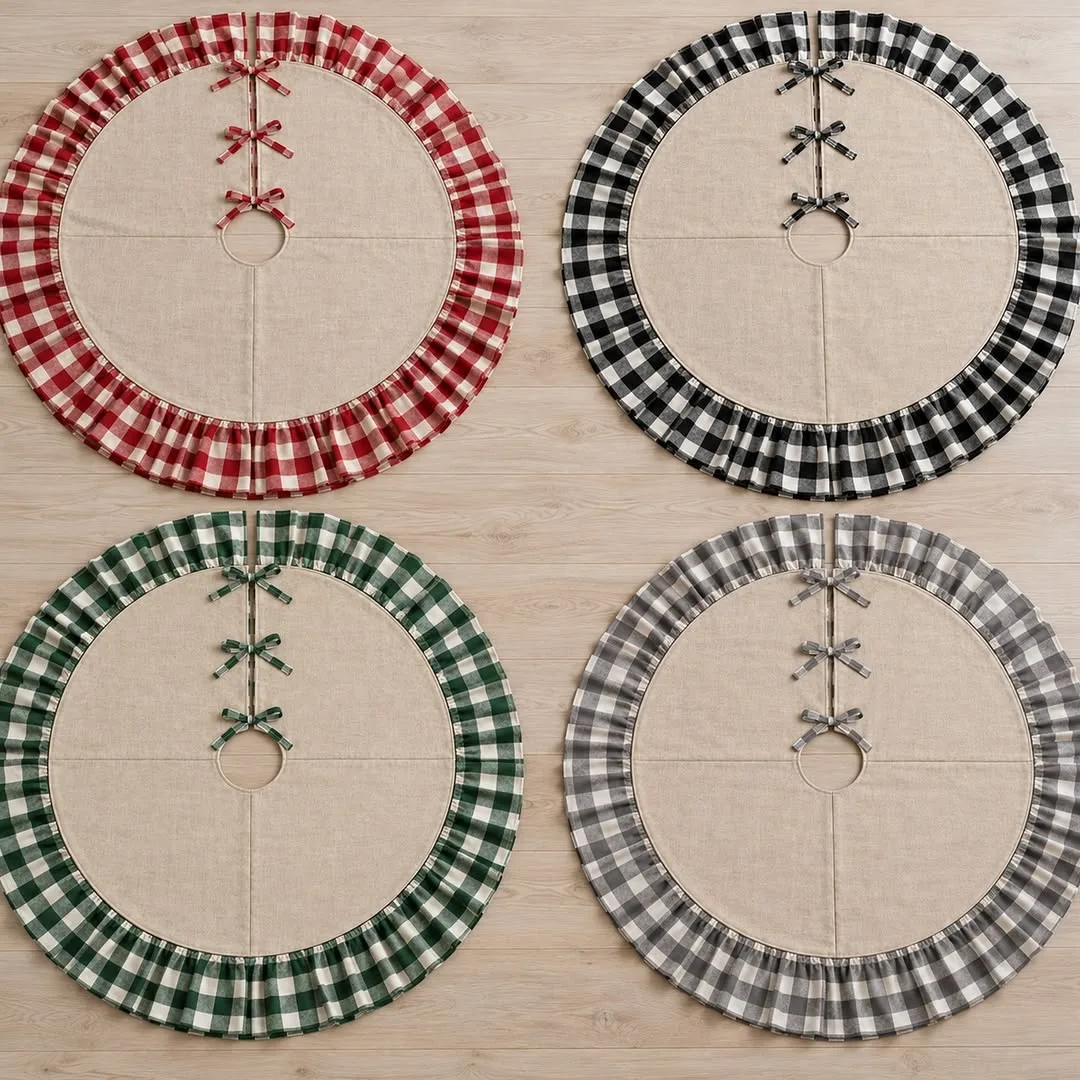
Linen gives a tree skirt a calm natural texture that suits simple modern decorating. Stencilled stars add pattern exactly where you want it, in gold, white or soft silver. Plain linen also folds and stores without bulk.
Count on two yards of medium weight linen for a 48 inch skirt, plus fabric paint and a star stencil cut from card or bought ready made. Practise stencils on scraps until edges look crisp. Space stars evenly by marking light pencil dots around the circle first.
Modern living rooms and calm neutral homes suit stencilled linen best. Trees with white lights, wooden beads and plain glass ornaments match the quiet surface. Linen also suits homes that keep decorations low key and natural.
Gold stars scattered across natural linen under a slim tree make a small flat feel festive without crowding the room. Presents wrapped in white paper and twine keep the palette calm. Visitors often ask whether the fabric came printed, which flatters the careful stencilling.
Bleeding paint under a stencil ruins the crisp stars, so use a nearly dry brush and build colour in light layers. Hold the stencil flat and lift it straight up. Let each star dry before moving the stencil close beside it.
Permanent Fabric Markers: Permanent fabric markers draw crisp star shapes on linen and stay bright after washing.
Mini skirt for tabletop trees
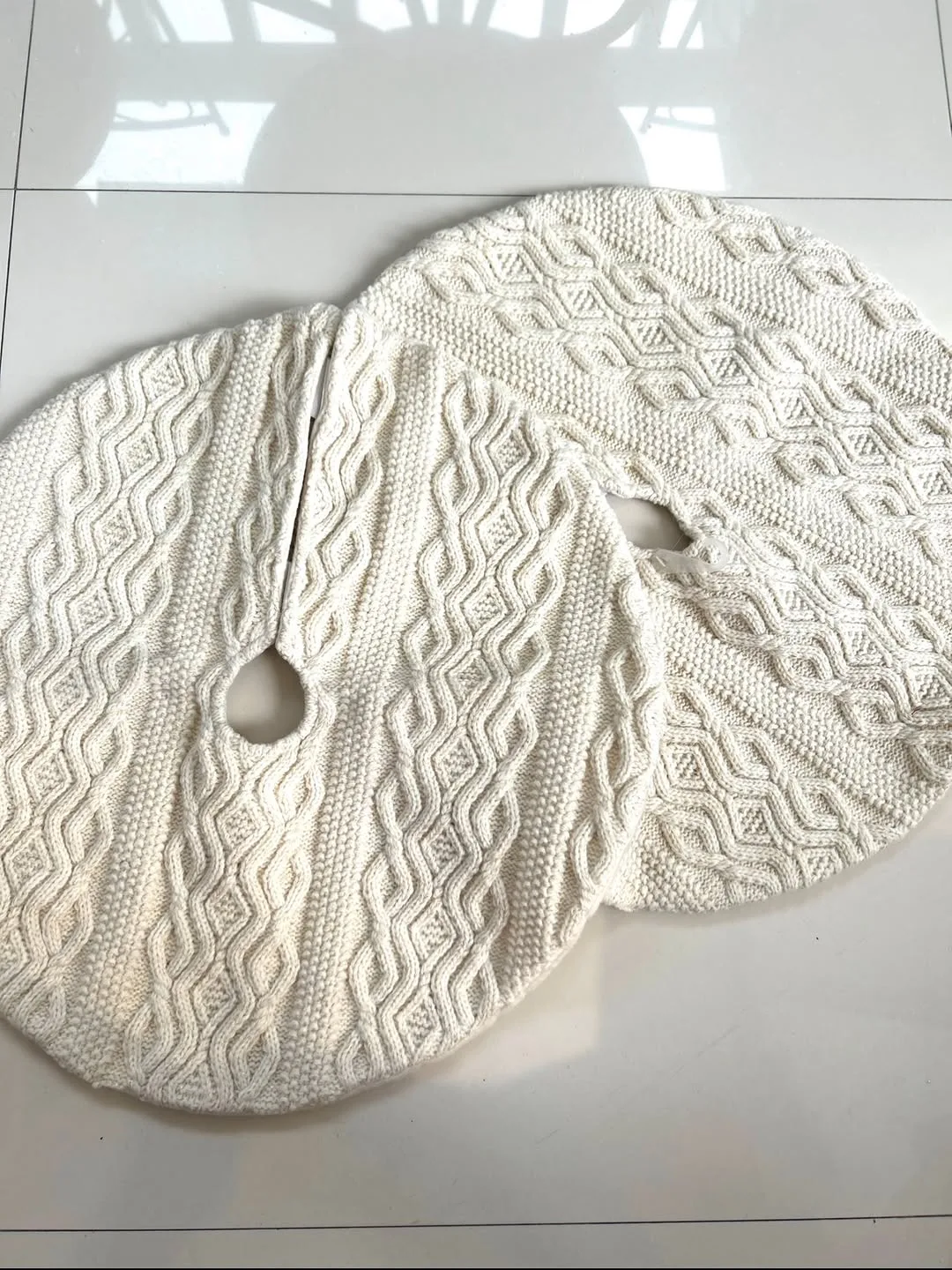
Mini skirts dress small tabletop trees that would otherwise show a plain pot or stand. Little circles suit desks, side tables, shop counters and bedroom dressers. Quick sewing makes minis good gifts for friends with small trees.
Scale the circle down to between 12 and 20 inches across, using about half a yard of fabric or large scraps from bigger projects. Keep the centre hole small and finish edges with binding so the tiny curves stay neat. Short ribbon ties work better than buttons at this size.
Desks, nursery shelves and kitchen counters suit mini skirts best, because small trees decorate work and display spaces. Children enjoy a mini tree in a bedroom with a skirt matching the main family tree. Craft fair sellers also display minis well.
Tiny red velvet under a tabletop tree on a hall dresser greets visitors before they even reach the main tree. Matching fabric links the two trees across the house. Hosts can sew several minis in one session using scraps left from the large skirt.
Making the centre hole too large lets a mini skirt slide down around the pot instead of sitting on the table. Measure the trunk or stand first and cut the hole slightly smaller than you think. Binding can stretch a tight hole gently into place.
Deluxe Rotary Cutter: A sharp rotary cutter makes quick, clean cuts when working with small pieces for a tabletop tree skirt.
Extra wide skirt for large trees
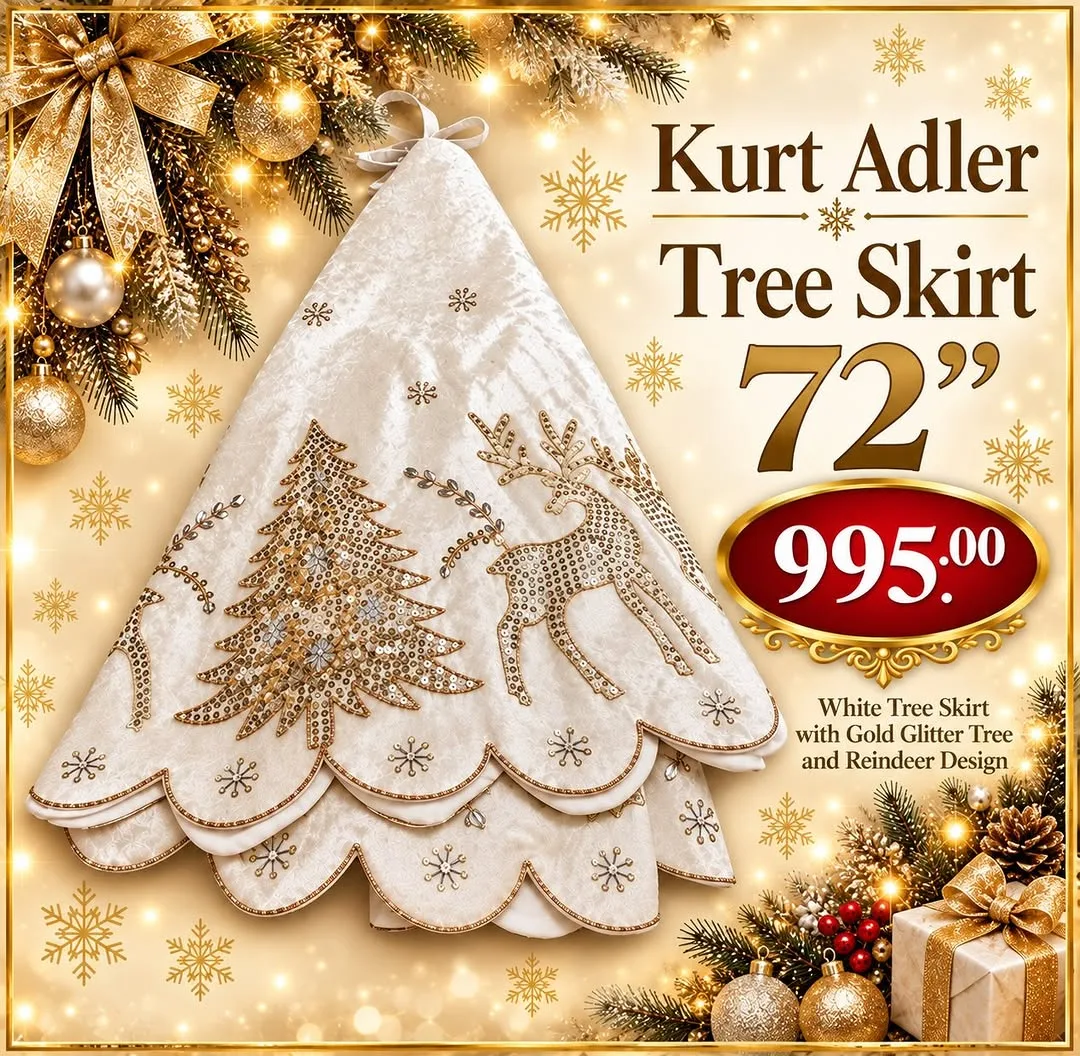
Wide skirts balance tall trees, because a small circle under a big tree looks lost and leaves the stand partly visible. Extra fabric also gives large gift piles a proper base. Homes with high ceilings and statement trees benefit most.
Measure your tree height and room space first, then aim for a skirt between 60 and 72 inches across for trees above seven feet. Wide fabric or joined panels will be needed, often three yards or more. Join panels before cutting the circle so seams sit evenly.
Large living rooms, halls and community spaces suit extra wide skirts, since furniture spacing lets the full circle show. Plain or small print fabrics stop a huge circle from dominating the room. Velvet and quilted styles carry the scale especially well.
Under a nine foot tree in a village hall, a deep green wide skirt holds dozens of donated gifts during a charity drive. Volunteers arrange parcels in neat rows on the fabric, and the stand stays hidden in every photo. Scale makes organisation easier as well as prettier.
Guessing the size from memory wastes fabric, because wide skirts use far more cloth than standard ones. Measure the floor space and the widest gift pile you expect. Keep the circle at least six inches clear of walls and heat sources on every side.
Self Healing Cutting Mat: An extra large cutting mat gives room to lay out and cut the wide panels a large tree skirt needs.
Common Mistakes to Avoid With Tree Skirts
Many makers who sew a christmas tree skirt for the first time cut the centre hole too wide, and the finished skirt slips down around the stand instead of sitting flat. Measure the trunk, cut a small hole, and enlarge it slowly if needed. Cardboard templates help you test the fit before cutting good fabric.
Leaving the opening unfinished causes fraying edges that catch on branches and gift paper every time the skirt moves. Bind, hem or face the slit edges before the skirt goes under the tree. Ties or buttons at the opening also stop the skirt sliding open during the season.
Fabric choice causes quiet problems when slippery, stretchy or very thick cloth meets a simple circle pattern. Stable cotton, linen and flannel behave best for beginners. Test fancy fabrics on a mini skirt first, and keep one plain cotton skirt as a reliable spare.
Poor measuring of the room leads to skirts that bunch against walls or vanish under an oversized tree. Measure floor space, tree height and stand width together before choosing a diameter. Write the numbers on your pattern and store them together for next year.
Budget Friendly Ways to Sew Tree Skirts
Scraps and leftover fabric cover many tree skirts at almost no cost, especially patchwork, mini and applique styles. Check curtain offcuts, old tablecloths and worn shirts with strong fabric before buying new cloth. One shared pack of thread, ribbon and binding can finish several skirts for a family.
Planning lets you sew a christmas tree skirt during sales, when Christmas prints drop in price after the season for the following year. Buy plain basics in January, store them flat, and enjoy calm sewing the next autumn. Remnant bins also hold velvet and linen pieces large enough for mini and standard skirts.
Borrowing tools saves money when sewing happens only a few times a year. Rotary cutters, large rulers and quilting clips can come from a friend or a library of things if your town has one. Spend first on sharp scissors, fresh needles and good thread, because poor tools waste fabric.
Simple finishes keep costs down without looking cheap, since neat hemming beats costly trim on a wobbly edge. Use ribbon from gift wrapping, buttons from old coats and lace from worn linens where the material still looks good. Careful pressing gives budget fabric a finished look.
Tree Skirt Sewing Tips That Save Time and Fabric
Measure the stand before the fabric. Stand width, trunk size and floor space decide the circle and centre hole far better than guesswork. Write all three numbers on the paper pattern. Stored patterns make repeat skirts faster every year.
Cut the circle on the largest flat surface. Floors and big tables beat small desks, because fabric that hangs over an edge pulls the circle out of shape. Smooth the cloth fully before pinning the pattern. Slow cutting protects the curve.
Practise the opening on scrap fabric. Anyone learning to sew a christmas tree skirt gains confidence from testing the slit and centre hole on an old sheet first. Cut, finish and tie the practice piece before touching good fabric. Ten minutes of testing saves costly cloth.
Press every edge before finishing. Flat edges feed through the machine evenly and give hems and bindings a crisp line. Press the circle, the slit and the centre hole at each stage. Neat pressing makes simple fabric look carefully made.
Label the back with the year. One small stitched label or fabric pen note helps you remember sizes, fabrics and repairs between seasons. Future sewing becomes easier when past choices are recorded. Labels also turn family skirts into small keepsakes.
Store the finished skirt flat or rolled. Folding hard creases into velvet, fur or quilted layers leaves marks that pressing may not remove. Roll around a cardboard tube or store flat in a dry box. Shake and air the skirt before use each year.
FAQ
How wide should a tree skirt be?
Most home trees suit a skirt between 40 and 56 inches across, which covers the stand and leaves room for gifts. Tabletop trees need only 12 to 20 inches, while trees above seven feet often need 60 inches or more. Measure your floor space before choosing the largest sizes.
Which fabric is easiest for a first tree skirt?
Cotton quilting fabric is easiest, because it cuts cleanly, presses well and feeds through the machine without sliding. Flannel and linen also behave well after washing. Save velvet, fur and slippery fabrics until you have finished one simple cotton skirt.
How long does a handmade tree skirt take?
Beginners can sew a christmas tree skirt in one afternoon when they choose a plain cotton circle with a hemmed edge and ribbon ties. Quilted, ruffled and reversible styles take longer, often a full weekend. Working in stages, cutting one day and sewing the next, keeps the project calm.
Do tree skirts need lining?
Lining helps thin fabric sit flat, hides seam edges and protects floors from rough materials like burlap. Plain cotton makes a cheap and smooth lining. Heavy quilted and felt skirts often work without lining, provided every raw edge is finished neatly.
How do I wash a handmade tree skirt?
Gentle washing in cool water suits most cotton, flannel and linen skirts, followed by flat drying to keep the circle shape. Velvet, fur and applique skirts often need spot cleaning only. Shake off needles outdoors first, and check trims are secure before washing.
Can I make a tree skirt without a sewing machine?
Hand sewing works for felt, mini and simple cotton skirts when you use small even backstitches and allow extra time. Finishing edges takes patience, yet the circle shape needs no advanced stitches. Choose felt for a first hand sewn skirt, because felt edges need no hemming.
Conclusion
Fifteen styles show how one simple circle can suit every tree, from a tiny tabletop pine to a tall hall tree. Plaid feels traditional, fur feels cosy, patchwork uses scraps with meaning, and velvet dresses a room for guests. Pick the style that matches your fabric stash and your confidence.
Choosing to sew a christmas tree skirt yourself means the size fits your tree, the colours fit your room, and the finish can return year after year. Start with cotton or scraps, keep measuring carefully, and let neat edges carry the look. Confidence grows quickly after the first finished circle.
Gather your fabric this week, draw the circle, and sew a christmas tree skirt that makes the base of your tree feel finished and loved. Work slowly around the curve, press with care, and place the opening at the back. Your handmade skirt will greet every gift placed beneath the branches.