15 Christmas Gift Wrapping Ideas That Look Store Bought
People see the wrapping long before they see the gift, and a neat parcel raises quiet excitement under the tree. Good christmas gift wrapping ideas do not depend on costly paper or rare supplies. Clean folds, a ribbon with some body, and one small finishing touch like a tag or a sprig of green do most of the work, and they work on gifts of every size.
You might picture shop wrapping as perfect and your own as rushed, yet shop assistants follow simple habits rather than secret skills. They cut paper to fit, crease every fold with a fingertip, hide tape underneath, and finish each parcel the moment they wrap it. Home wrappers can copy every one of those habits at a kitchen table with ordinary supplies and a little patience.
Fifteen christmas gift wrapping ideas follow below, and each one uses paper, fabric, ribbon, or scraps most homes already own. Every idea explains the supplies, the method, the gifts it suits best, and the mistake that spoils it. Read through once, pick two or three favourites, and repeat them across your pile so the whole tree looks calm and planned.
How can I wrap Christmas gifts so they look store bought?
Clean folds and honest proportions make simple christmas gift wrapping ideas look store bought far more than busy paper ever will. Cut the paper so it wraps the box once with a small overlap, fold raw edges under, and press each corner flat with your thumb. Add one ribbon, tie it firmly, and place the tag where the eye lands first.
Picture a plain book wrapped in brown paper with corners as sharp as a shirt fold, red ribbon crossed neatly over the top, and a white tag tied at the knot. Nothing on that parcel costs much, yet it looks finished because every edge is straight and every part has a purpose. Neatness, repeated gift after gift, creates the store bought look.
Brown paper with a sprig of greenery
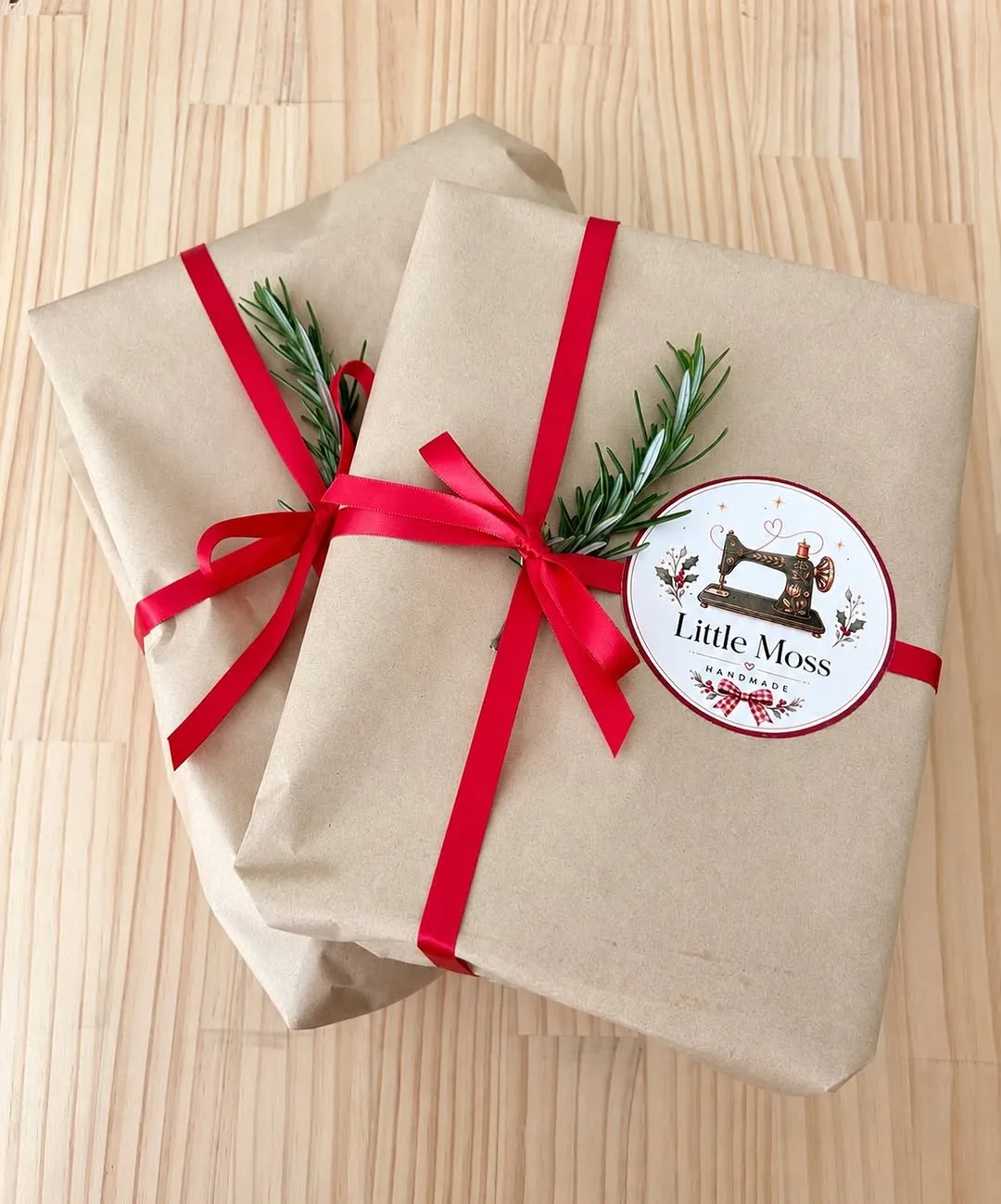
Brown paper gives every gift a calm, natural base that suits any age and any budget. Parcels wrapped in it look tidy even in large piles, and the plain surface lets one green sprig do the decorating. Among all christmas gift wrapping ideas, brown paper stays the most forgiving, because small creases and tape marks barely show against its matte finish.
Cut the paper so the ends meet under the box with a modest overlap, then fold the raw edge under before you tape it down. Crease each corner with a thumbnail and fold the side flaps into neat triangles. Garden twine or thin ribbon tied once around the parcel keeps the surface plain and lets the greenery carry the colour.
Greenery comes from the garden, a market bunch, or the trimmings of the Christmas tree itself. Rosemary, pine, cedar, and eucalyptus all sit well on brown paper, and one short sprig per gift is plenty. Slide the stem under the twine after you tie it, and press the sprig flat so the parcel still stacks neatly with the others.
Fresh greenery wilts and sheds, so add it on the day you give the gift or the evening before at the earliest. Needles from a dry sprig scatter across the paper and spoil the clean look you worked for. Books, board games, and boxes of biscuits suit greenery best, because flat parcels show the sprig off and keep it from snapping.
White paper with a red ribbon
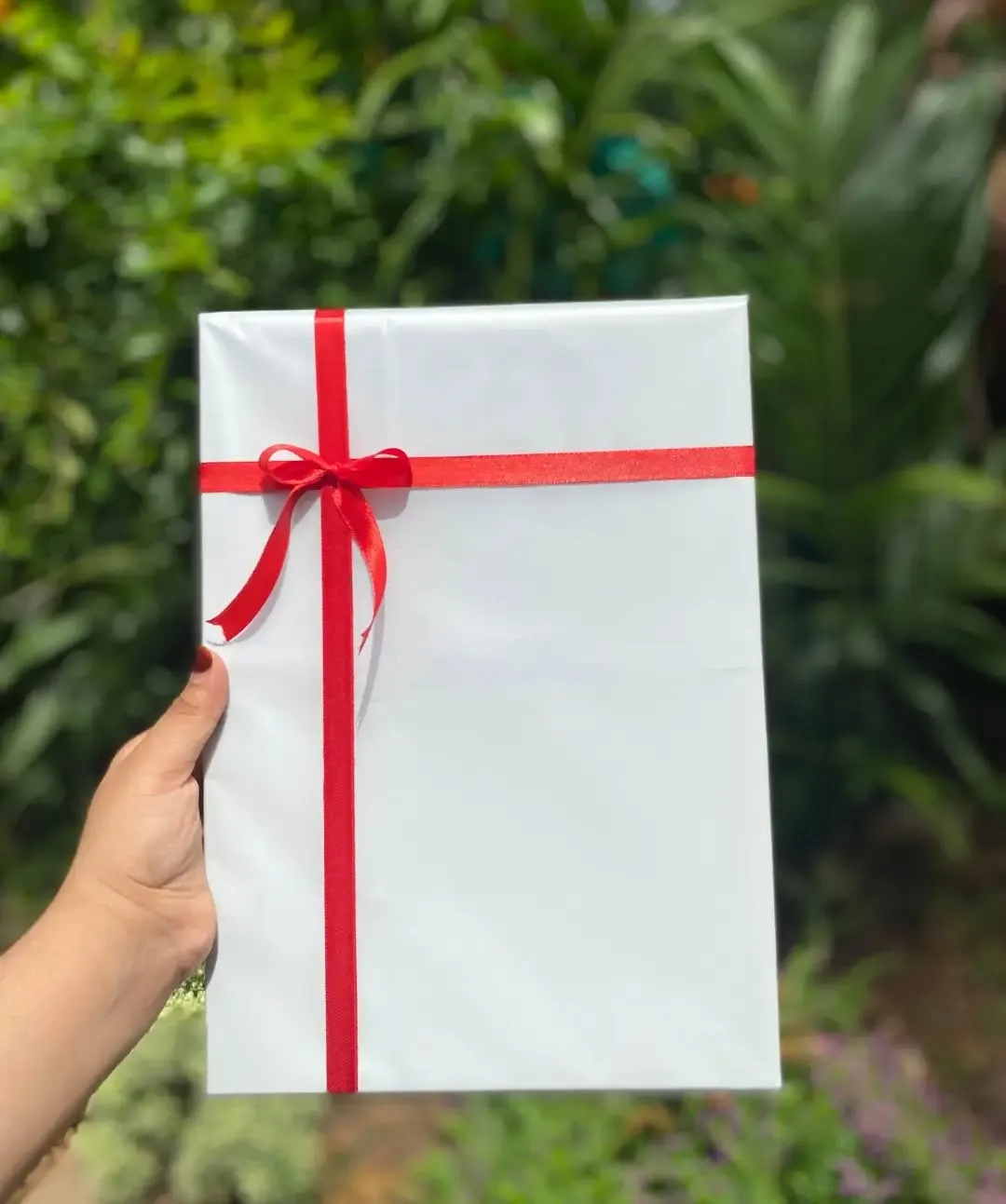
White paper with a single red ribbon looks as festive as any printed design and far more orderly. Crisp white shows off sharp folds beautifully, and the red band gives the parcel its Christmas colour in one stroke. Stores use the same pairing in their windows because it photographs well and suits gifts for men, women, and children alike.
Choose matte white paper rather than glossy, because matte surfaces hide tape and forgive small wrinkles. Wash and dry your hands before you start, since white paper records every fingerprint and pencil smudge. Ribbon with a woven edge holds its bow best, and a width around the size of your thumb suits most boxes without swamping small ones.
Red ribbon flatters nearly everyone on your list, from grandparents to teachers to neighbours you know only slightly. Formal gifts look especially smart in the pairing, like a boxed candle, a bottle of something nice, or a new scarf folded in a shirt box. Add a plain white tag so the whole parcel stays within its two colours.
Glossy ribbon slides against itself and loosens by morning, so knot it once under the bow before you shape the loops. Damp ribbon can also bleed colour onto white paper during storage, so keep finished parcels dry and away from radiators. Wrap white parcels last in your session, after the coloured papers, so stray ink and glitter stay off them.
Fabric wrapping with a simple knot
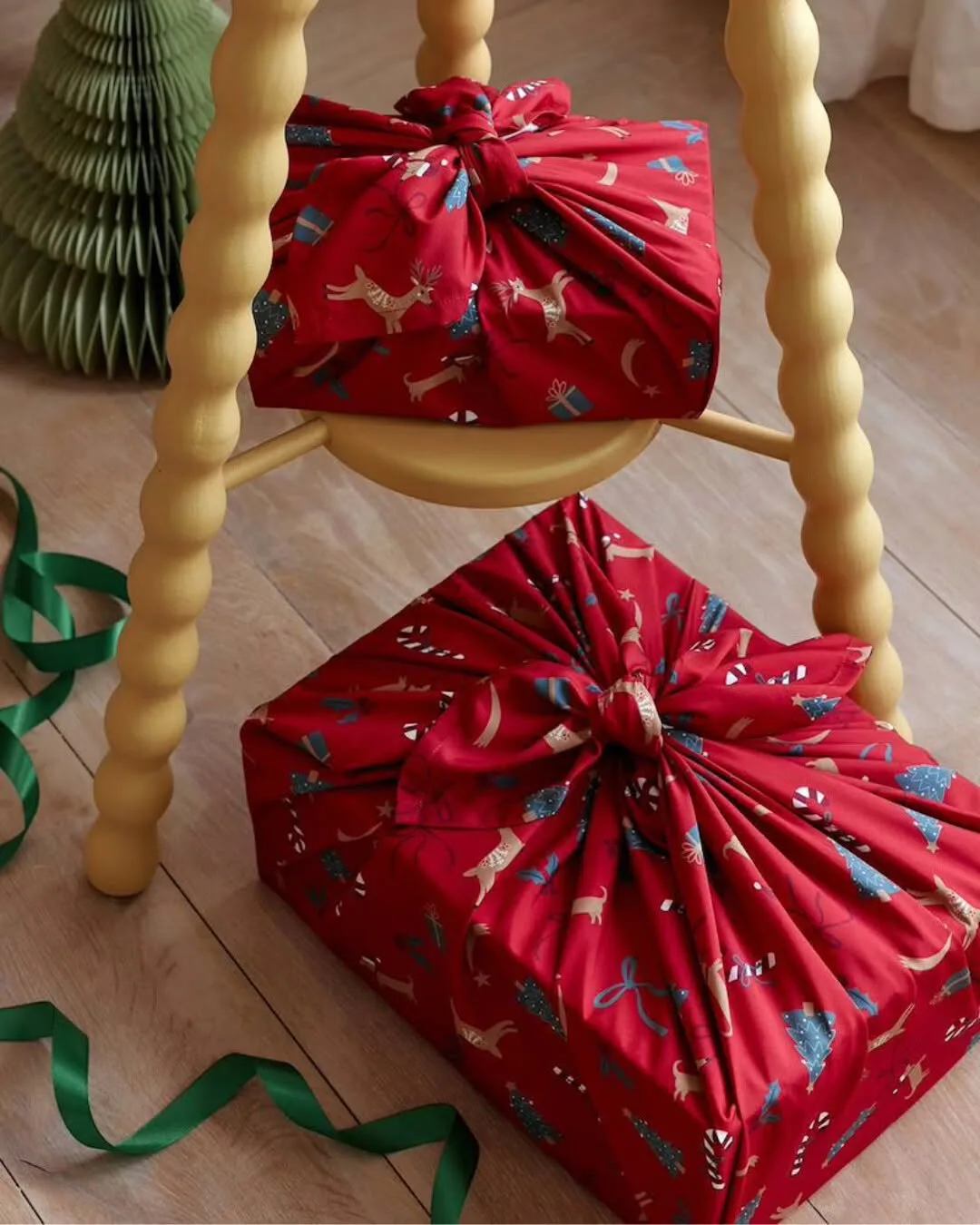
Fabric wrapping turns the covering into part of the present, because the cloth stays useful long after Christmas Day. Scarves, tea towels, cloth napkins, and cotton squares all fold around a gift and tie at the top with one confident knot. Nothing goes in the bin afterwards, and the soft parcel feels generous in the hands before it is even opened.
Lay the cloth flat with the pattern facing down, set the gift in the middle, and lift two opposite corners up to meet above it. Knot those corners once, then bring the remaining two corners up and knot them over the first. Tuck any loose ends under the knots, and shake the parcel gently to check the cloth holds firm.
Soft and rounded gifts suit fabric best, because cloth follows curves that paper fights against. Jars of preserves, bottles, balls of wool, and bundles of clothing all wrap neatly in cloth, and older relatives often keep the fabric in daily use. Choose cloth in a colour the person already wears or uses in their kitchen for a thoughtful touch.
Loose weaves and slippery silk slide open during handling, so pick cotton or linen with some grip for parcels that travel. Wash new cloth before you wrap with it, since stiff sizing can leave marks on pale gifts and smells from storage linger. Keep knots on top where hands can undo them, and skip pins entirely around children and pets.
Family photo gift tags
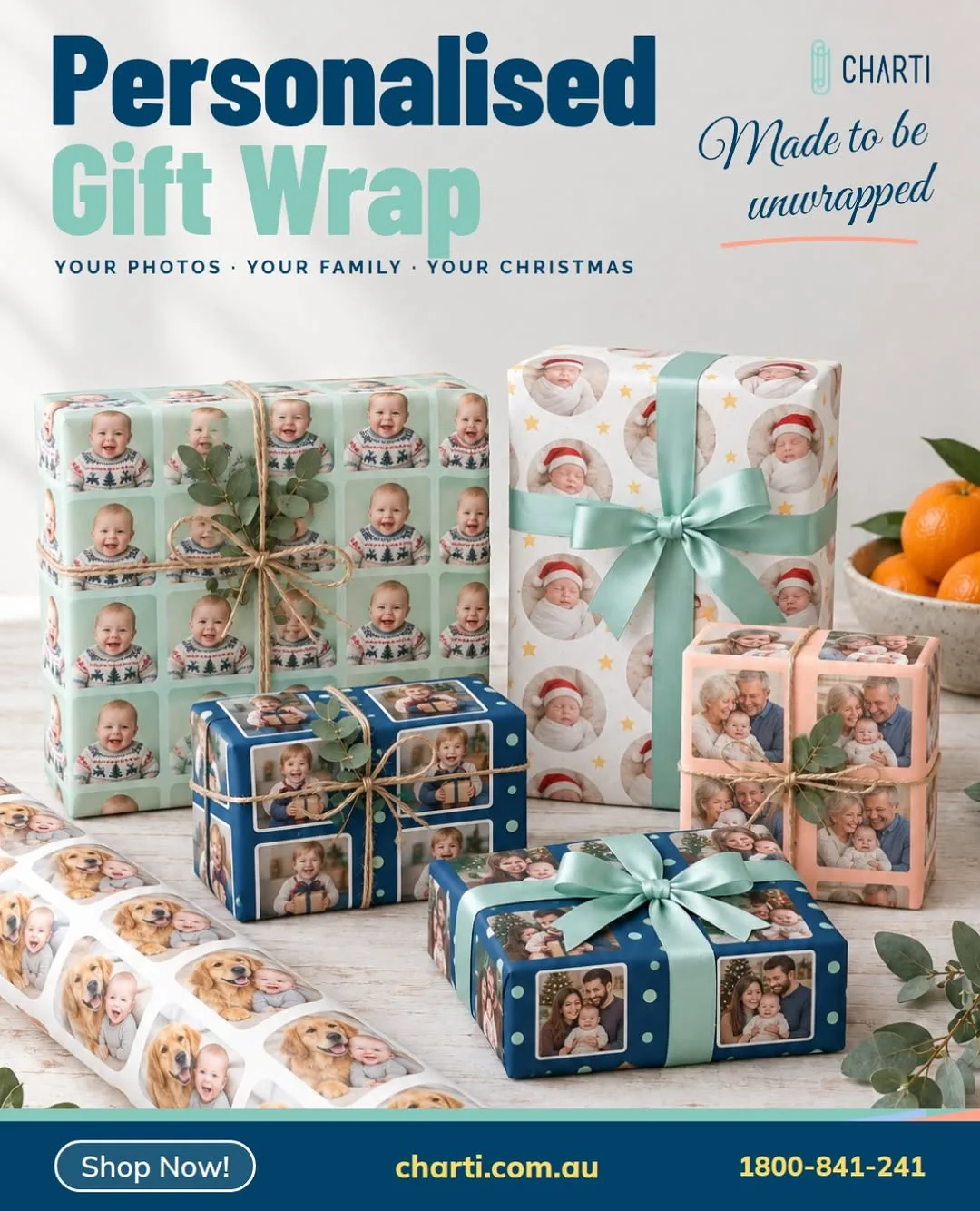
Photo tags turn a plain parcel into a small keepsake before anyone unties the ribbon. One favourite family photograph, printed small and tied on top, tells the person exactly who the gift celebrates. Grandparents especially keep these tags long after the paper is gone, and children love spotting themselves on the gifts under the tree on Christmas morning.
Print your chosen photographs at a small size, mount each one on a piece of card if the print feels flimsy, and punch one hole in a corner. Write the name on the back in pencil so ink never bleeds through the picture. Thread twine or thin ribbon through the hole and tie the tag at the knot of the bow.
Grandparents, godparents, and close family friends value photo tags most, because the picture matters as much as the present inside. Match the photograph to the person where you can, like a shot of the two of you together or the children they adore. One photograph per gift keeps the look clean and stops the pile turning into a scrapbook.
Order prints early, because photo counters slow down badly in the last week before Christmas. Keep a few plain tags in your wrapping box for gifts you forgot to photograph, and never tape a photograph directly to paper you plan to recycle. Store leftover prints flat in an envelope so they stay crisp for birthdays during the year ahead.
Hand stamped wrapping paper
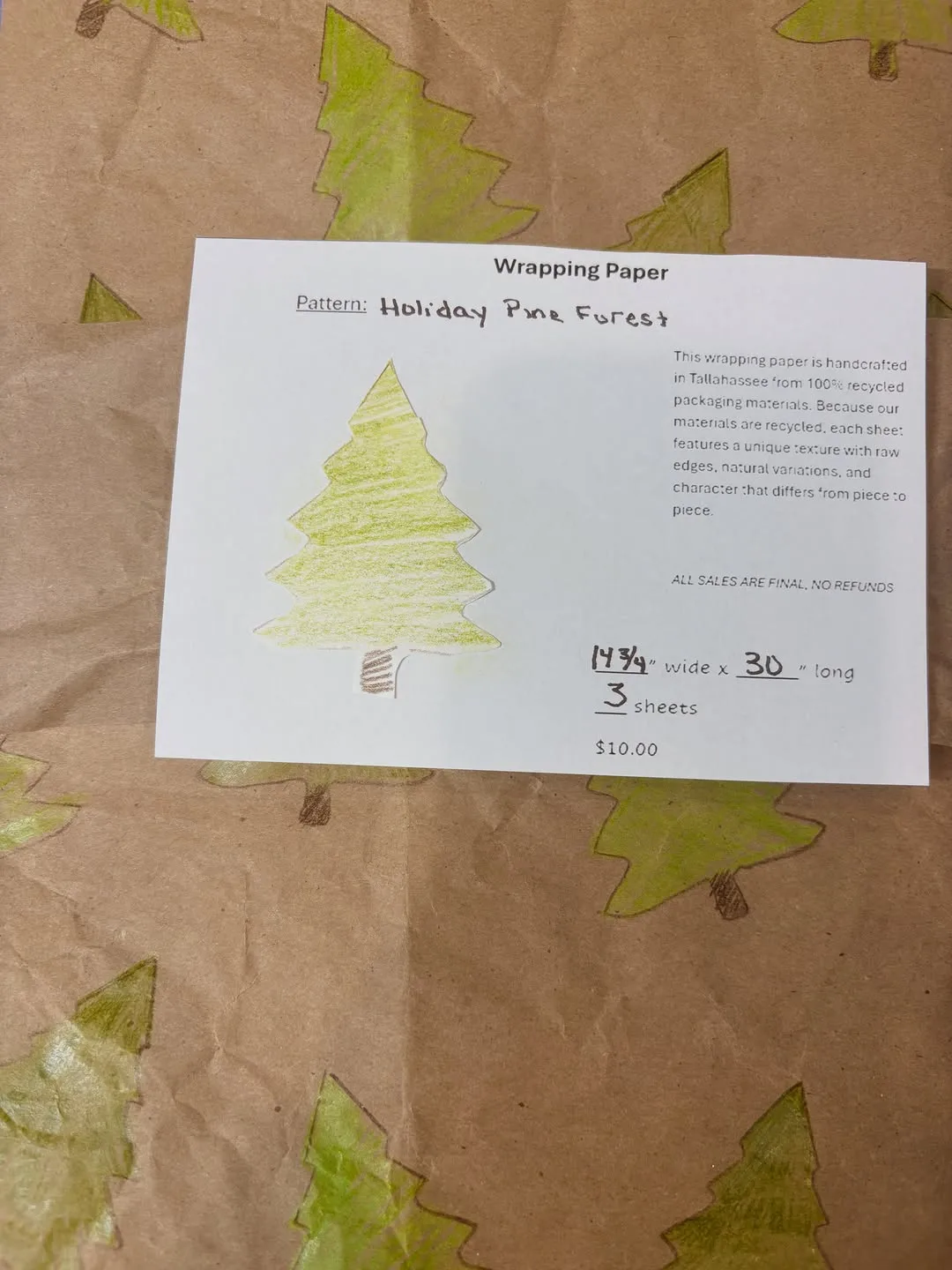
Plain paper becomes your own printed design when you stamp it by hand, and no two sheets ever match exactly. Simple shapes read best at a distance: stars, trees, dots, and leaves all stamp cleanly with an ink pad. Craft shops sell ready made stamps, and a firm potato cut in half also takes ink well for a rustic print.
Roll the paper out on a table and hold the corners down with books so the sheet stays flat while you work. Stamp in loose rows across the whole sheet, turning the stamp slightly each time so the pattern feels handmade rather than mechanical. Leave the paper to dry fully before you cut it, and stamp more than you need.
Children stamp happily alongside you, and their slightly wobbly rows charm grandparents more than perfect printing would. Keep one ink colour per sheet so young helpers can work without muddying the design. Stamped paper suits craft lovers, teachers, and anyone who appreciates effort, and it wraps especially well around books, boxes of craft supplies, and baking gifts.
Wet ink smudges under hands and ribbon, so test your stamp on scrap paper first and give the finished sheet proper drying time. Ink also soaks through thin paper and can mark the gift beneath, so stamp the thicker papers in your stash. Even with those cautions, stamped sheets rank among the cheapest christmas gift wrapping ideas in this whole list.
Twine and cinnamon sticks
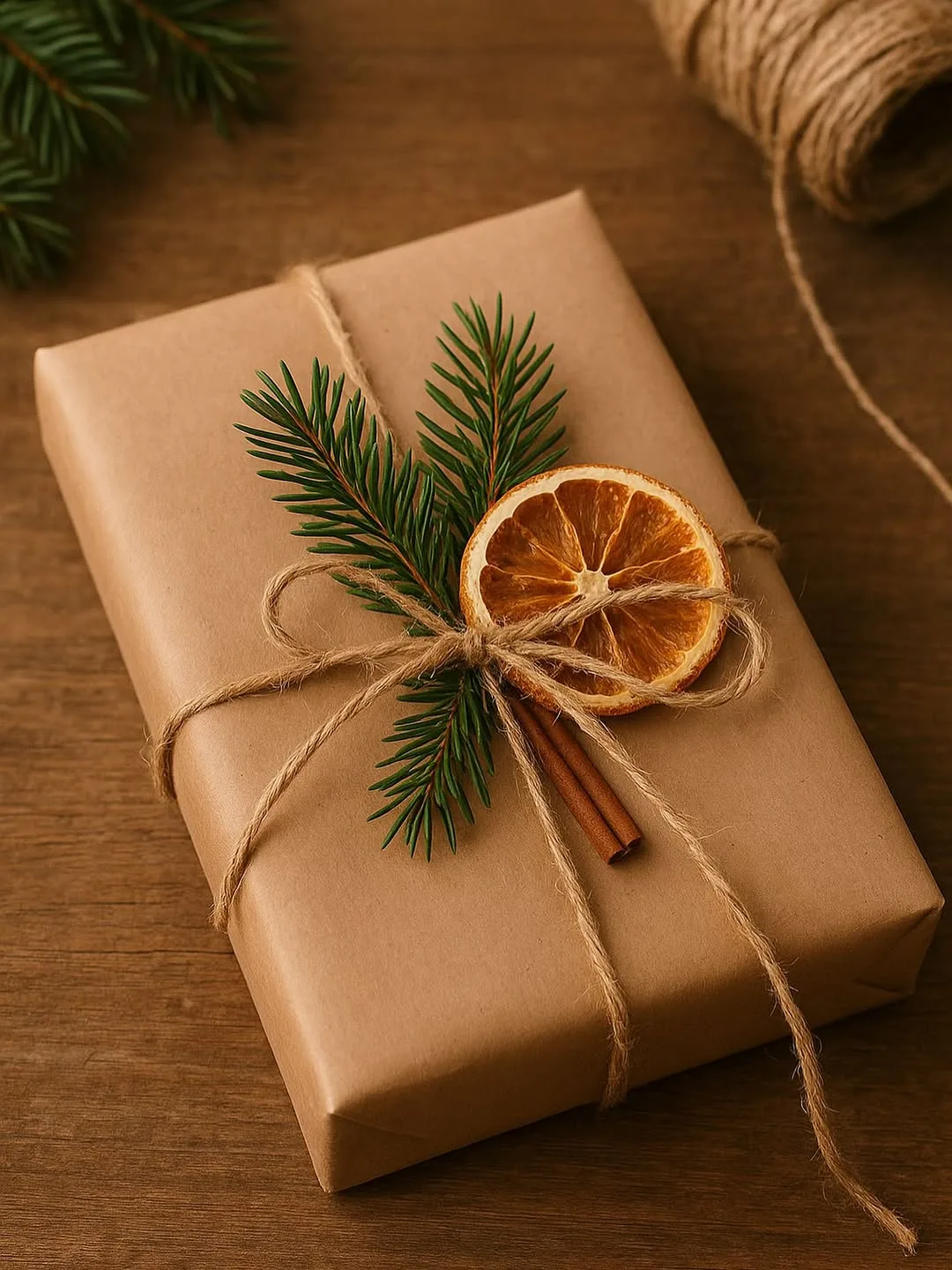
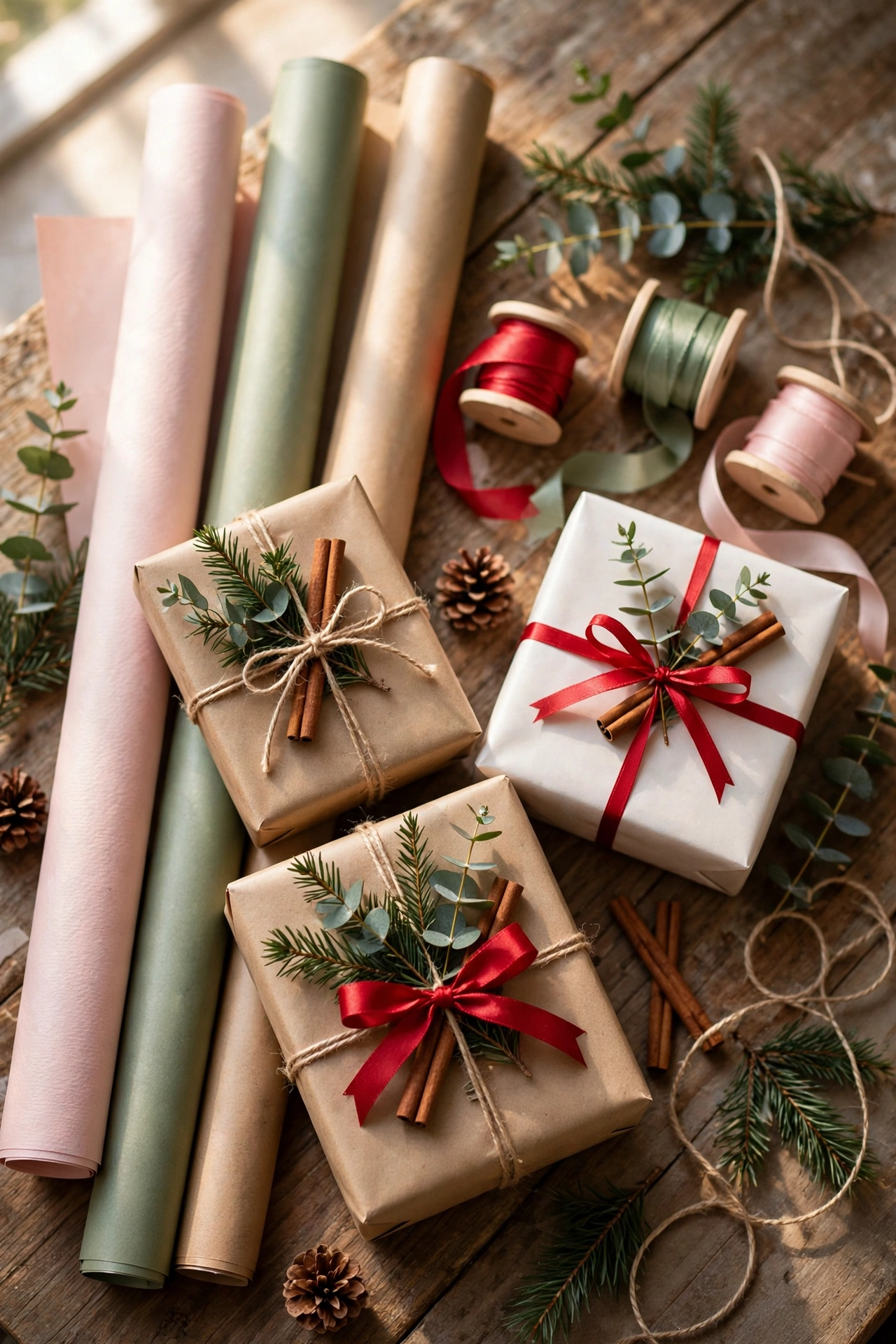
Twine costs very little, ties firmly, and gives plain paper a warm, rustic finish that suits a family Christmas. Garden centres sell it in big rolls that last for years of wrapping. Paired with brown, white, or plaid paper, twine looks deliberate rather than plain, and it never clashes with whatever paper you already own.
Tie the twine around the parcel twice in one direction and once across, so it sits flat and holds the paper snugly. Slide two cinnamon sticks under the crossing point while the twine is still loose enough to move, then pull everything tight. Finish with a small tag threaded onto the twine before the final knot, and trim the ends short.
Kitchen gifts wear cinnamon best, because the scent belongs with food and cooking. Cookbooks, spice sets, baking boxes, and jars all suit the pairing, and cooks usually notice the thought behind it. Hosts and neighbours also receive twine wrapped parcels well, since the style feels friendly and homemade without looking unfinished or scruffy at the door.
Cinnamon sticks snap when you force them under tight twine, so buy a few spares and slide them in gently. Whole spices also shed tiny fragments, so shake the finished parcel over the table before you carry it to the tree. Keep scented parcels away from gifts of plain chocolate or biscuits for babies, because strong smells travel through paper.
Plaid paper with a gold sticker seal
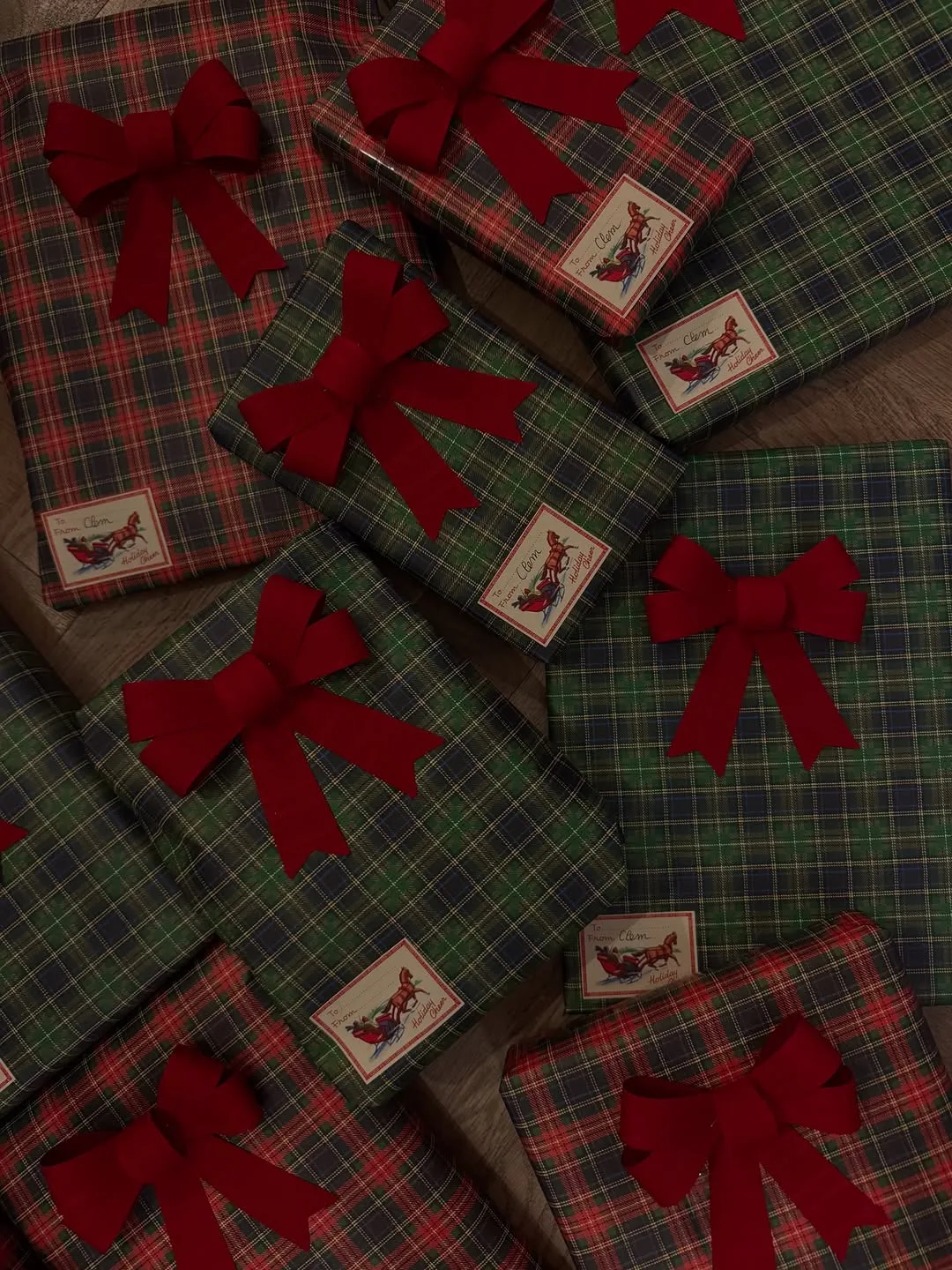
Plaid paper carries the whole Christmas look on its own, so the parcel needs almost nothing else on top. Red and green checks feel traditional and warm, and they flatter gifts for fathers, grandfathers, and anyone who dislikes fussy decoration. One round gold sticker pressed over the paper join replaces ribbon entirely and keeps the surface smooth for stacking.
Gold sticker seals come in packets from craft and card shops, and one packet covers a whole season of gifts. Press the sticker over the centre seam at the back first if you want a hidden join, or place it on the front like a wax seal for show. Match the paper pattern across the join where the design allows it.
Traditional tastes respond best to plaid, and the style suits whisky glasses, books, tools, and winter clothing particularly well. Men who claim not to care about wrapping still notice a sharp plaid parcel with a clean gold seal. Use the same approach for office gifts, where neat and unfussy always reads better than bows and glitter.
Busy patterns forgive small wrapping faults, but they also hide the gift tag if you choose a patterned one, so pick plain tags in cream or kraft. Sticker seals lose their grip on textured or fluffy paper, so test one before you commit a whole roll. Store plaid paper rolled rather than folded, because creases cut across the checks.
Two ribbons layered on one gift
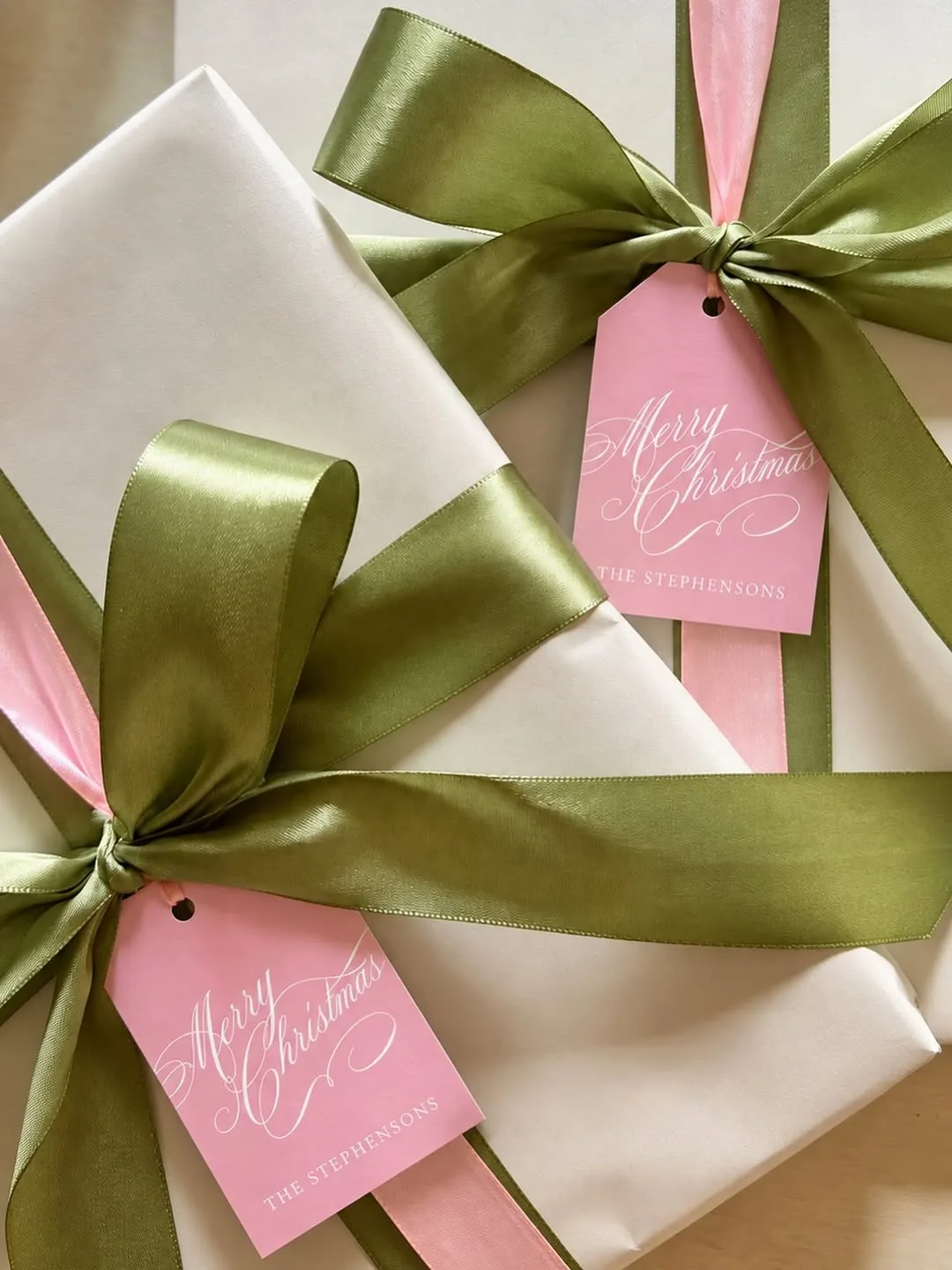
Layered ribbon makes an ordinary parcel look dressed, because two widths and two textures catch the light differently. One wide ribbon forms the base, and one narrow ribbon runs along its centre like a stripe. Shops charge extra for exactly this finish, yet it takes less than a minute once you know the order of the steps.
Place the wide ribbon around the box first and knot it underneath, keeping the surface smooth and flat. Run the narrow ribbon along the same path, centred on the wide one, and tie both together at the top in one bow. Colours from the same family blend calmly, like deep red over soft gold or sage over cream.
People who love a dressed table and a styled tree usually love a dressed parcel too, so save your best layered work for them. Jewellery boxes, perfume, and good chocolate carry the extra ribbon well because the gifts inside feel special. Coordinate the ribbon colours with your tree decorations and the whole pile looks planned from across the room.
Thick ribbon over a tiny box looks clumsy and hides the gift entirely, so scale the widths down for small parcels. Velvet and satin layered together slide against each other and the bow sags, so pair one smooth ribbon with one woven one for grip. Cut ribbon ends at an angle or in a notch so they resist fraying.
Small ornament tied to the bow

Ornaments earn their keep twice when you tie one to a bow, first as decoration and then on the tree for years. Small baubles, wooden figures, and metal stars all sit well on top of a parcel. Choose ornaments in the same colour family as your paper so the gift looks composed rather than decorated at random.
Choose a shatterproof ornament for any gift that travels by post or car, and save glass ones for parcels you hand over yourself. Thread the ornament loop onto the ribbon before you tie the bow, and let it rest against the knot. Among christmas gift wrapping ideas, ornaments suit people who collect tree decorations and mark each Christmas with a new one.
Newly married couples, new parents, and anyone in a first home value an ornament gift deeply, because their tree still has gaps to fill. Match the ornament to the occasion inside the parcel where you can, like a tiny house beside a housewarming gift at Christmas. Write the year on the back of the ornament in fine pen for keeping.
Fragile ornaments crack in a pile of parcels, so place finished gifts ornament side up and never stack heavy boxes on top. Heavy ornaments also drag the bow sideways and spoil your straight lines, so keep the ornament small compared with the box. Pad posted parcels around the ornament, or post the ornament inside the box instead.
Brown paper bags for awkward shapes
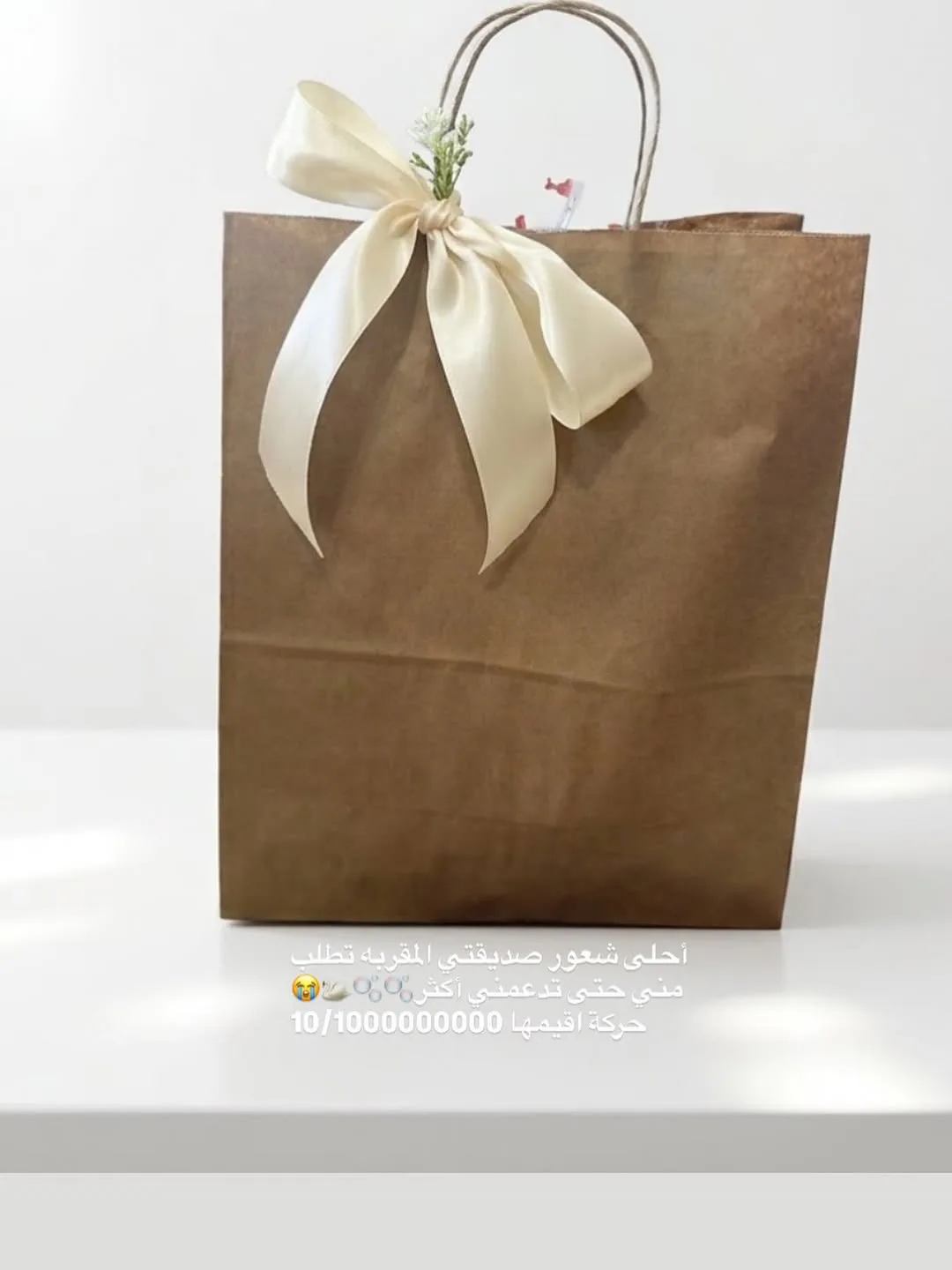
Bags solve the gifts that paper cannot handle, like balls, mugs, soft toys, and bottles with odd shoulders. Brown paper bags look neat, cost very little in a bundle, and take seconds to finish. Folded down at the top with a sticker or a short length of ribbon, a plain bag looks like a deliberate style rather than a shortcut.
Fold a wide cuff at the top of the bag after you drop the gift inside, and crease it firmly so the fold stays shut. Punch two holes through the folded layers and thread ribbon or twine through them for a handled finish. Stand the bag upright while you work so the gift settles at the bottom and the cuff folds evenly.
Bottles, jars, candles, and rolled clothing all disappear into bags gracefully, and children find bag gifts easy to carry and open. Teachers receiving several small gifts from a class also manage bags better than a stack of boxes. Line the bag with one sheet of tissue in a bright colour so the opening shows a hint of the surprise.
Thin bags split at the corners under anything heavy or sharp, so double the bag for tools, tins, or hardback books. Bag bottoms also give way when gifts stand in a damp hallway, so keep finished bags on a shelf or table. Write the name tag before you fold the cuff, because writing on a finished bag crumples the fold.
Children drawings as wrapping paper
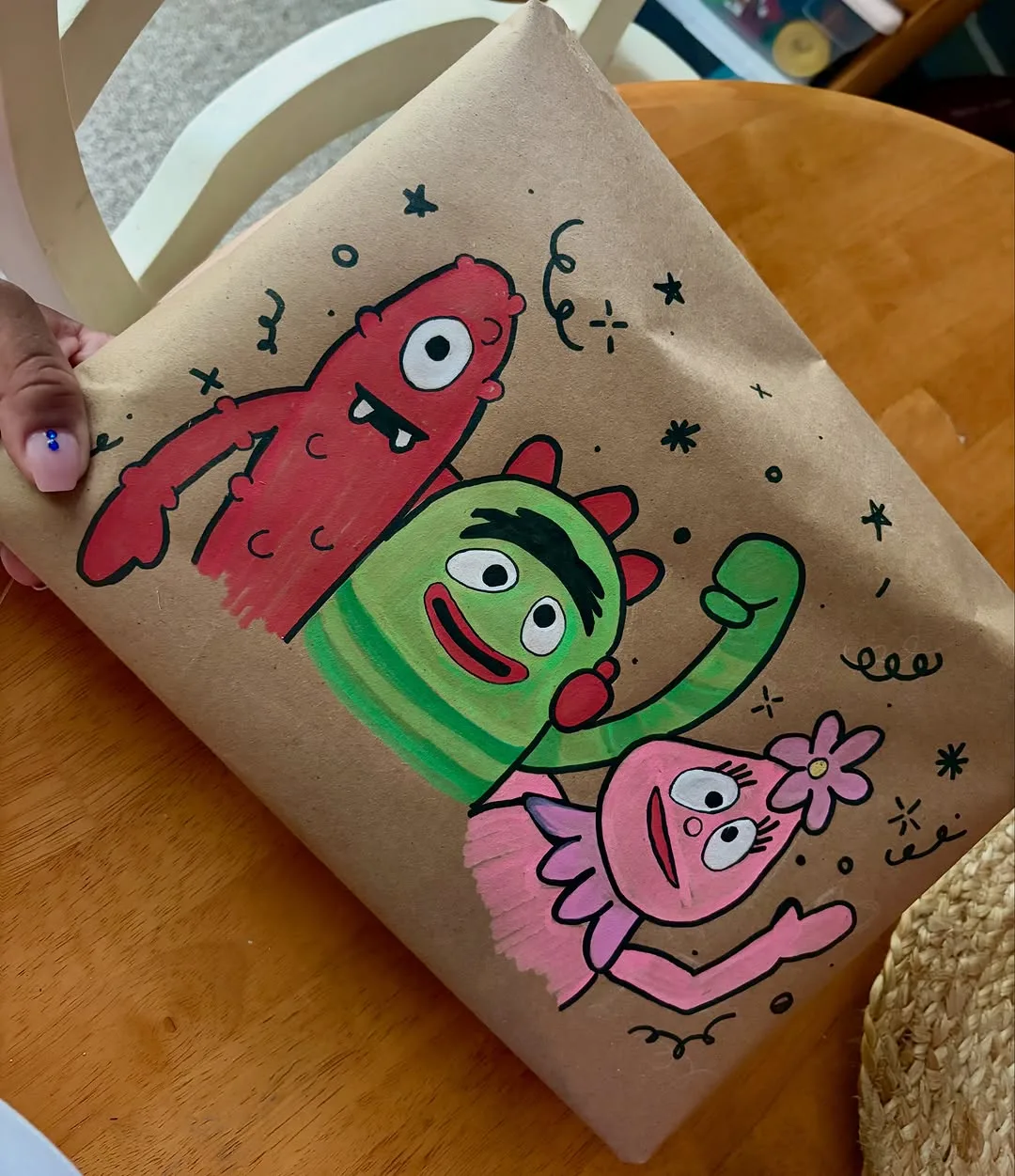
Drawings from your own children wrap a gift in something no shop can sell, and grandparents treasure the paper as much as the present. One large drawing covers a small box, and several sheets taped together cover bigger gifts. Bright crayon and paint show up best, and the personal artwork suits simple ribbon or plain twine over the top.
Ask children to draw on the largest paper you have, and give them Christmas shapes to fill: trees, stars, houses, and the family pet. Let every sheet dry fully before you wrap, because wet paint sticks to the gift and to your hands. Tape sheets together from the back so the joins stay invisible under the ribbon on the front.
Relatives who live far away receive drawing wrapped gifts with real delight, because the artwork doubles as a letter from the children. Match the drawing to the gift when you can, like a drawn cake outside a baking book. Photograph each finished parcel before you give it away, because the paper itself rarely survives the opening.
Large gifts eat through drawings quickly, so keep this idea for small and medium parcels and cover big boxes in plain paper instead. Thin school paper tears along folds, so back special sheets with a layer of plain paper before you wrap. Save one favourite drawing each year in a folder rather than wrapping with it, for looking back.
Black and white wrapping with one red bow
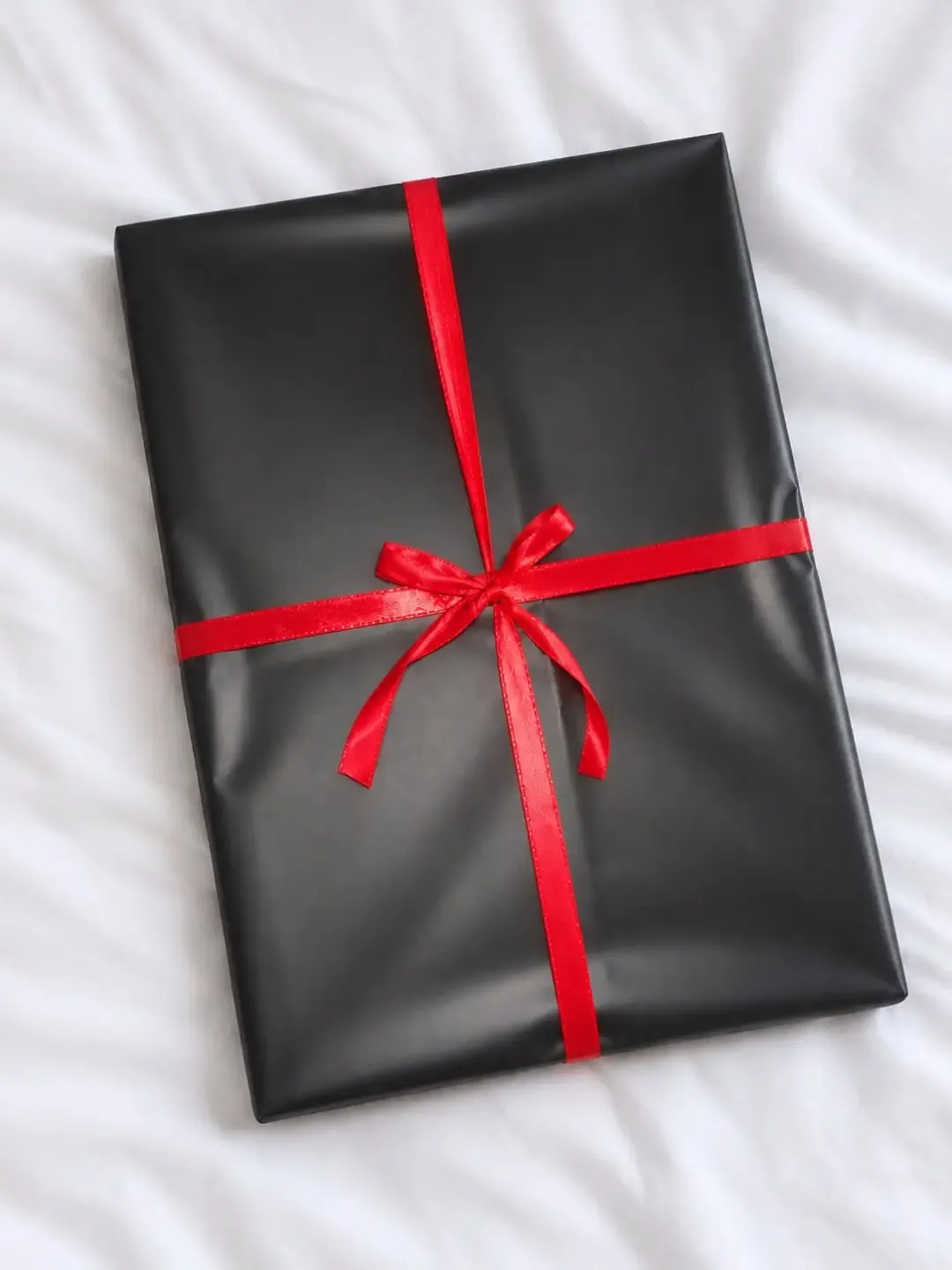
Black and white wrapping turns simple christmas gift wrapping ideas into something modern that stands apart under a green tree. Plain black paper, plain white paper, and striped or spotted prints all mix calmly in one pile. One red bow per parcel supplies the Christmas colour, and the strict palette keeps even a large pile looking orderly and grown up.
Keep the paper matte, because glossy black shows every tape mark and fingerprint under tree lights. Use the same red ribbon on every parcel so the set reads as one collection rather than leftovers. Black paper also pairs well with white tags written in black pen, which keeps the writing clear and the look uncluttered from every angle.
Modern tastes suit this palette best, and teenagers and design minded friends usually pick these parcels first. Photographers, artists, and anyone with a monochrome home feel understood by the choice. Wrap one or two gifts this way inside a larger family pile as an accent, or commit the whole tree to the palette for a striking result.
Dark paper shows dust, flour, and pet hair mercilessly, so wipe each finished parcel with a dry cloth before it goes under the tree. Black paper also drinks ink, so write tags separately rather than on the parcel itself. Store black rolls away from sunlight, because the colour fades in patches and faded paper spoils the sharp look.
Reusable boxes wrapped once
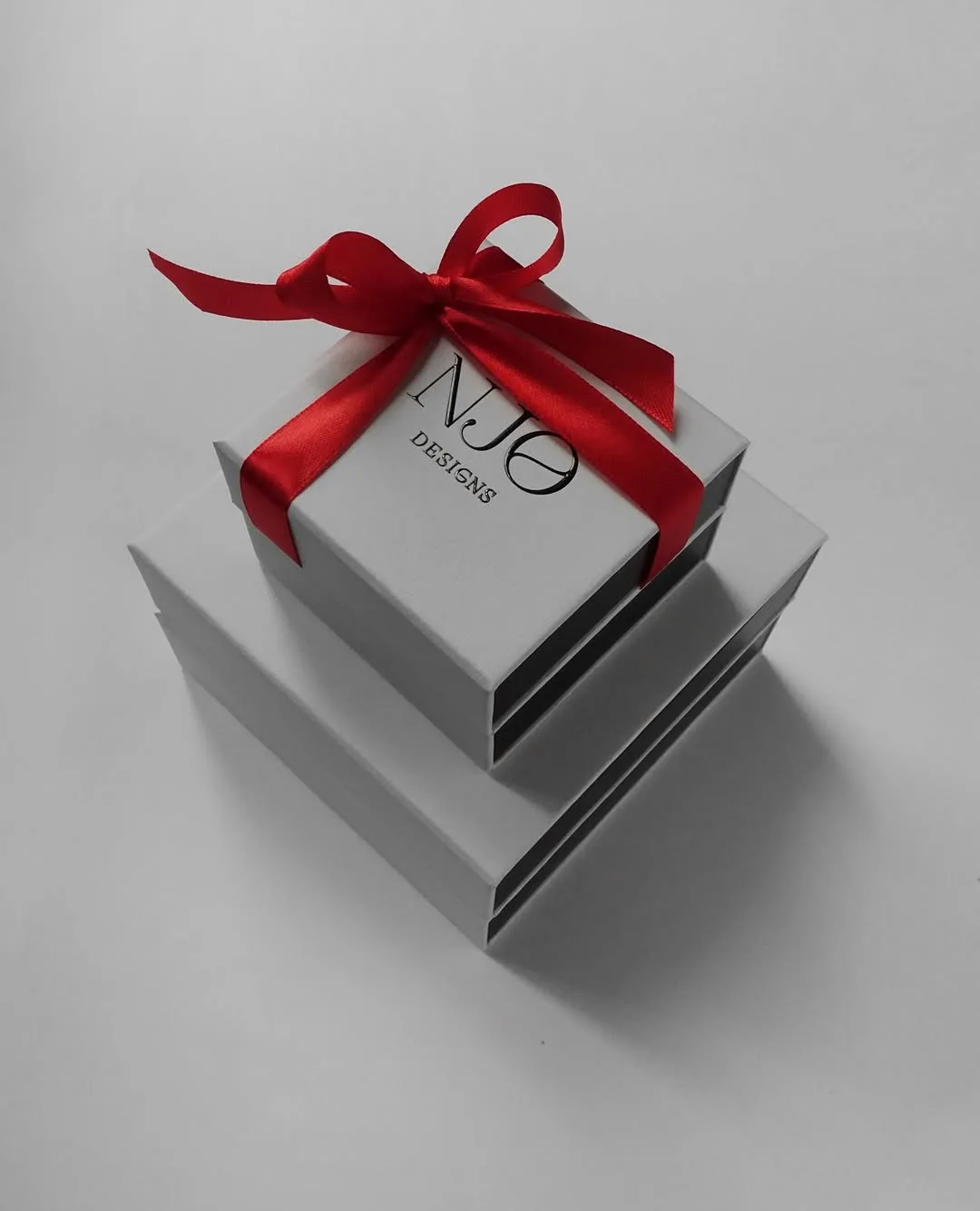
Sturdy gift boxes wrapped once serve your family for a decade of Christmases, because you wrap the box and never the gift again. Lidded boxes from shoe shops, department stores, and craft suppliers all work, and you cover them inside and out in one good paper. Future gifts simply drop inside, gain a ribbon, and go straight under the tree.
Wrap the lid and the base separately so the box still opens after the paper goes on, and fold the paper edges inside each part. Choose a classic paper you will not tire of, like deep red, forest green, or brown with a plain ribbon. Write the box size on the inside of the lid in pencil for quick choosing.
Families who exchange gifts every year gain the most, because the same boxes appear each Christmas and become part of the tradition. Children learn to spot their box shape under the tree, and adults save an evening of wrapping every December. Keep two or three sizes in circulation, and retire a box only when its corners finally give way.
Label each box with its size rather than a name, because names change as gifts change hands. Boxes stored in damp places smell musty by December, so keep them in a dry cupboard with a sheet of tissue inside each one. Never wrap a box you still need for returns or storage, because paper and ribbon make it awkward to reuse.
Dried flowers tucked under the ribbon
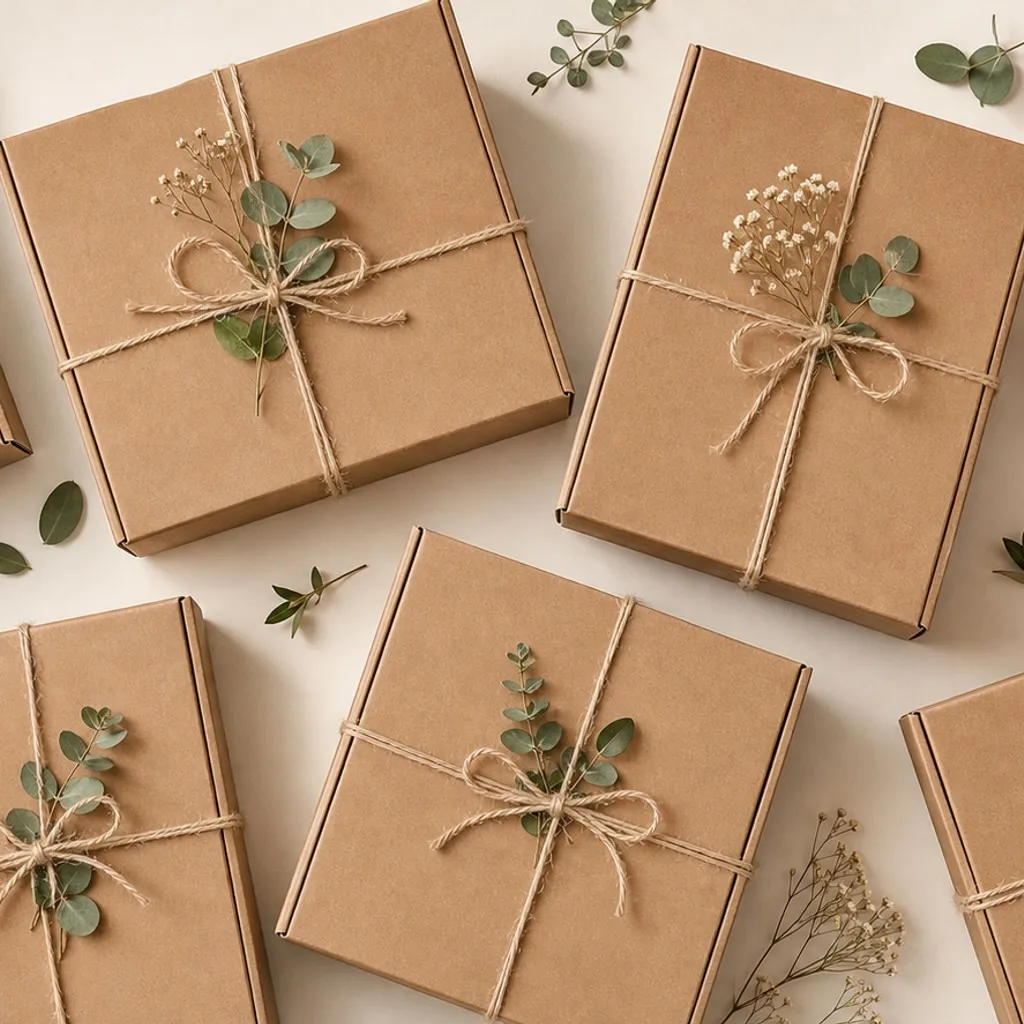
Dried flowers bring soft colour and texture to a parcel without wilting, dripping, or shedding petals everywhere. Lavender, dried grasses, small roses, and gypsophila all dry well and keep for a whole season in a jar. Tucked under a ribbon on plain paper, a small bunch looks gentle and thoughtful, and the flowers often end up in a vase afterwards.
Tuck the stems under the ribbon while you tie it, pointing the flower heads toward one corner of the parcel. Keep bunches small and flat so parcels still stack, and trim stems so nothing pokes through the paper. Plain cream, white, or brown paper shows dried flowers best, because busy prints fight with their soft colours and fine shapes.
Gardeners and flower lovers notice this finish first, and it suits gifts like candles, books, scarves, and handmade presents. Brides keeping a colour theme from a wedding year also treasure dried flowers from their own bouquet on a special gift. Add a tiny card naming the flower if you grew it yourself, and the parcel gains a story.
Petals and seed heads crumble when parcels travel in bags or car boots, so add dried flowers at the last moment before you give the gift. Strongly scented bunches also perfume whatever sits beside them, so keep lavender parcels away from food gifts. Store spare dried flowers upright in a jar away from sunlight, because colours fade fast in bright rooms.
One wrapping style for the whole tree
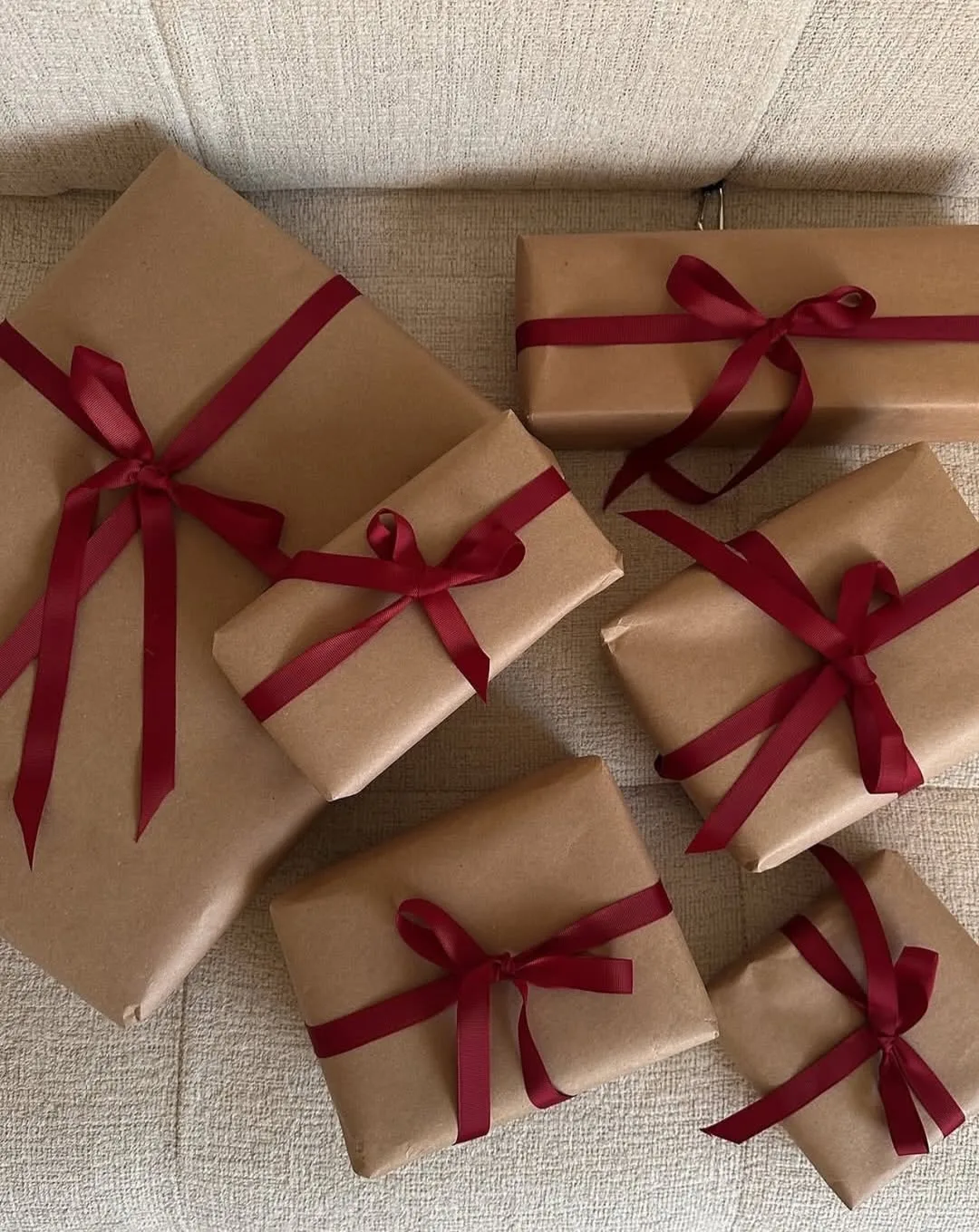
One signature style across every gift makes the whole tree look composed, even when the parcels cost very little each. Pick one paper, one ribbon, and one finishing touch, then repeat them without apology on gift after gift. Visitors read the pile as a planned display, and you shop for supplies once instead of hunting for variety all December.
Set your style from what you already own before you buy anything new this year. Brown paper with red ribbon, white paper with green ribbon, and plaid with twine all repeat beautifully and suit most families. Buy the paper in the largest roll you can store, because running short in the final week forces a style change mid pile.
Parents wrapping late at night gain the most from one style, because every decision is already made and the work speeds up. Children also love spotting the family style year after year, and photographs of the tree look calm and uncluttered. Guests receiving several gifts from your house carry home a matching set that looks generous and considered.
Running out of your one ribbon in the last week breaks the whole effect, so buy a spare roll early and keep it sealed. Boredom tempts some wrappers to improvise halfway, and one odd parcel then draws every eye for the wrong reason. Keep one small backup paper that blends with your style for emergencies, like plain brown under a plaid theme.
Common Mistakes to Avoid When Wrapping Gifts
Rushed wrapping shows itself in every crease, because midnight sessions with blunt scissors undo good intentions. Torn corners, bubbling tape, and lopsided bows all come from hurrying rather than from lack of skill. Wrap in shorter sessions across several evenings, keep your tools sharp and together, and stop while you still have patience for the final details on each parcel.
Many christmas gift wrapping ideas fall apart on paper quantity alone, because too much paper bunches at the ends and too little leaves gaps at the corners. Measure the box before you cut, using string around it if the shape confuses you. Paper should wrap around once with a small overlap and fold over each end by about half the depth.
Tags cause the quietest disasters, because unnamed parcels under a busy tree get shaken, guessed at, and occasionally opened by the wrong person. Write the tag the moment you finish each gift, while the contents are still fresh in your mind. Keep a list on your phone of what you wrapped, and tick gifts off as they go under the tree.
Budget Friendly Ways to Wrap Every Gift Well
Simple christmas gift wrapping ideas cost very little when you build them around one paper, one ribbon, and one finishing touch you repeat. Brown paper by the long roll undercuts printed paper badly, and garden twine outlasts several Christmases. Money saved on wrapping belongs inside the gifts and the food, where people actually notice and enjoy it.
Buy rolls in the January sales for the following Christmas, and choose classic colours that never date, like red, green, gold, and kraft brown. Market bunches of greenery cost little and divide across many parcels, while one packet of sticker seals finishes a whole pile. Second hand shops also sell part used ribbon reels and sturdy gift boxes for pennies.
Save ribbon, tissue, tags, and good boxes from gifts you receive, and store them flat in one labelled box ready for next year. Spend your small wrapping budget on sharp scissors and good tape instead of novelty paper, because tools improve every parcel you wrap. Free finishing touches surround you: garden greenery, dried flowers, children drawings, and last year leftover card.
Gift Wrapping Tips That Save Time and Paper
Cut paper on a table at standing height. Working on the floor bends your back, wrinkles the paper, and scatters offcuts everywhere. Clear one table for the whole season if you can, keep the tree and the finished pile in another spot, and your sessions stay calmer and faster from the first gift to the last.
Keep one wrapping box stocked all year. Scissors, tape, twine, tags, a pen, and a ruler living in one box end the hunt that ruins wrapping evenings. Restock the box whenever you finish a session rather than at the start of the next one, and add sale finds to it whenever you spot them through the year.
Measure awkward gifts with string first. Wrap the string around the gift, mark the length with your fingers, and lay it along the paper before you cut. String follows curves that rulers cannot, and one measured cut saves the torn sheet and the wasted metre that guessing so often produces with bottles, tins, and soft toys.
Hide every strip of tape underneath. Tape on the underside and inside the end folds keeps the top of the parcel clean like shop wrapping. Press each strip down firmly with a fingertip so edges never lift during storage. Parcels also stack better without raised tape ridges, and photographs of the pile look far tidier.
Write the tag before you tie the bow. Bows bury the spot where a tag belongs, and writing on a finished parcel risks ink through the paper. Fill in the tag while the gift sits open in front of you, thread it onto the ribbon, and then tie the bow over the string so the tag lands exactly on top.
Finish each gift fully before starting the next. Half wrapped gifts breed mistakes, because ribbons wander, tags swap, and one parcel always ends up wearing another one colours. Wrap, ribbon, tag, and move the finished gift to the pile in one flow. Assembly line habits feel dull for one gift and save real time across twenty.
Small habits like these turn wrapping from a chore into a quiet pleasure of the season. Pour a warm drink, put on music you love, and work through the pile at your own pace. Finished parcels lined up in order give their own reward, and the tree looks better for every calm session you give it.
FAQ
When should I start wrapping Christmas gifts?
You can start as soon as the first gifts come home, and early wrapping spreads the work into painless short sessions. Wrap two or three gifts a week through late November and early December, and keep finished parcels in a spare cupboard away from curious children. Leave only the fresh greenery and delicate finishes for the final days before Christmas.
How much wrapping paper do I need for each gift?
One standard roll covers roughly eight to ten medium boxes, depending on how carefully you cut and how many mistakes you make. Measure each box before cutting, keep offcuts for small gifts, and buy one more roll than your estimate if your paper is a seasonal design. Running short in the final week costs more than one spare roll ever will.
Can I wrap gifts without tape?
Fabric wrapping needs no tape at all, because the knot holds the cloth closed on its own. Paper parcels can also close with ribbon tied firmly over folded ends, though the finish loosens more easily during travel. Sticker seals and folded bags give you two more tape free options, and children find all of them easier to open on the day.
What can I use instead of ribbon?
Twine, wool, string, strips of leftover fabric, and even long pine needles tied in a bunch all finish a parcel neatly. Look around the house before you shop, because most homes hide several ribbon substitutes in drawers and garden sheds. Choose something with enough strength to knot firmly, and match its colour to your paper so the swap looks deliberate.
How do I wrap a round or awkward gift?
Bags and fabric handle round gifts most gracefully, because both follow curves instead of fighting them with folds. Balls, mugs, and tins drop into a folded paper bag in seconds, and soft toys knot into cloth without a single crease. Round tins can also stand on paper and gather it on top like a bonbon, tied with ribbon.
How do I keep wrapped gifts looking neat until Christmas Day?
Store finished gifts upright in a large box, basket, or spare suitcase so bows and ornaments never carry weight. Keep the storage spot dry and away from radiators, because heat loosens tape and fades ribbon. Carry parcels to the tree in small batches on the day itself, and arrange them once rather than shuffling them for weeks.
Conclusion
Wrapped gifts speak before anyone reads a tag, and neat parcels tell your family that thought went into every stage of the present. None of the ideas in this guide needs rare supplies or special talent. Sharp folds, honest materials, and one finishing touch repeated with care carry the whole effect, from the first small box to the last big one.
Choose two or three christmas gift wrapping ideas from this list and repeat them across all your gifts this year. Repetition builds speed, calms the look of the pile, and turns wrapping into a rhythm instead of a fresh puzzle every time. Next year you can change the palette and keep the habits, and your parcels will still look unmistakably yours.
Your table, your supplies, and one quiet evening are all this really takes. Start with the easiest gift in the pile, enjoy the first neat result, and let it pull you through the rest. Christmas morning will show rows of parcels you feel proud to give, and the wrapping will finally match the care inside them.