15 Small Bathroom Organization Ideas That Make Mornings Easier
Small bathrooms collect clutter faster than any other room in the house. Bottles crowd the sink edge, towels land on the floor, and cleaning products hide in corners where nobody can find them. Simple small bathroom organization ideas fix that mess by giving every daily item a fixed home, even when the room barely fits one person.
Counters stay clear when storage moves up the walls and into the gaps most people ignore. Space above the toilet, the gap beside the sink, and the back of the door all hold more than most families expect. Smart storage also keeps mornings calm, because nobody hunts for a toothbrush or a hair brush while running late.
Each idea below uses plain shelves, baskets, trays, hooks, and jars that cost little and suit bathrooms of every style. You will also find common mistakes, honest budget advice, and simple habits that keep the room tidy after the first big sort out. Pick two or three small bathroom organization ideas to start, and add more as the room begins to feel calmer.
How can I organize a small bathroom without a cabinet?
Good small bathroom organization ideas start with vertical storage and small containers that group daily items together. Open shelves above the toilet hold towels, hooks on the wall hold robes, and one tray beside the sink holds everything you touch every morning. Storage works without any cabinet when every item has a set spot and the counter holds almost nothing.
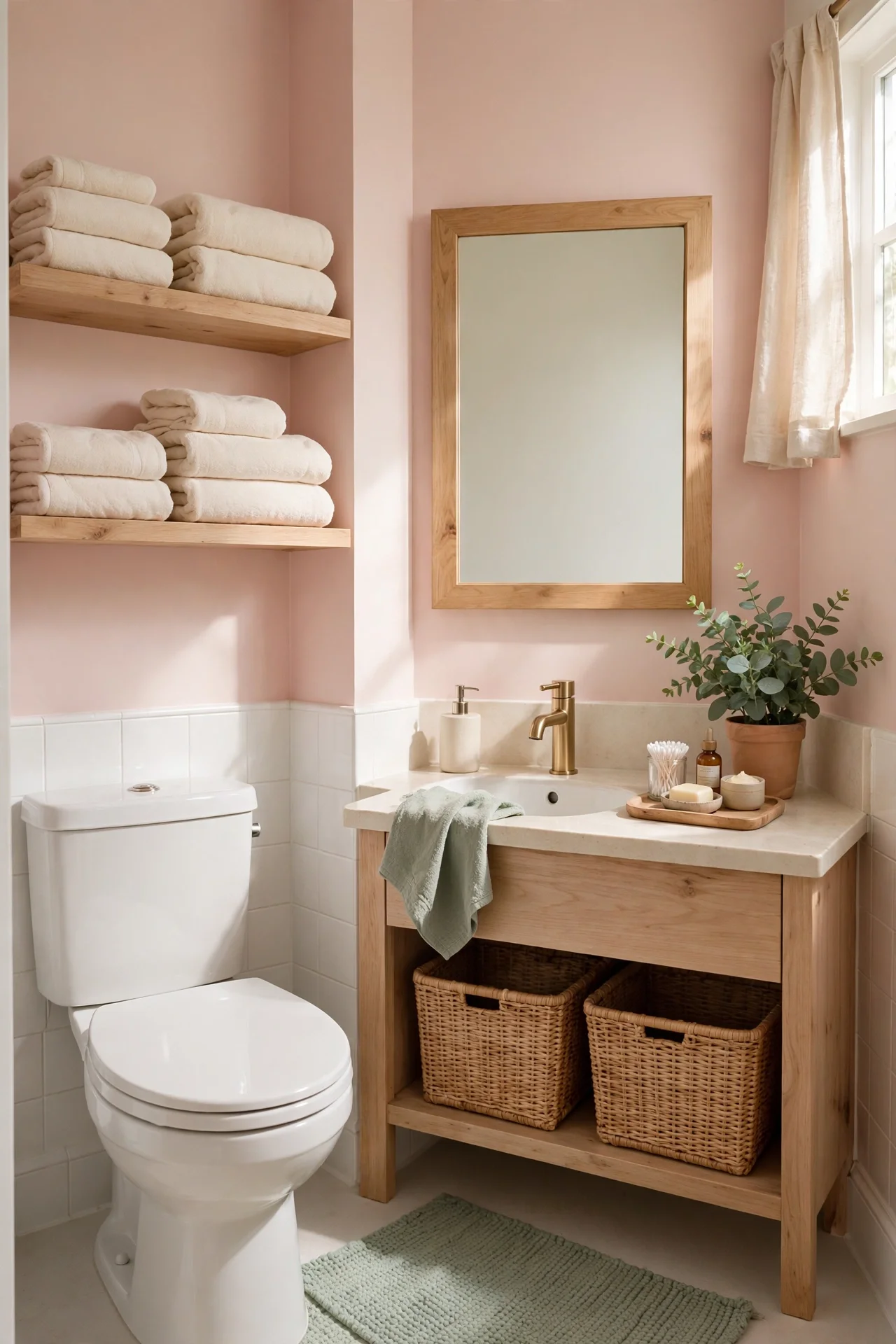
Picture a narrow bathroom where folded towels sit on two shelves above the toilet, cotton balls live in a glass jar, and a slim cart fills the gap beside the basin. Guests find spare rolls in a basket, and the sink edge holds only soap. Nothing in that room cost much, yet every surface looks calm and clear.
Shelves above the toilet for folded towels
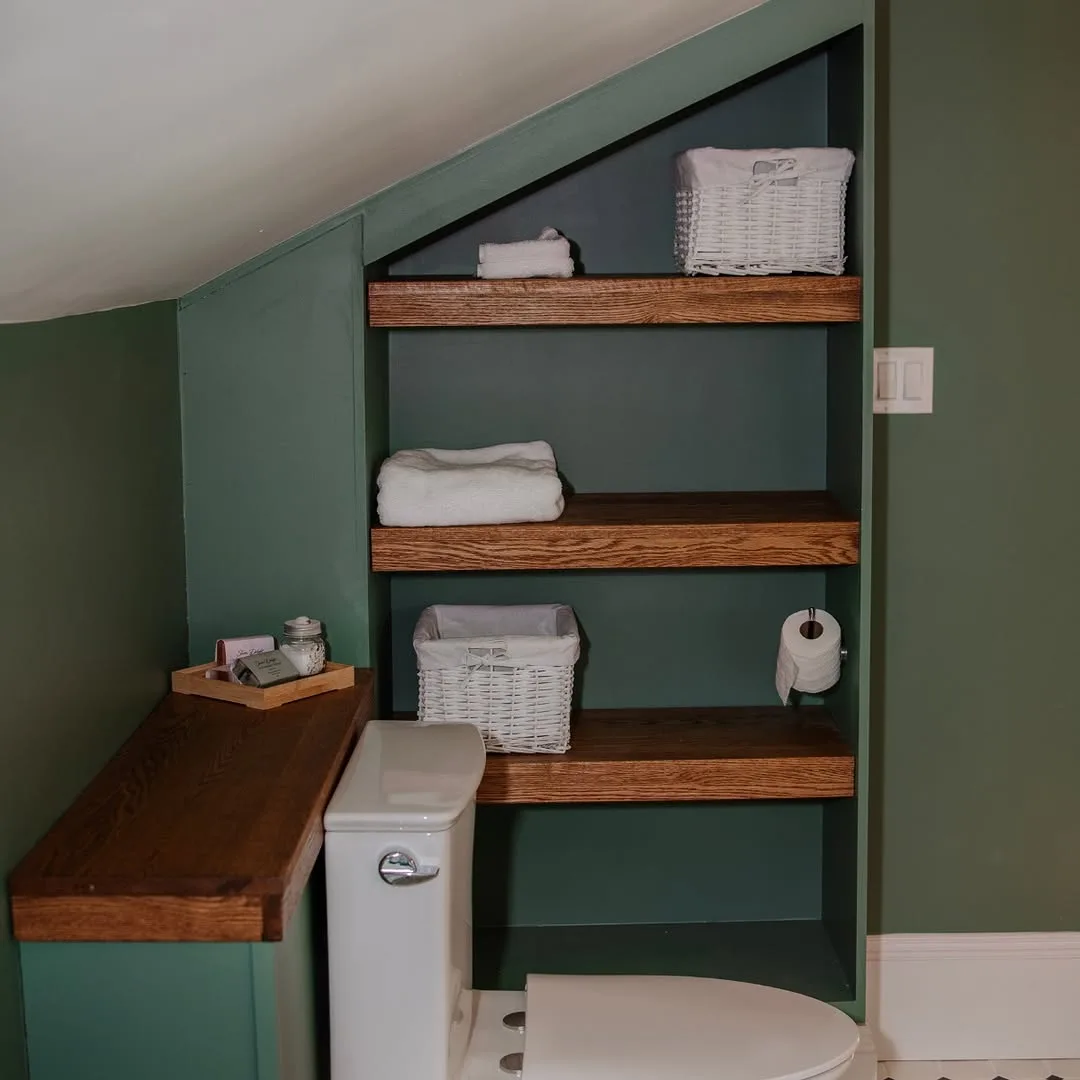
Wall space above the toilet often sits empty while towels pile on rails and door handles. Two or three open shelves turn that blank patch into the main linen store for the whole bathroom. Folded towels look neat in stacks, and guests always know where to find a clean one.
Measure the wall before buying shelves, and leave clear headroom so nobody bumps a shelf while standing up. Boards around twenty to twenty five centimetres deep hold folded towels without crowding the room. Brackets at both ends keep each shelf steady under the weight of damp cotton.
Families with young children gain the most, because spare towels stay close to the bath without filling floor baskets. Keep daily towels on the lowest shelf and guest towels higher up. Rolled towels fit small shelves well and show clearly when stock runs low.
Common mistake is stacking towels too high so the pile leans and slides onto the floor. Limit each stack to three or four towels and leave air between stacks so cotton dries between uses. Damp towels stored in a closed pile also start to smell, so rotate the stack weekly.
One tray for daily sink items
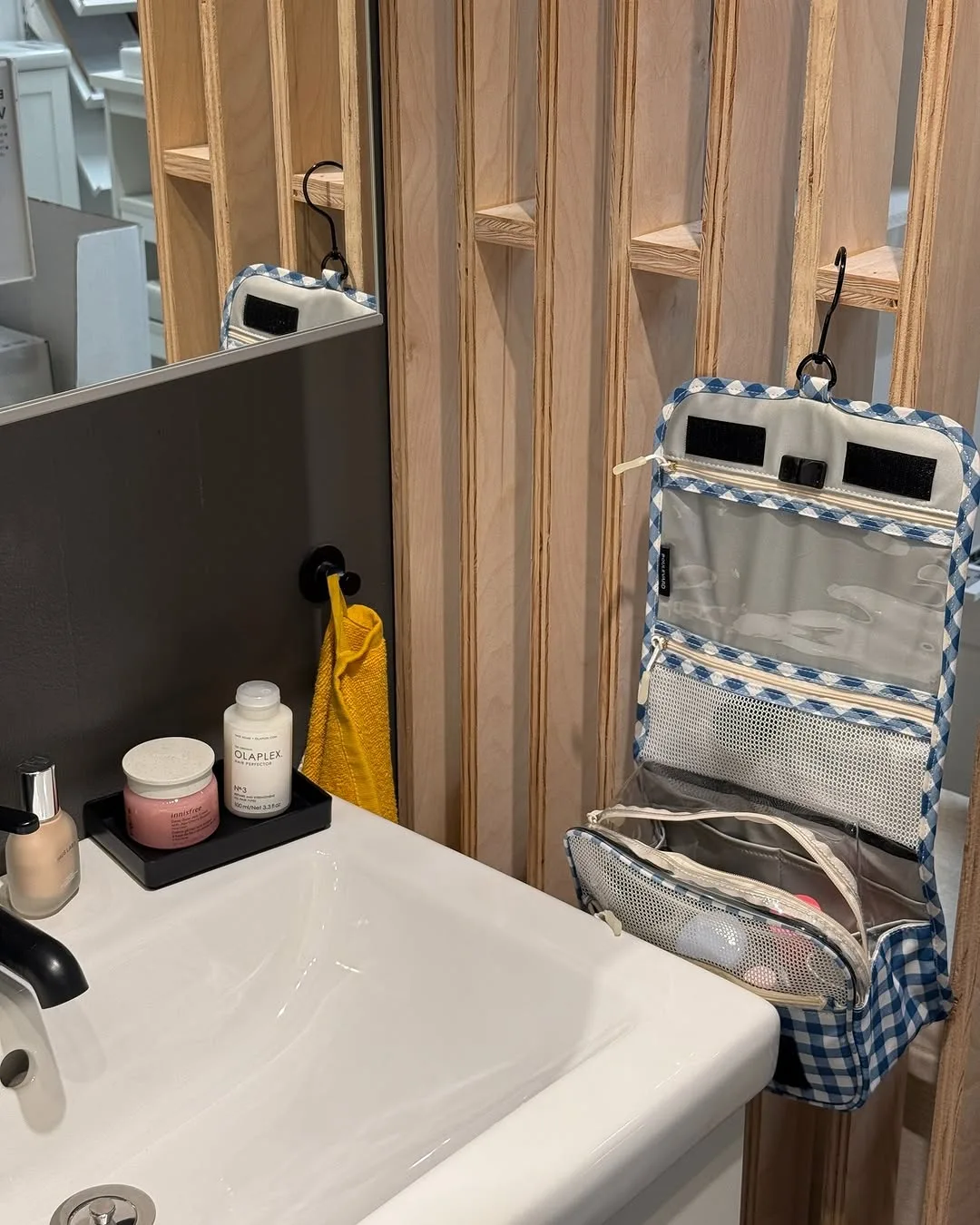
Loose bottles and tubes scatter across the sink edge and make even a clean bathroom look messy. One tray gathers the items you use every morning into a single neat group. Wiping the counter takes seconds when you lift one tray instead of moving ten bottles.
Choose a tray with raised edges so bottles stay put when small hands reach across the sink. Materials like bamboo, ceramic, and sealed stone handle splashes well and wipe clean in seconds. Size the tray to the items you truly use daily, not everything you own.
Couples sharing one sink benefit most, because each person keeps a small group on the shared tray without mixing products. Toothpaste, hand soap, and one moisturiser per person cover most mornings. Guests also read the tray as a signal that the bathroom stays cared for and orderly.
Resist filling the tray with extras once the system works. Perfume bottles, spare creams, and rarely used tools belong in a drawer or basket instead. Review the tray monthly and return escapees to storage, because the tray only works while it holds daily items and nothing more.
Baskets that slide under the sink
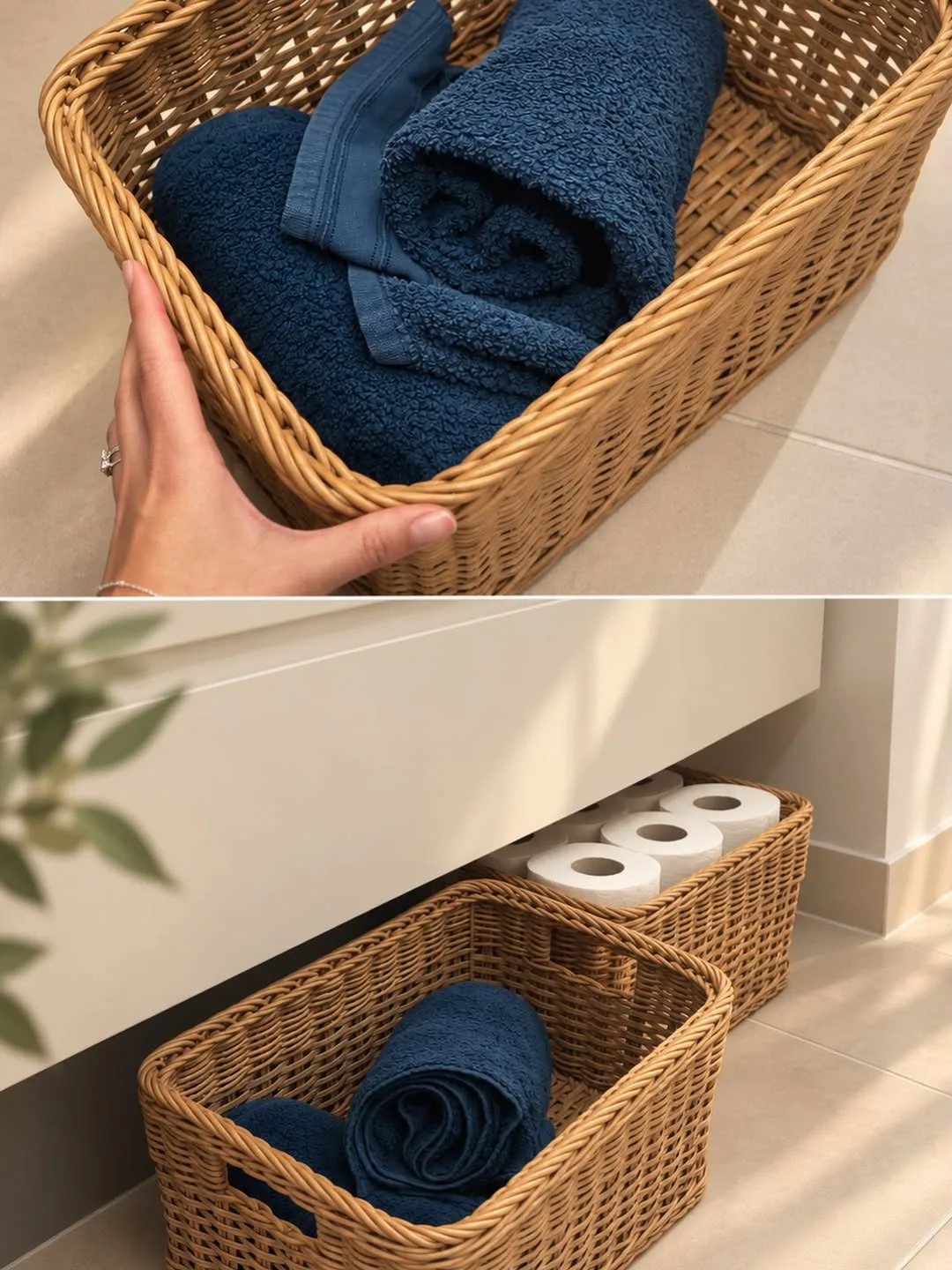
Under sink space swallows cleaning bottles, spare shampoo, and tangled cords when items go in loose. Baskets that slide or stack turn that dark cupboard into tidy zones you can pull out in one motion. Each basket holds one job, so finding the bathroom cleaner takes seconds.
Plastic or coated wire baskets suit the under sink area best because drips and leaks happen often. Measure around the pipes before buying, since plumbing cuts the usable space into odd shapes. Two smaller baskets usually fit better than one wide basket in a tight vanity.
Parents find under sink baskets handy for bath toys, spare nappies, and the cleaning products that must stay out of sight. One basket can hold refills, so you spot low stock before the last bottle runs dry. Labels on the front edge help everyone return items to the right basket.
Avoid storing medicines or sharp tools in open baskets where young children can reach them during bath time. Keep those items higher up or behind a latched door. Check baskets every few months for leaked bottles, because sticky residue builds up quietly under the sink.
Wall hooks for towels and robes
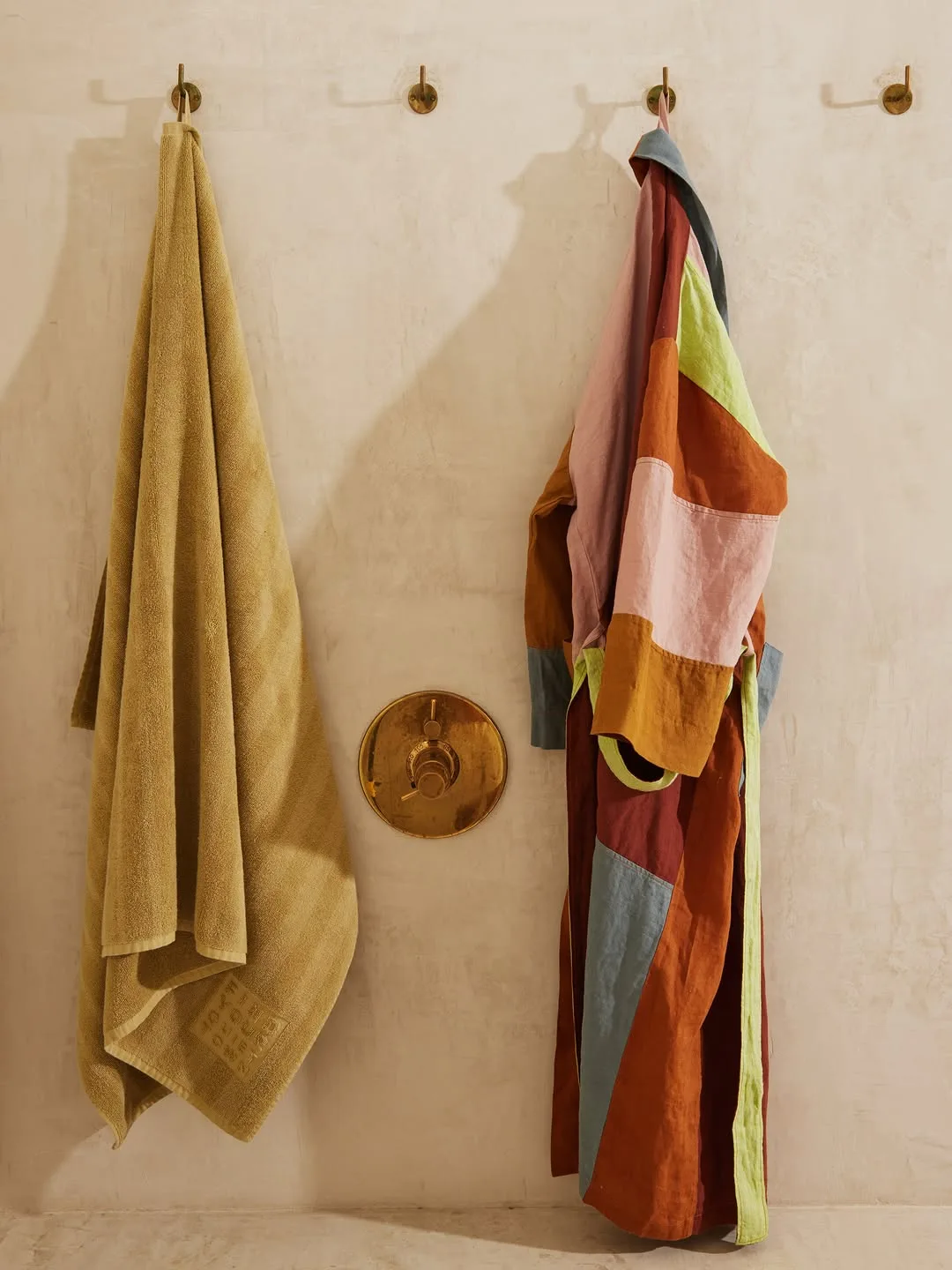
Towel rails hold one or two towels at most, and damp towels bunch together and dry slowly. Wall hooks give every towel its own spot with air on all sides. Hooks also welcome robes, wash bags, and the clothes people change out of during a bath.
Fixed hooks screwed into studs or solid plugs hold heavy wet towels without pulling loose. Place hooks at staggered heights so children reach the low ones and adults use the higher row. Leave a hand width between hooks so towels hang without touching each other.
Busy family bathrooms gain the most, because hooks end the daily pile of towels on the floor. Give each person a hook in a set colour or position and the system runs itself. Guests get a spare hook too, which feels welcoming and keeps their towel off the rail.
Hooks fail when people overload one hook with two heavy towels and a robe, stretching loops and pulling fixings loose. One towel per hook keeps cotton fluffy and dry. Among small bathroom organization ideas, hooks cost the least and change the room fastest, so fix weak hooks before buying anything else.
Hanging caddy in the shower
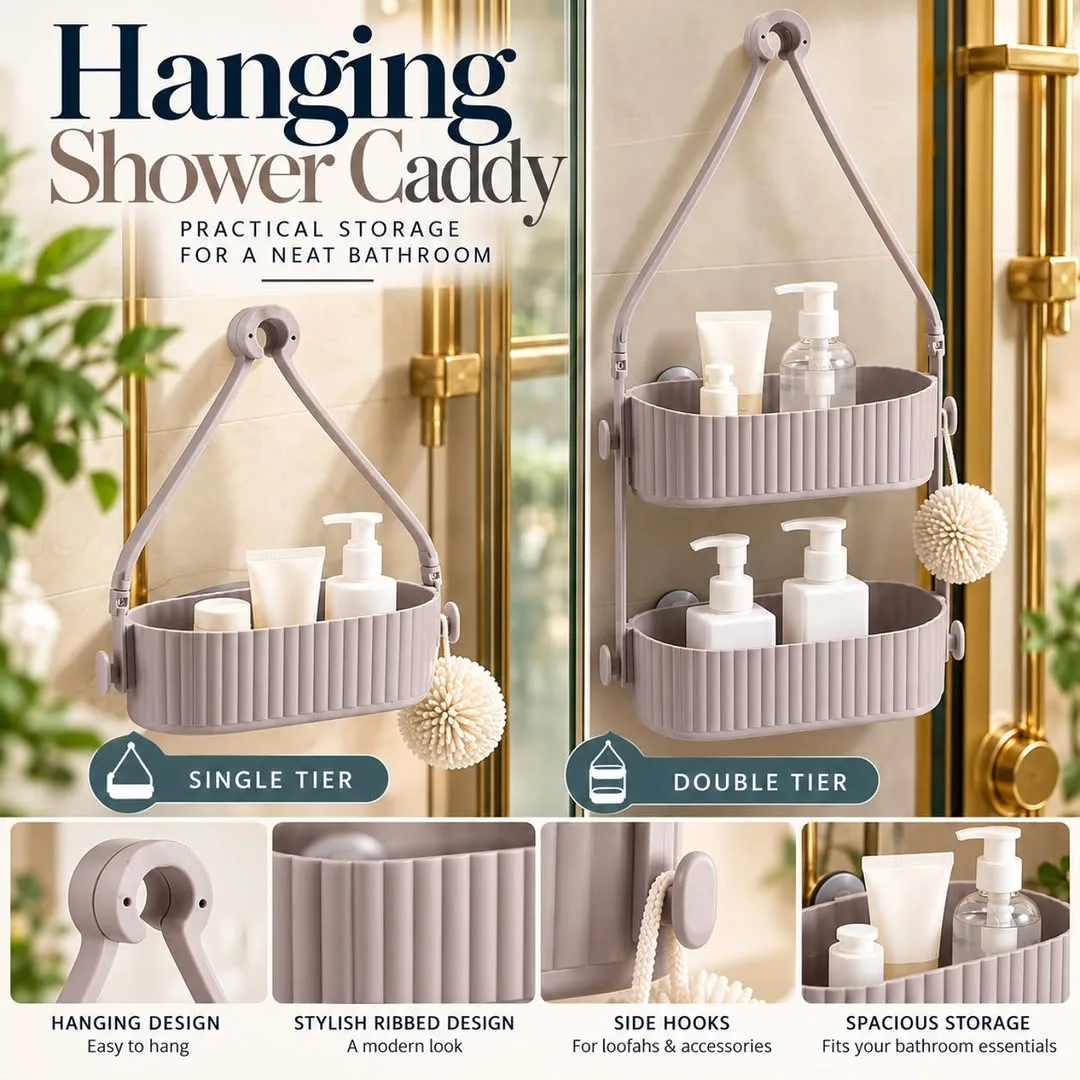
Shower corners and bath edges collect bottles until shampoo falls every time someone reaches for the soap. One hanging caddy lifts bottles off wet surfaces and keeps them within easy reach. Water drains through the caddy instead of pooling under bottles, so edges stay cleaner.
Look for a caddy with wide hooks that fit your shower head pipe and a brace that stops swinging. Rust resistant coatings matter, because cheap chrome flakes within months in daily steam. Shelves with raised rails stop tall bottles tipping out when the caddy moves.
People who share one shower benefit most, since each person claims a shelf level for their own bottles. Conditioner, shampoo, and body wash for the household fit in most caddies without crowding. Guests also find what they need without opening cupboards or asking.
Skip oversized caddies that block the shower head or force you to duck under bottles. Measure the drop from the shower head to the taps before ordering. Clean the caddy monthly with an old toothbrush, because soap scum builds in the corners and turns slippery.
Magnetic strip for pins and tweezers
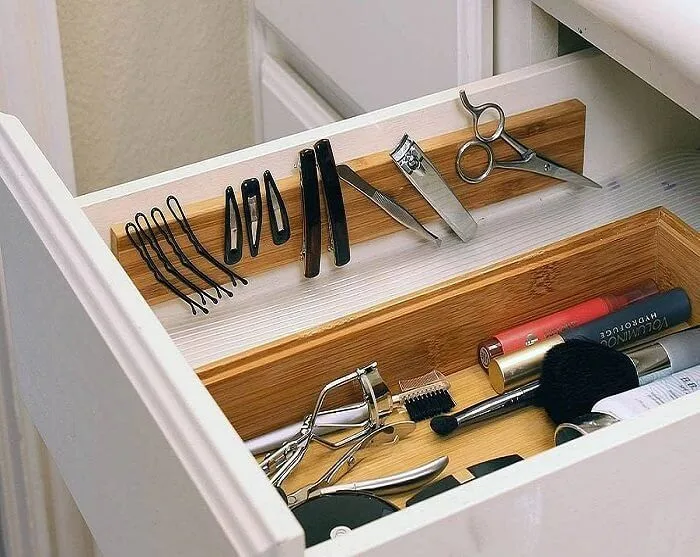
Hair pins, tweezers, and nail clippers vanish into drawers and makeup bags right when you need them. One magnetic strip on the wall or inside a cabinet door holds them in plain sight. Small metal tools click into place and stay ready for quick morning fixes.
Mount the strip at eye level near the mirror, where you use the tools most. Self adhesive strips suit smooth tiles, while screws hold better on painted wood inside a door. Test the magnet strength with your heaviest tool before trusting it with everything.
Teens and parents who style hair daily gain the most from tools that stay visible and sorted. Pins return to the strip by habit once the spot becomes routine. The strip also clears drawer space for larger items that truly need hiding away.
Keep the strip away from the shower zone, because constant steam weakens adhesive and dulls metal tools. Wipe the strip weekly so dust and hair spray do not build a sticky film. Replace bent pins instead of forcing them back, since weak pins slide and fall behind the sink.
Glass jars for cotton balls and buds

Cotton balls, buds, and pads come in flimsy bags that spill and look untidy on open shelves. Glass jars turn those soft supplies into a calm display that also shows stock levels at a glance. Clear jars on the counter or shelf make the bathroom feel cared for.
Fill jars only two thirds full so fingers reach inside without crushing the contents. Lids keep dust and bathroom steam off clean cotton, which matters for skin care. Many small bathroom organization ideas use jars because glass suits every style and costs very little at second hand shops.
Hosts preparing for overnight guests gain the most, because visitors find cotton supplies without opening drawers. One jar of balls, one of buds, and one of pads cover nearly every need. Place jars where guests see them as they enter, grouped on a small tray or shelf.
Wash jars with hot soapy water every time you refill them, since bathroom dust settles on lids fast. Skip jars with narrow necks that trap cotton and force you to shake supplies out. Broken or chipped glass belongs in the bin, never on a bathroom shelf.
Slim cart in the gap beside the toilet
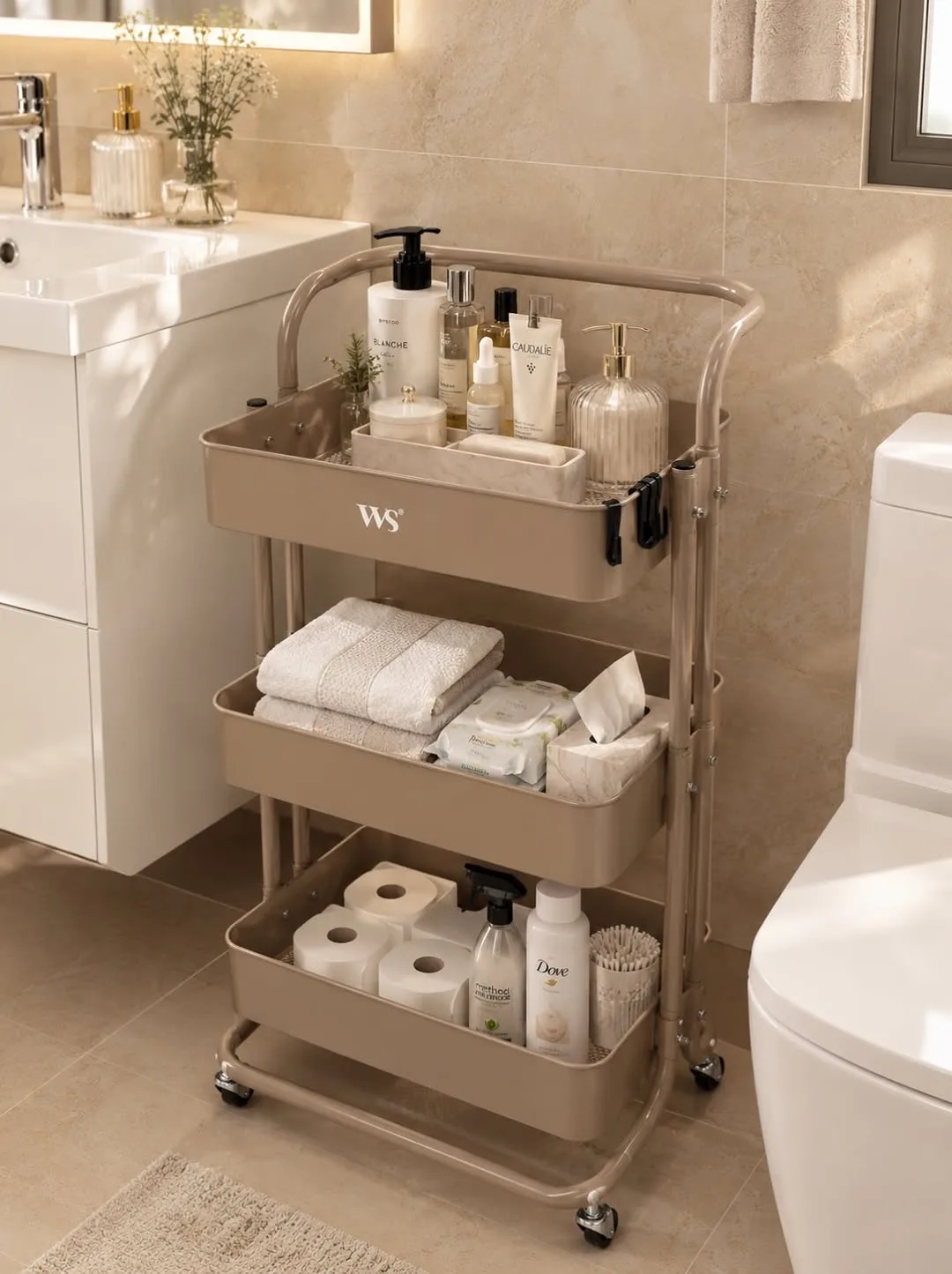
Narrow gaps beside the toilet or between the sink and the wall waste prime storage in small bathrooms. One slim rolling cart slides into that gap and holds spare rolls, cleaning wipes, and bottles in neat layers. Wheels let you pull everything out for cleaning day.
Check the gap width at floor level and again at counter height, because skirting boards steal space. Carts with three tiers suit most gaps and keep heavy bottles on the lowest shelf. Handles on both ends help you slide the cart without tipping items over.
Small homes without a linen cupboard gain the most from a cart that stores bathroom stock in the room itself. Extra shampoo, spare soap, and cleaning refills sit ready instead of crowding a kitchen shelf. The cart also moves easily when guests arrive and you want the gap clear.
Do not load the top tier with heavy bottles, because slim carts tip when weight sits high. Keep daily items at the front of each shelf so you never unload the cart to reach one bottle. Dust the wheels monthly so the cart keeps rolling smoothly.
Divided tray inside the vanity drawer
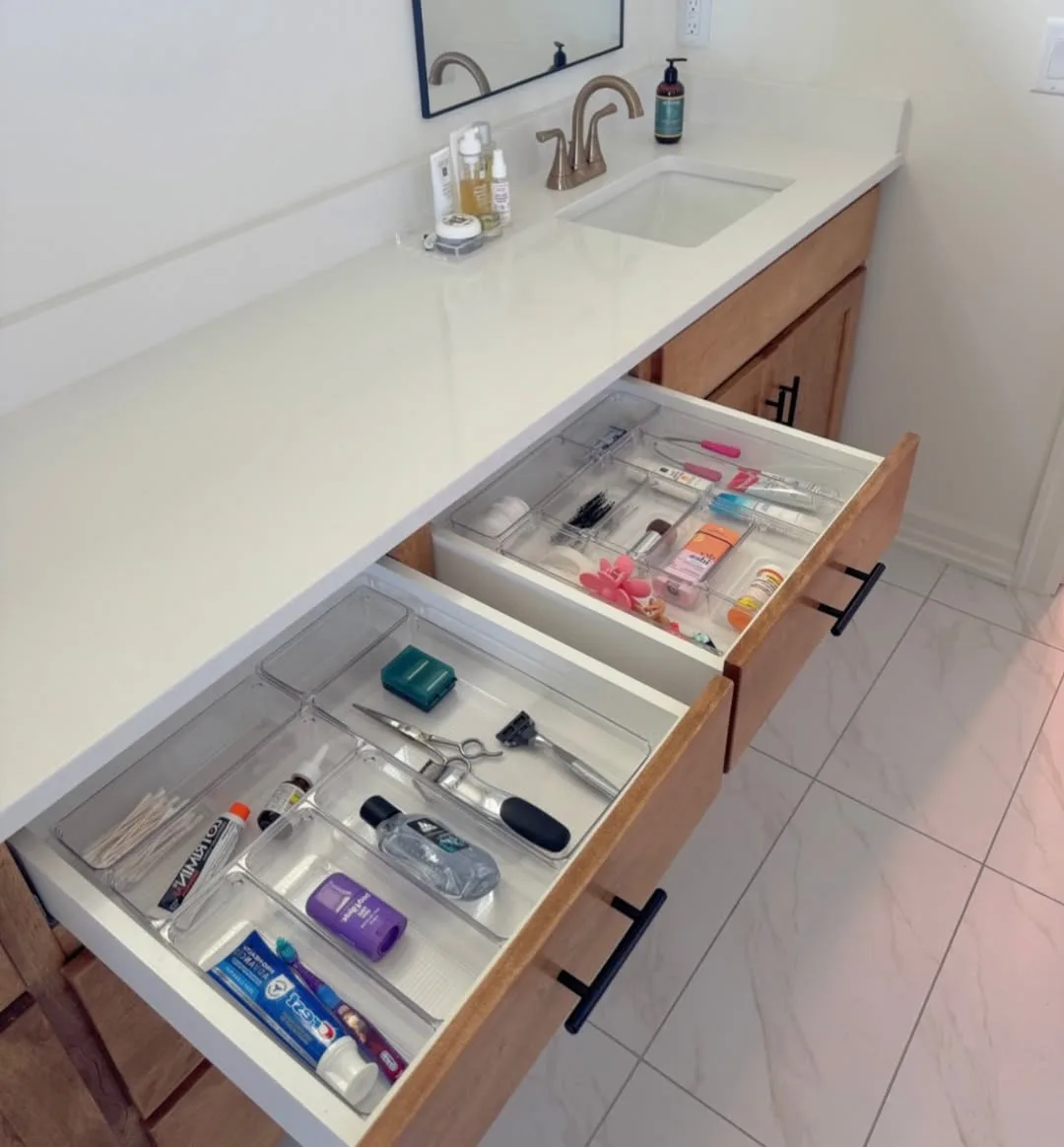
Drawers without dividers turn into a jumble of brushes, tubes, and loose bands within a week. One divided tray sorts the drawer into calm sections that stay tidy through busy mornings. Every item gets a slot, and the drawer closes without forcing.
Sort drawer contents by job before choosing a tray: teeth, hair, skin, and small tools. Adjustable dividers suit odd drawer sizes better than fixed trays. Line the drawer base with a washable mat so spills wipe up without staining the wood.
Partners sharing one vanity gain the most, because divided trays stop products mixing and arguments starting. Each person claims one side, and shared items sit in the middle section. Morning routines speed up when hands find every item without looking or digging through clutter.
Review the drawer every season and throw out dried creams, old makeup, and empty tubes. Expired products waste the space your daily items need. Keep only what you used in the last month in the top drawer, and move spares to baskets elsewhere.
Mirror cabinet with daily basics
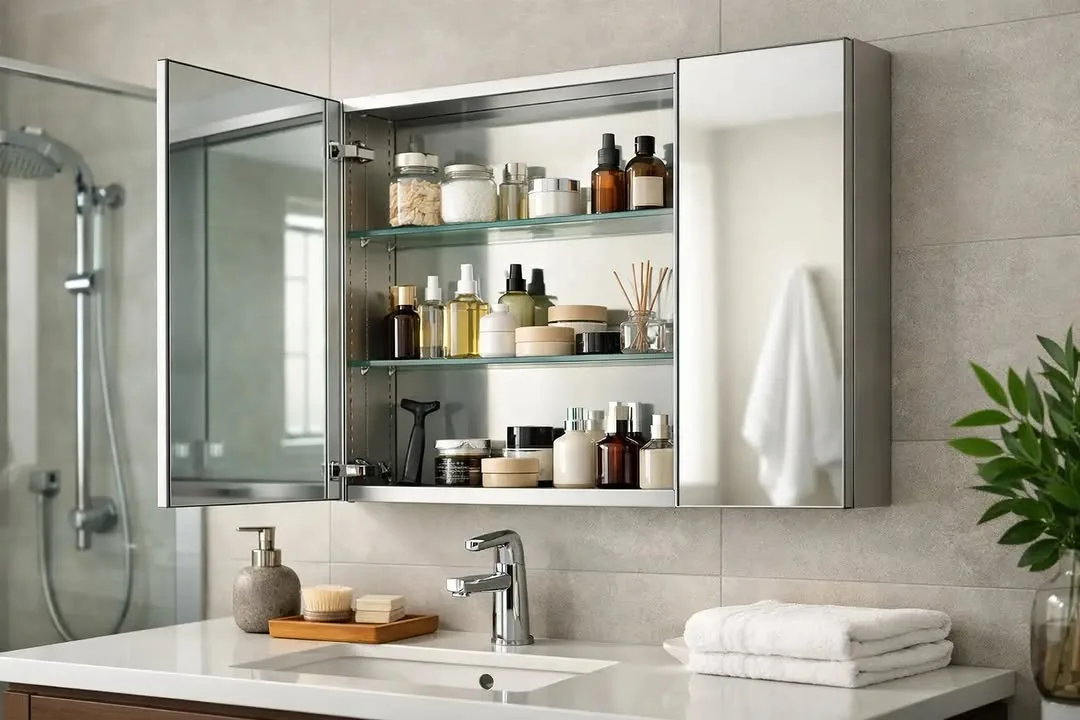
Flat mirrors waste the storage chance hiding right behind the glass. One mirror cabinet holds daily basics at eye level, exactly where you use them. Medicines, face creams, and toothbrushes stay hidden, so the room looks calm even with the door open.
Depth matters most when choosing a cabinet, since shallow shelves hold jars and tubes but not tall bottles. Measure your tallest daily bottle before buying. Soft close hinges protect the mirror and keep early morning noise down for sleeping family members nearby.
Households with toddlers gain the most, because cabinets lift medicines and razors beyond small reach while staying easy for adults. Daily basics for each adult fit on one shelf each. Guests see a simple mirror, not your whole routine lined up by the sink.
Never store spare stock or rarely used items in a mirror cabinet, because prime eye level space belongs to daily basics only. Crowded shelves push bottles forward until one falls into the sink. Keep the cabinet at one layer deep so nothing hides behind anything else.
Basket of spare rolls by the toilet
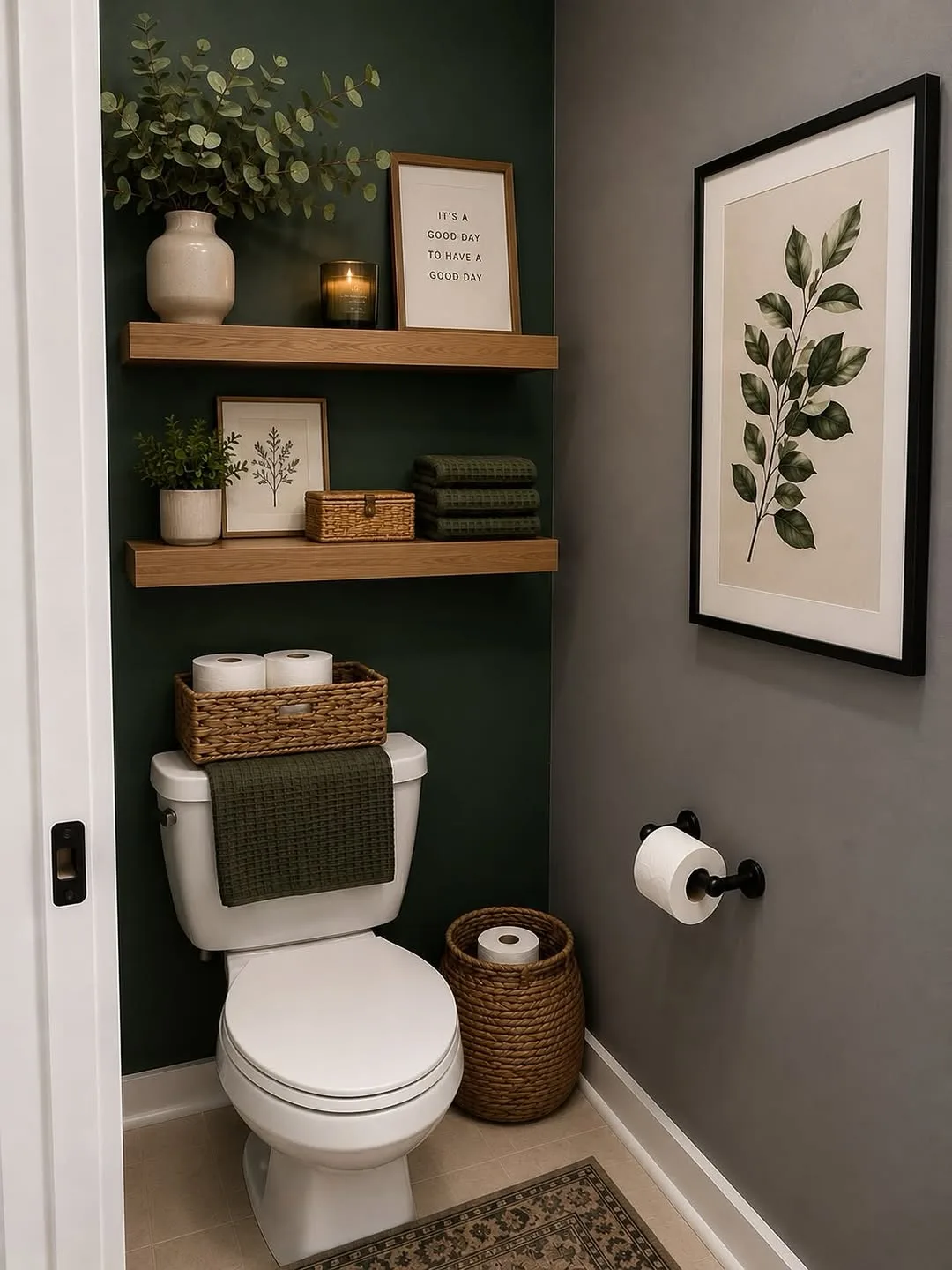
Running out of toilet rolls mid visit embarrasses hosts and guests alike, during a party or a busy family weekend. One basket of spare rolls beside the toilet solves the problem quietly and looks welcoming. Guests help themselves without opening cupboards or calling through the door.
Pick a basket with a lid or a high rim when the bathroom serves young children who love unrolling paper. Natural fibres like seagrass suit most bathrooms and handle splashes better than fabric. Size the basket for four to six rolls so refills stay simple.
Homes with one bathroom gain the most, because the basket keeps the room stocked through busy mornings and guest visits. Place the basket within reach of someone seated, on the floor or on the tank if space allows. Refill it during the weekly clean so the job never gets forgotten.
Rotate stock so older rolls get used first and the basket never holds dusty paper. Keep the basket off wet floors by choosing one with small feet or a stand. Simple habits like this one sit at the heart of small bathroom organization ideas that actually last.
Towel rack on the back of the door
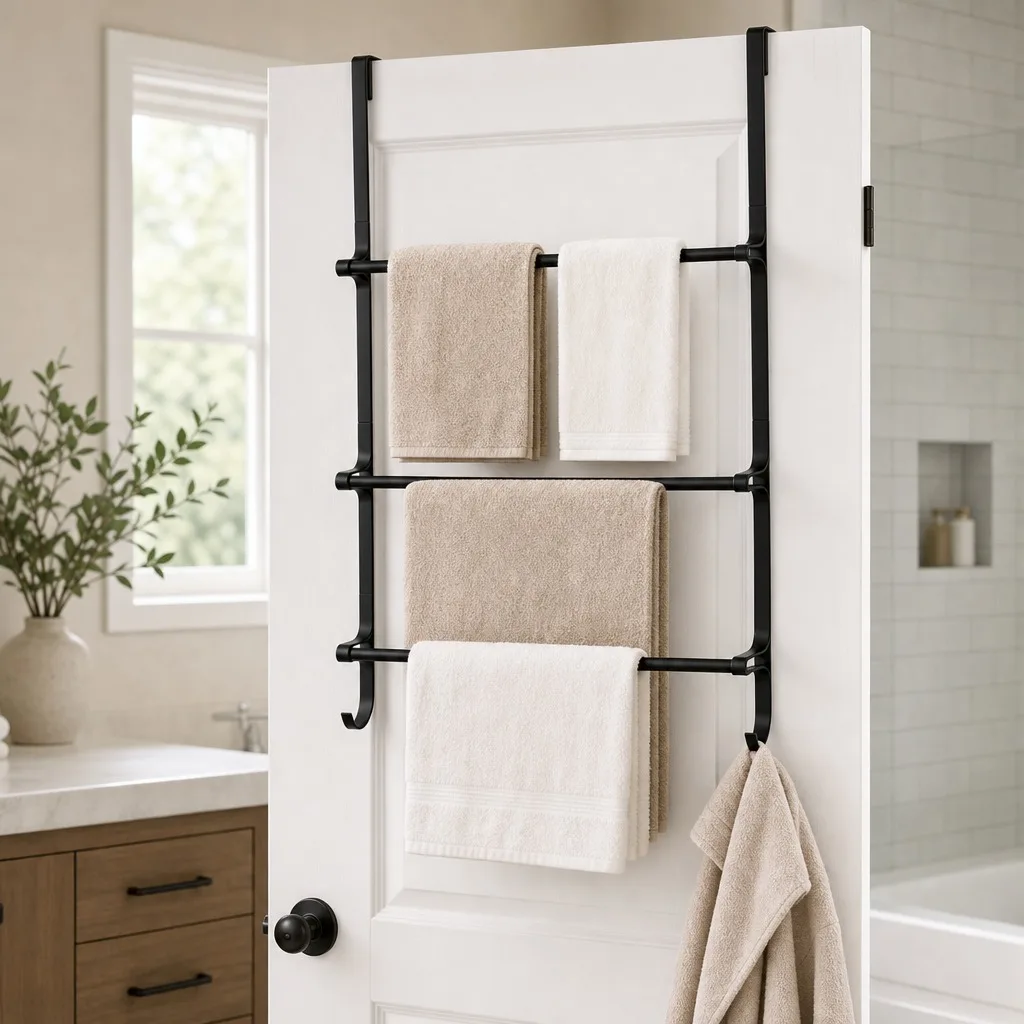
Door backs offer a full wall of storage that most small bathrooms ignore completely. One rack on the back of the door holds towels, robes, and wash bags without using any floor space. The rack also keeps damp towels away from crowded rails.
Over door racks hook on in minutes and suit doors that still close fully with the hooks in place. Fixed racks screwed to the door hold more weight and suit heavy bath sheets. Check clearance behind the door so towels do not brush the wall each time it opens.
Shared bathrooms gain the most, because the door rack gives every person a drying spot even when rails fill up. Children reach low bars for their own towels after bath time. The rack also holds guest towels ready, separate from the family set.
Limit the rack to towels and light robes, because heavy wet loads strain hinges over time. Shake towels out before hanging so they dry flat instead of bunching. If the door starts to creak or drop, move one towel back to a wall hook and lighten the load.
Small stool that hides cleaning supplies
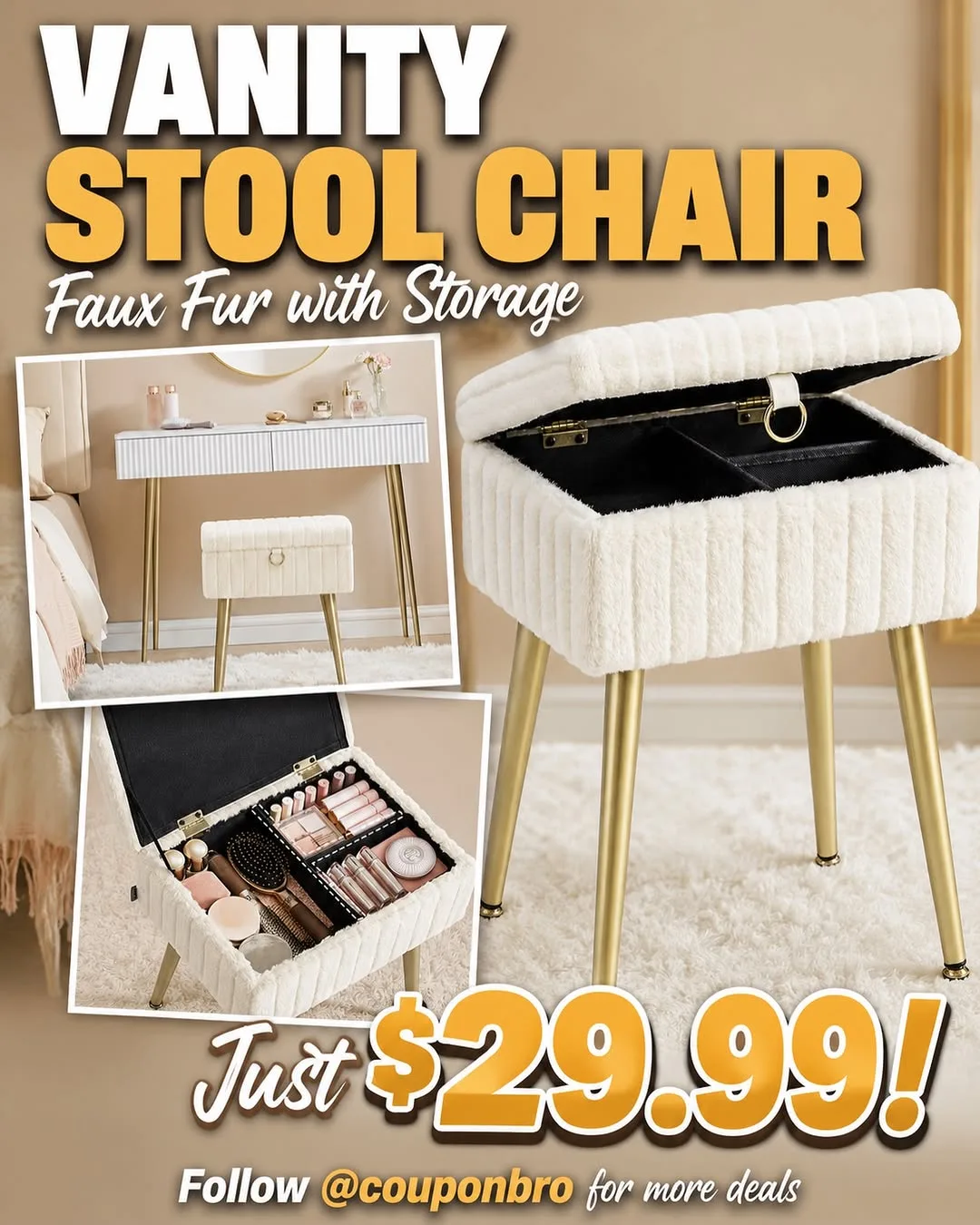
Cleaning bottles under the sink or lined along the bath edge make a small bathroom feel like a store cupboard. One small stool with a hollow seat or a box base hides those supplies in plain sight. The stool also gives children a step and adults a seat for bath time.
Hunt for stools with sealed interiors or a removable inner bucket, because cleaning bottles sometimes leak. Wood and sturdy plastic both suit steamy rooms when the finish resists water. Measure the stool against your bath side so knees fit when you sit.
Bath time with toddlers runs smoother when one stool serves as seat, step, and storage at once. Cleaning sprays stay sealed inside, away from curious hands during play. After guests leave, the bathroom still looks tidy because supplies never sit on show.
Store only bathroom cleaning items inside the stool, and keep kitchen or garden chemicals elsewhere. Mixing products in one hidden box invites mistakes in a hurry. Wipe the interior monthly, since drips collect at the base and start to smell in warm rooms.
Labels that keep shelves honest
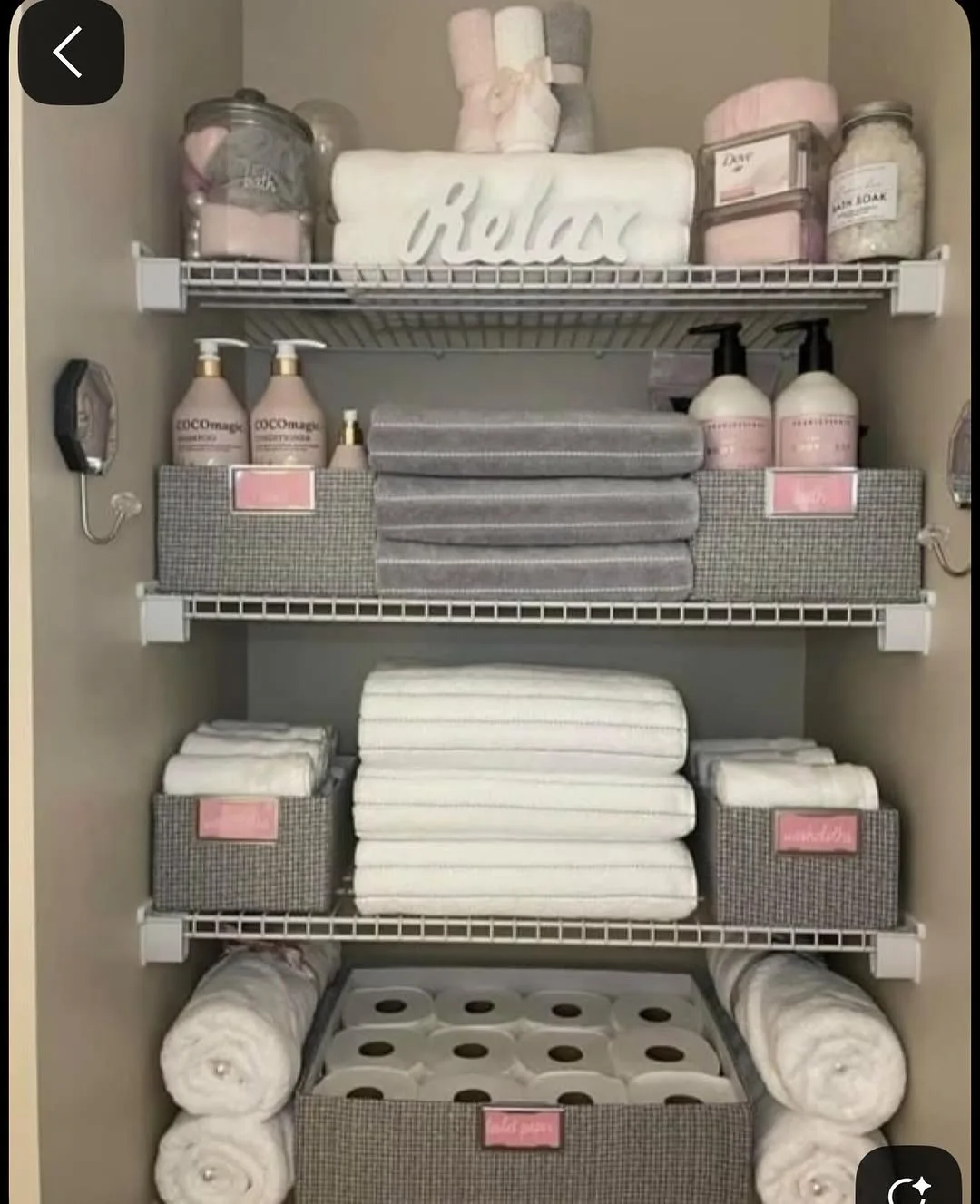
Open shelves and shared baskets drift into disorder when nobody knows what belongs where. Clear labels turn good intentions into a system everyone can follow without thinking. Guests, children, and partners all return items to the right spot when the spot announces itself.
Use short labels with plain words like towels, refills, cleaning, and hair. Printed labels on card inside plastic sleeves survive steam better than bare paper. Stick labels on the shelf edge or basket front at eye level, where people look while holding an item.
Labels help most in homes where several people share one small bathroom and sort laundry or cleaning in rotation. New partners, babysitters, and visiting family learn the system in seconds. The room stays ordered between your own tidy sessions, which is where most systems fail.
Update labels whenever you move a category, because wrong labels teach people to ignore all labels. Peel off faded or curled labels during the monthly reset and print fresh ones. Keep label wording identical across baskets and shelves so the whole room reads like one system.
Reset basket for bathroom strays
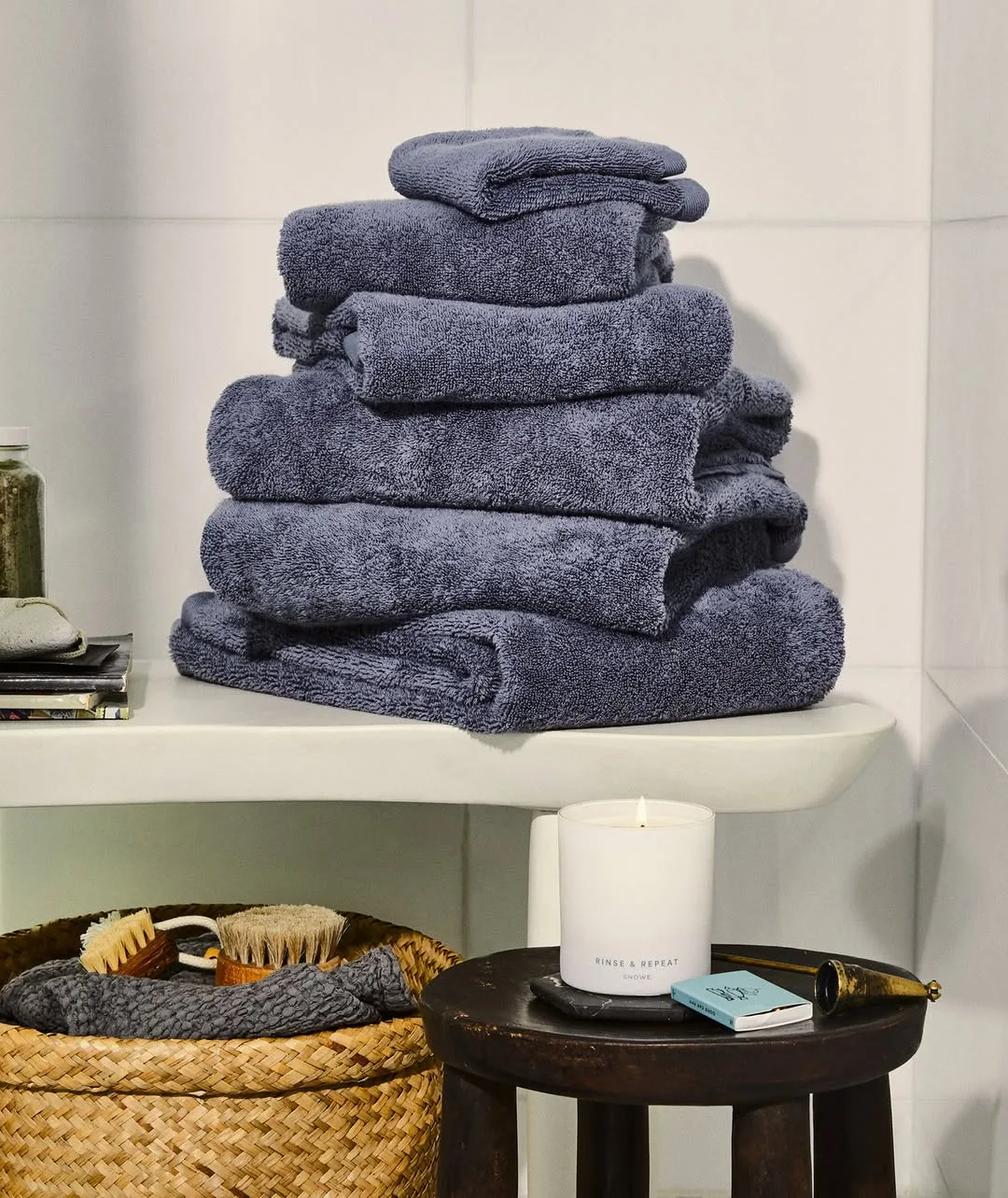
Strays like hair ties, watches, books, and toys wander into the bathroom and settle on every surface. One reset basket gives those wanderers a landing spot instead of the counter. Emptying one basket beats hunting strays room by room at night.
Place the basket on a shelf or the floor corner nearest the door, where people pass as they leave. Small baskets suit the job, because a huge basket becomes storage instead of a sorting spot. Choose a style that matches your other baskets so the room still looks planned.
Evenings run calmer when one person carries the basket through the home and returns each item to its room. Children learn the routine fast and start dropping strays in without being asked. Counters stay clear overnight, so mornings begin in a tidy room.
Set a firm rule that nothing lives in the reset basket longer than one day. Items that linger turn the basket into another clutter drawer with better looks. If the basket overflows often, the strays need real homes elsewhere in the house, not a bigger basket.
Common Mistakes to Avoid in a Small Bathroom
Buying storage before sorting is the mistake that wastes the most money. People measure full shelves, buy baskets for items they later throw away, and end with containers that fit nothing. Sort first, group what stays, and measure the groups before spending a single coin.
Matching every container looks lovely in photos and fails in real bathrooms where bottles come in odd shapes. Storage must fit the items and the space, not a colour scheme alone. One odd basket that fits the gap beats three pretty baskets that block the cupboard door.
Forgetting the weekly reset undoes every system within a month. Items migrate, guests guess, and counters refill with bottles that belong elsewhere. Ten minutes of returning strays and wiping shelves each week protects all the effort you spent on the first big sort.
Budget Friendly Ways to Organize a Bathroom
Strong small bathroom organization ideas rarely need new furniture or a full shopping trip. Start with containers already in the house: jam jars, shoe boxes, spare baskets, and trays from other rooms. Test the layout for two weeks before buying anything, because living with the system shows which gaps truly need money.
Second hand shops and discount stores sell baskets, jars, and trays for very little, and bathrooms hide minor scratches well. Buy one item at a time as each zone proves itself, starting with the sink area you use most. Slow buying also spreads cost across months instead of one painful weekend.
Spend first on the spots that cause daily stress, usually the sink edge and the towel situation. Hooks and one good tray cost little and calm the room every single morning. Decorative extras can wait until the storage works, and most people find they want fewer extras than expected.
Bathroom Tips That Keep Counters Clear
Keep one home for every item. Toothpaste lives in the drawer tray, towels live on hooks, and refills live under the sink. Decisions vanish when homes stay fixed, and tidy up takes minutes because hands move without thinking. Teach the homes to everyone in the house during the first week.
Clear the counter every night. Two minutes before bed returns bottles, brushes, and strays to their homes. Waking to a clear sink changes how the whole morning feels. Pair the habit with brushing your teeth so the routine anchors to something you never skip.
Store by frequency, not by category alone. Daily items earn the drawer, the tray, and the mirror cabinet. Weekly items sit on shelves, and monthly stock hides under the sink or in the cart. Reach distance should match use, because buried daily items always end up living on the counter.
Decant into jars and bottles you enjoy. Plain glass jars and matching pump bottles calm the visual noise of loud packaging. Supplies look like a set even when brands differ. Refill from bulk packs stored elsewhere, and keep the bathroom shelf holding only the working amount.
Give guests a visible setup. Spare rolls in a basket, cotton jars on the shelf, and a spare towel on a hook tell guests where things live. Visitors stop opening cupboards and leaving items out. The bathroom also resets itself after guests, because everything returns to obvious homes.
Review one zone every month. Pick one zone each month, sort it fully, and fix whatever stopped working. Small repairs stop the slow slide back into clutter. Note what ran out or overflowed, and adjust quantities before the next shop.
Habits protect the room better than any basket or shelf ever will. Small daily returns and one monthly review keep small bathroom organization ideas working long after the first tidy weekend. Start tonight with the sink edge, and let the calm spread from there.
FAQ
How many shelves fit above a toilet?
Most bathrooms fit two or three shelves above the toilet, depending on ceiling height and tank clearance. Leave enough headroom for a tall person standing up from the seat. Stop at two shelves if the wall feels crowded, because open space above the top shelf keeps the room feeling light.
What should stay on the bathroom counter?
Only daily essentials deserve counter space: hand soap, one tray of morning items, and perhaps a small plant. Everything else earns a drawer, shelf, or basket home. When you judge small bathroom organization ideas, keep the ones that protect the counter and drop the rest.
How do I stop towels smelling damp?
Damp smells fade when towels hang with air on all sides and dry fully between uses. Hooks beat rails in small rooms because each towel hangs alone. Wash towels hot every few uses, and leave the bathroom door open after showers so steam escapes instead of soaking into cotton.
Which storage suits a bathroom with no drawers?
Wall shelves, hooks, a mirror cabinet, and a slim cart replace drawers in most small bathrooms. Trays on the counter group daily items when no drawer exists. Baskets under the sink hold the rest, sorted by job so nothing hides at the back.
How often should I sort bathroom storage?
One quick reset each week and one deeper sort each season keep systems working without big efforts. Weekly resets return strays and wipe shelves. Seasonal sorts clear expired creams, old makeup, and empty bottles that quietly steal space from daily items.
Can open shelves work in a steamy bathroom?
Open shelves work well when you choose sealed wood, metal, or plastic that shrugs off steam. Keep cotton supplies in lidded jars and paper goods away from the shower end. Run the fan or open a window during showers, and any shelf material lasts longer.
Conclusion
Calm bathrooms come from fixed homes, clear counters, and small habits repeated daily. Shelves, hooks, trays, and baskets each solve one problem well, and together they change how the room feels every morning. You do not need a bigger bathroom to enjoy that calm.
Start with the zone that annoys you most, sort it fully, and give every item a home before moving on. Small bathroom organization ideas work best one corner at a time, with a week of living between changes. Soon the whole room runs on simple systems instead of daily effort.
Share the system with everyone who uses the room, because shared homes stay tidy and private systems collapse. Labels, guest setups, and the reset basket invite the whole household to help without lessons. Enjoy the first clear counter morning, and let that feeling carry the habit forward.